
How automated redaction reduced video DSAR processing by half
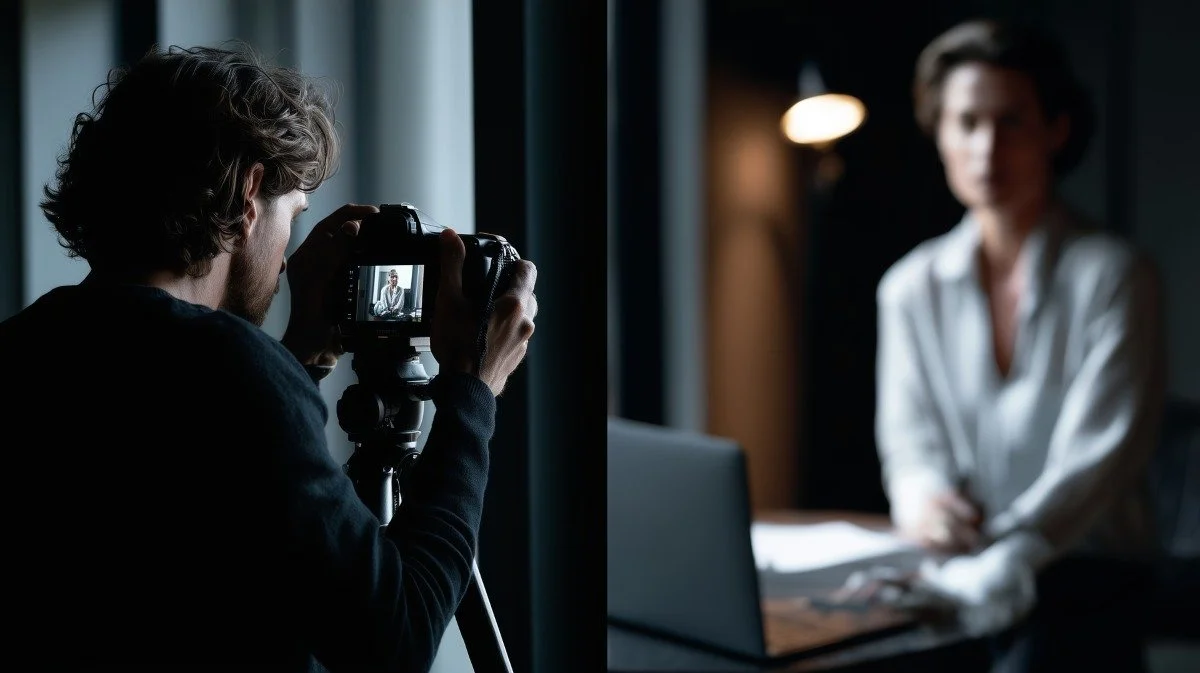
Data Subject Access Requests involving CCTV footage are among the most resource-intensive compliance obligations that educational institutions face. Unlike documents or databases, where data can be extracted and reviewed relatively quickly, video footage requires frame-by-frame attention, manual identification of individuals, and careful editing before disclosure. In a school environment with comprehensive camera coverage, the combination of high footage volume and limited IT resources creates a problem that manual processes simply can't absorb.
Elizabeth College in Guernsey found themselves at that breaking point before implementing Secure Redact - and what happened next illustrates something more useful than a sales case study. It shows what automated redaction actually looks like when it's working.
The setting: 150 cameras, a backlog of unfulfilled requests
Elizabeth College is a secondary school on Guernsey, operating close to 150 CCTV cameras across its grounds and surrounding areas. The camera system supports a range of monitoring purposes, from minor incidents involving misplaced property through to more serious matters such as theft prevention and safeguarding investigations.
What the school's small IT team discovered, as DSAR culture matured and requests began arriving more regularly, was that their video footage was compliance infrastructure they couldn't actually use. Incidents would be captured. Footage would exist. And then a DSAR would arrive, requiring them to share footage of a specific individual in a form that didn't expose the identities of every other student, staff member, or visitor who happened to appear in the same clip.
The IT team evaluated several redaction tools to address this. The search produced a clear outcome. Joe Langlois, the College's IT Manager, found that Secure Redact was by far the easiest to use and one of the most cost-effective solutions available. Many alternatives were either too expensive or impractical for a school-scale operation.
The specific problem: over 100 faces in a single clip
The complexity of CCTV redaction in a school environment is easy to underestimate. School corridors, playgrounds, and entrances are busy spaces. A clip showing an incident near a school entrance at morning arrival might contain dozens of students and staff in motion, at varying distances from the camera, in different lighting conditions as doors open and close.
Joe Langlois described one piece of footage that had over 100 identifiable faces - making manual redaction not just time-consuming but practically impossible within any reasonable timeframe. This is not an unusual edge case. It's the normal condition of footage captured in high-traffic areas of a secondary school.
Before Secure Redact, the College had a backlog of DSARs they couldn't fulfil. The requests were legitimate. The footage existed. The obligation to respond was clear. The capacity to do so wasn't.
What the implementation looked like
The implementation process at Elizabeth College is described in terms that are worth noting for what they reveal about the platform's design. Langlois and his team were not specialist redaction operators. They came to the platform without prior training in video editing or redaction tooling. Their evaluation was as a general IT team facing a compliance problem they needed to solve practically.
The assessment: Secure Redact was easily the most user-friendly of the tools evaluated, requiring minimal training to reach productive use. The platform's automated detection handled the identification work - finding faces across hundreds of frames - while the review interface allowed Langlois to verify the output and make any minor manual adjustments before finalising the redacted version.
The accuracy finding is directly relevant to how the tool affects the review workload. Langlois described the platform as easily 99% accurate - a figure consistent with Secure Redact's stated detection performance. The significance of this level of accuracy is that even when minor manual work is needed, the reviewer's job is verification and occasional correction, not primary redaction. The difference between reviewing a 99% accurate automated output and doing the redaction manually is the difference between a quality check and a full working day.
The outcome: A full day's work in ten minutes
The headline figure from Elizabeth College's implementation is straightforward: what would have taken a whole day now takes ten minutes with Secure Redact.
That figure reflects the compression of what was a multi-stage, time-intensive manual process - reviewing footage, identifying all third-party faces, editing each one frame by frame, verifying completeness, exporting the finished version - into an automated workflow where the AI handles detection across all frames simultaneously, the reviewer checks the output, and the redacted file is ready for disclosure.
The practical consequence isn't just time saving. It's the removal of a ceiling on what the College's IT team can realistically handle. Before automation, their DSAR response capacity was limited by how many hours could be dedicated to manual video editing. After automation, the constraint is no longer capacity - it's simply receiving and processing requests as they arrive.
There's a further effect that Langlois specifically noted: the College can now speak more openly about its CCTV infrastructure and actively use footage in incident handling in ways that previously carried too much disclosure risk. When you can't reliably redact, you're reluctant to engage with footage at all. When redaction is manageable, the footage becomes genuinely useful rather than a compliance liability.
What this means for education more broadly
Elizabeth College's situation is not unique. UK schools and colleges are subject to UK GDPR in the same way as any other organisation, with the same DSAR response obligations and the same consequences for failure to comply. Many run extensive CCTV systems for safeguarding, security, and incident monitoring purposes. Most have IT teams that are not resourced for large-scale manual video editing work.
The DSAR volume pressure on educational institutions has increased alongside broader public awareness of data subject rights, and the complexity of footage from school environments - high people density, mixed-age subjects including children, emotionally sensitive incident contexts - makes getting redaction right both more important and more technically demanding than in many other settings.
Secure Redact offers education-specific deployment for UK and EU institutions, with pricing and access models designed for the organisation sizes and budgetary contexts that schools and colleges typically operate within, including a free tier for initial evaluation and low-volume use.
FAQs
-
The time required varies significantly by footage length and complexity, but a professional video editor typically takes at least one to two minutes of editing time per minute of footage for careful redaction work. Footage containing many individuals simultaneously can take considerably longer per minute. A request covering a few hours of multi-camera footage can run to a full working day or more.
-
Yes, though the specific DSAR patterns differ. Primary schools tend to have lower camera counts and fewer DSARs than secondary schools, making lower-volume tiers of the platform appropriate. The child-specific sensitivity of footage from educational environments makes accurate, auditable redaction particularly important regardless of school type.
-
One calendar month from receipt of the request. There is provision to extend by a further two months in cases of complexity or high volume, but the extension must be notified to the requester within the initial month and the complexity must be genuine. Routine CCTV DSARs are unlikely to justify the extension.
-
Secure Redact processes footage to produce redacted outputs but is not a long-term video archive. The platform's chain of custody logging records processing events, but organisations retain responsibility for their own footage storage and retention management in accordance with their data retention policies and regulatory obligations.
-
Children's personal data receives heightened protection under GDPR, and redaction of footage from educational environments requires particular care to protect all identifiable minors. Secure Redact's detection models identify faces regardless of age, and the platform's review interface allows operators to verify that all individuals - including children - have been appropriately protected before disclosure.