
Federal court rules for redacting documents
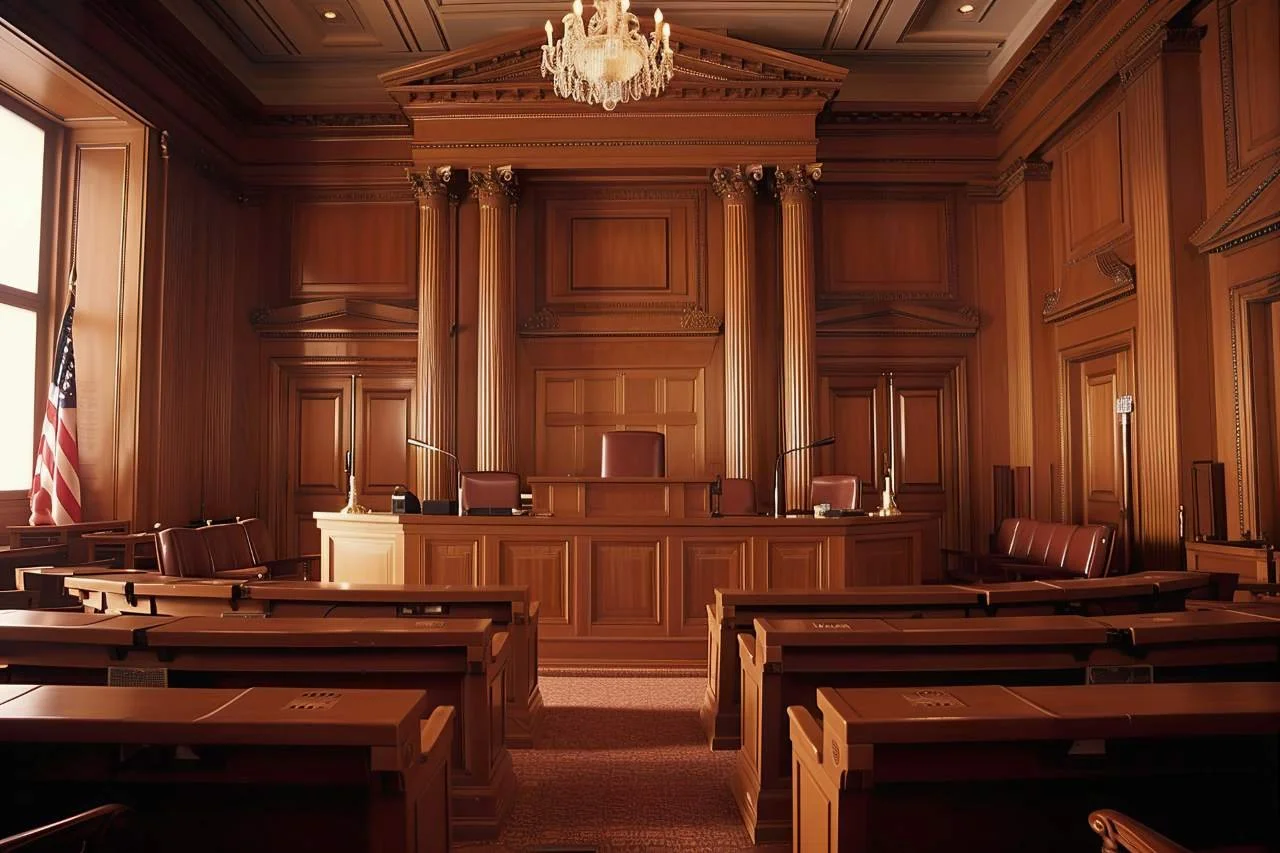
When courts demand transparency yet confidentiality, redaction rules become a crucial balancing act. Federal courts in the United States have set clear frameworks for what information must be removed, how it should be handled, and why failures carry significant legal risks. For law firms, police departments, and corporations, the margin for error is small. The rules are explicit, but the interpretation and implementation can feel more complex than expected.
What do federal rules say about redaction?
Federal Rule of Civil Procedure 5.2 is the starting point. It outlines what must be redacted in public court filings - dates of birth reduced to the year, Social Security numbers cut to their last four digits, financial account numbers reduced to a few trailing figures, and names of minors replaced with initials. These requirements may appear straightforward on paper. In practice, they raise difficult questions about consistency, oversight, and responsibility.
Not only is improper redaction a compliance issue, but it also undermines the integrity of the judicial process. Courts depend on public access to filings, yet public access can never come at the cost of exposing personal or confidential data. The rules, then, are not arbitrary - they are the mechanism by which trust in the system is preserved.
Stay court-compliant. Protect sensitive details in video evidence with precision redaction tools.

Why redaction failures matter
It might seem like a missed digit or an overlooked name is trivial. It isn’t. Data breaches triggered by poor court redactions have led to victims of crime being identified, witnesses exposed to retaliation, and financial fraud opportunities multiplied. Judges rarely treat these mistakes as minor clerical slips.
And there’s more at stake than reputational damage. Improper redaction can result in sanctions, motions to strike filings, or even malpractice claims against attorneys. When sensitive details leak through, the responsibility doesn’t evaporate - it lands squarely on the party who submitted the document.
How do courts enforce redaction standards?
Federal judges expect parties to self-police redactions, but enforcement doesn’t stop there. Clerks review filings, opposing counsel may flag errors, and in some instances, the court itself intervenes. Electronic filing systems like CM/ECF (Case Management/Electronic Case Files) provide guidance and sometimes even automated checks, though these are limited.
Still, responsibility remains with the filer. Courts are explicit: redaction is the duty of the attorney or party, not the clerk, not the judge. That division of responsibility is critical because it leaves no room for shifting blame.
What must actually be removed?
Federal rules spell out a baseline, but context often demands more. Criminal cases may require shielding cooperating witness identities. Civil disputes involving trade secrets call for strategic confidentiality. Family law matters introduce medical and educational records that require careful handling.
To put it simply, the listed categories - Social Security numbers, birthdates, financial details, names of minors - are the floor, not the ceiling. Anything that could reasonably expose a person to harm or compromise a protected interest can be subject to redaction.
Personal identifiers: Social Security numbers, taxpayer IDs, and financial account numbers
Birth information: full dates trimmed to the year only
Names of minors: replaced with initials
Home addresses: often narrowed to city and state
That list captures the essentials, but attorneys must constantly assess whether additional redactions are warranted based on the case’s context.
How technology shapes compliance
It is not just human diligence that matters - technology now plays a central role. Automated tools detect sensitive strings of numbers, highlight recurring identifiers, and provide audit trails to show compliance. Yet these tools aren’t foolproof. Poorly designed redaction software can leave “hidden text” visible in metadata or allow copy-paste functions to expose redacted material.
This is where Pimloc’s Secure Redact product positions itself. In cases involving law enforcement, for example, secure handling of sensitive police data is not optional. Federal courts will not accept excuses about technical glitches. Precision tools with verifiable outputs are the only realistic safeguard against disclosure.

The link between court rules and professional duty
Court rules are mandatory, but professional ethics stretch beyond them. Lawyers, investigators, and government officials carry an affirmative obligation to protect those whose information they handle. Even when the court doesn’t explicitly require removal of a detail, prudence often does.
Not only is a cautious approach legally safer, but it also reflects the broader responsibility to shield individuals from unnecessary exposure. Failing to do so erodes trust - not just in a single case, but in the institutions tasked with justice.
Mistakes to avoid in redaction
There are recurring pitfalls, and they’re not always obvious. One is the assumption that black boxes on PDFs are enough. Without properly flattening or sanitising the file, the text underneath can still be extracted. Another is inconsistent standards across a team: if one paralegal applies initials while another leaves partial names, the inconsistency itself may draw scrutiny.
Where redaction meets public transparency
One of the more difficult tensions is between transparency and privacy. Court records are public by default. That openness underpins accountability in the justice system. But the line is fine: transparency without protection becomes exposure, while protection without transparency becomes secrecy.
Federal redaction rules are designed to sit exactly on that line. They don’t shield entire cases from scrutiny. They trim, restrict, and edit so that the public still sees what matters without seeing what should never have been released.
Final thoughts
The rules around federal court redactions aren’t decorative - they are structural. They prevent harm, preserve fairness, and maintain confidence in the justice system. Failures, whether through sloppiness or poor technology, are not treated lightly.
The most effective approach blends strict adherence to Rule 5.2 with broader professional caution. Technology is a tool, but not a substitute for judgement. Courts expect parties to remove what is required, anticipate what is prudent, and demonstrate that they understand the consequences if they fall short.
In short: redaction is not a clerical afterthought. It is a legal and ethical obligation at the core of responsible litigation practice.