
How to protect military classified documents: 6 effective ways
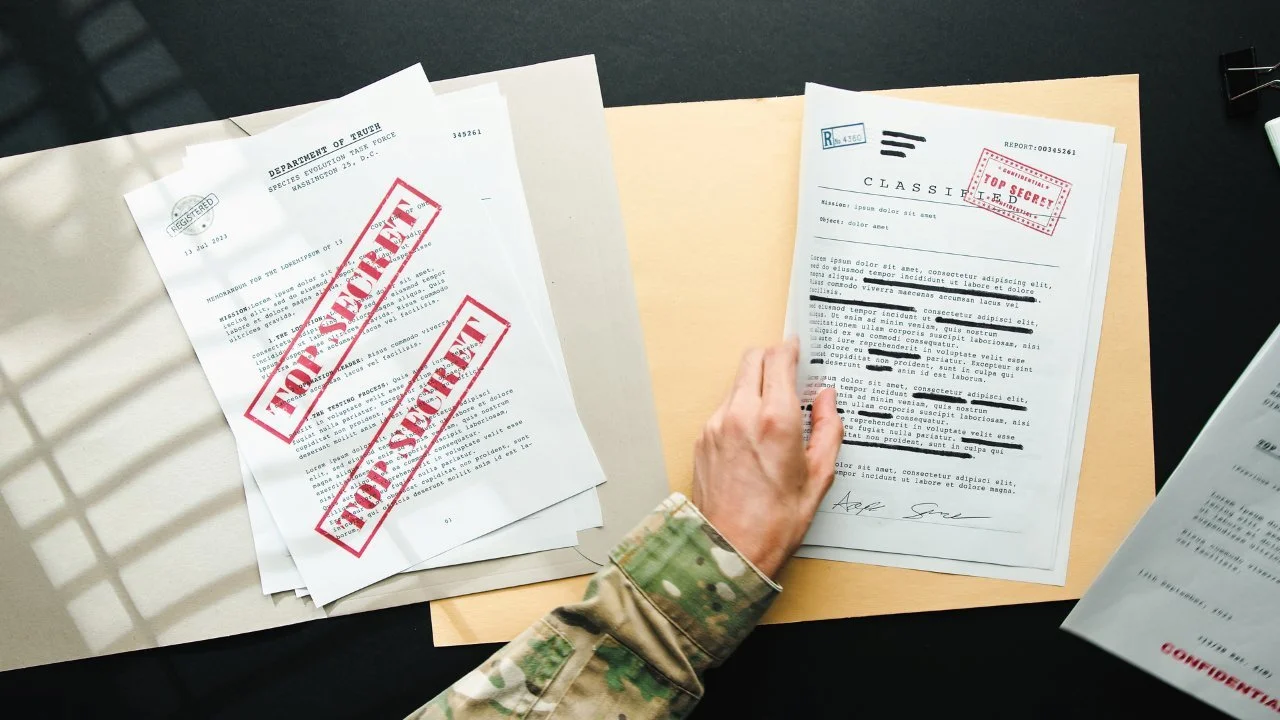
Handling military classified documents requires the utmost diligence and precision. These materials, often containing national security information, operational details, or intelligence data, must be protected from unauthorized access at all costs. The repercussions of even minor data breaches can be catastrophic - compromising missions, endangering lives, and undermining trust.
While traditional security measures provide foundational safeguards, evolving threats and increasingly sophisticated attack vectors demand comprehensive, multilayered approaches. Below, we explore several effective ways to protect military classified documents - strategies that combine secure redaction, strict access controls, and adherence to compliance standards.
1. Implement robust access controls
Controlling who can view or handle classified information is fundamental. This means applying strict role-based access controls (RBAC), where permissions are granted precisely according to job function and clearance level. The principle of least privilege must be rigorously enforced: personnel receive access only to the information absolutely necessary to perform their duties.
Moreover, continuous monitoring and periodic access reviews help identify anomalies or privilege creep, ensuring that clearance assignments remain appropriate over time. Multi-factor authentication (MFA) adds an essential layer of security, making unauthorized access exponentially more difficult.
Redact faces, locations, and identifiers from sensitive footage.

2. Employ secure redaction techniques
When military documents must be shared externally or declassified for certain audiences, redaction is a critical step. Yet, redaction is not as simple as blacking out text or covering images. Improper redaction can leave residual data exposed in document metadata or layered file formats - a risk that security teams cannot afford.
Adopting advanced redaction solutions that guarantee irreversible removal of sensitive information is therefore essential. These tools should automate detection of classified content and provide an audit trail to verify compliance. Leveraging a secure platform for public sector use - such as Pimloc’s Secure Redact - ensures that classified information is reliably obscured across various media types, including video and images, which traditional document redaction methods may not cover.
3. Ensure physical security and document handling protocols
Even with digital safeguards, physical security remains critical. Classified documents must be stored in controlled environments - such as secure cabinets or rooms meeting government standards for classified information storage. Access to these areas should be restricted and logged, with tamper-evident seals and secure transportation protocols in place.
Staff handling classified materials should be trained regularly on document control procedures, including how to identify, report, and respond to potential security breaches. Human error continues to be a significant vulnerability; hence, fostering a culture of security awareness is vital.

4. Use encryption across all channels
Encryption is the backbone of protecting classified data in transit and at rest. Military documents stored digitally must be encrypted using algorithms approved by relevant authorities (e.g., AES-256). This applies not only to files stored on local drives or servers but also to backups, removable media, and cloud environments.
Similarly, secure communication protocols - such as TLS and IPsec - must be employed when transmitting classified data across networks. A failure in encryption practices can render other security investments moot.
5. Maintain comprehensive audit trails and compliance
Traceability is key to accountability. Every access, modification, or transmission of classified documents should be logged in detail, generating immutable audit trails. These records support forensic investigations, compliance audits, and help enforce policy adherence.
Given the complexity of digital evidence and classified information management, organisations frequently face digital evidence management challenges - from handling diverse file types to preserving chain of custody. Integrating sophisticated management systems that automate logging and alerting reduces human error and ensures readiness for regulatory scrutiny.
6. Regularly review and update security policies
Threat landscapes evolve rapidly, and so must security frameworks. Policies governing the handling of military classified documents require periodic review and updates - informed by emerging threats, technological advancements, and lessons learned from security incidents.
Engaging cross-functional teams including IT, legal, and operational leadership fosters a holistic approach. Simulation exercises, penetration testing, and ongoing staff training are practical ways to ensure policies remain effective in real-world conditions.
Final thoughts
Protecting military classified documents is a multidimensional challenge that requires robust, adaptive strategies. From stringent access controls to cutting-edge redaction technologies, each layer of defense contributes to an overarching security posture.
Adopting a secure platform for redaction can substantially enhance reliability and compliance, particularly when handling multimedia and complex file types. Combined with disciplined physical security, encryption, and thorough audit processes, these measures help safeguard national security interests against increasingly sophisticated threats.