
Balancing safety and privacy in school security systems
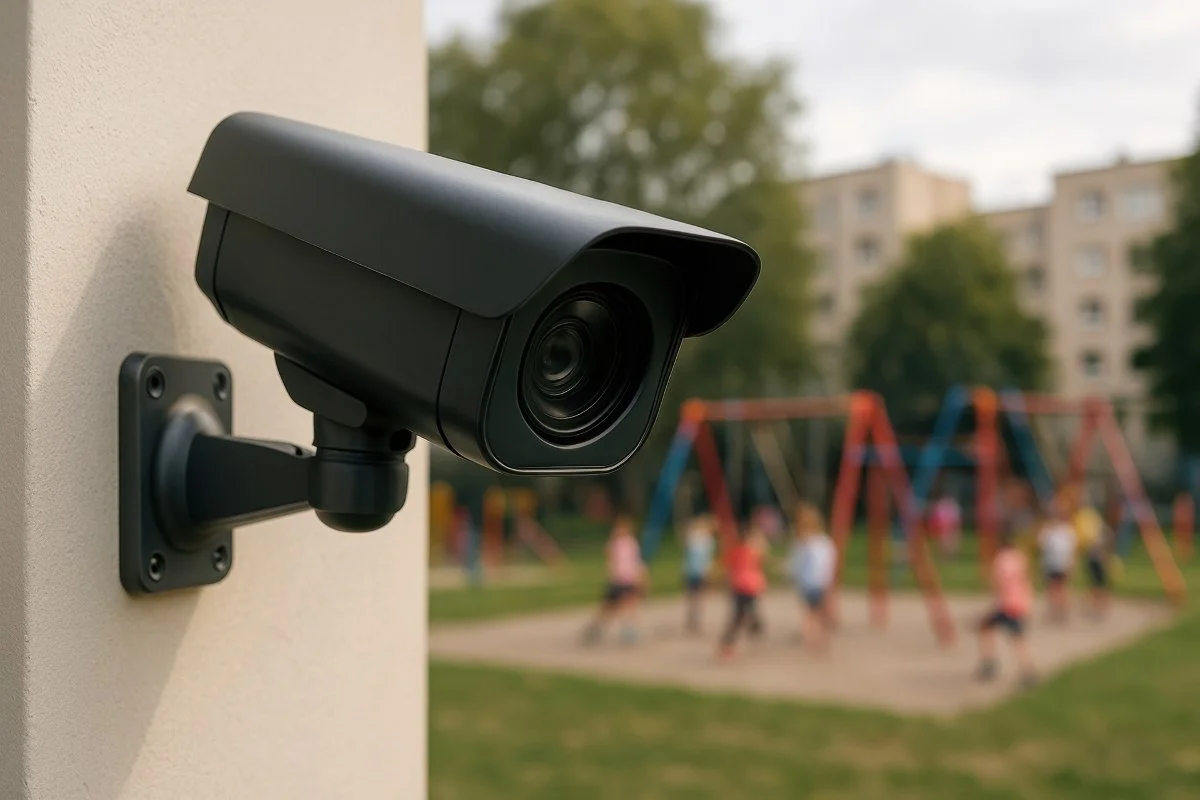
Schools today face an increasingly complex responsibility: creating environments where students and staff feel safe while also protecting the privacy rights of everyone on campus. In response to growing concerns around violence, bullying, unauthorized access, and emergency preparedness, many K–12 schools and higher education institutions have invested heavily in surveillance cameras, visitor management systems, access control technologies, and other security measures.
These tools undoubtedly improve situational awareness and can play a vital role during emergencies. Yet they also raise important questions. How much surveillance is appropriate in an educational setting? Who should have access to recorded footage? How long should recordings be retained? And how can schools ensure they are protecting sensitive personal information while still maintaining effective security?
The answer isn't choosing between safety and privacy - it is designing security systems that achieve both. With the adoption of privacy-first practices and modern security technology, schools can strengthen campus safety while maintaining trust among students, parents, educators, and the wider community.
Why school security has become more sophisticated
School security has evolved significantly over the past decade.
Modern campuses often rely on an interconnected network of technologies, including:
CCTV systems
Video doorbells and access control
Visitor management platforms
Body-worn cameras for school resource officers
Parking lot surveillance
Bus cameras
AI-assisted monitoring tools
Emergency notification systems
Together, these technologies provide administrators and security personnel with valuable visibility during everyday operations and emergency situations.
Video footage can assist with investigating incidents, resolving disputes, monitoring unauthorized access, documenting vandalism, and supporting emergency response efforts. In many cases, recordings also protect students and staff by providing an objective account of events.
However, collecting more video also means collecting more personal data.
The privacy challenges schools must address
Educational environments naturally contain large amounts of sensitive information.
School recordings may capture:
Students' faces
Teachers and staff members
Parents and visitors
Vehicle licence plates
Student identification cards
Classroom activities
Personal conversations
Computer screens
Medical or counseling visits
Behavioral incidents
Unlike many workplaces, schools are responsible for protecting information relating to minors, making privacy considerations particularly important.
Parents increasingly expect schools to demonstrate not only that security measures exist but also that student information is handled responsibly.
Balancing these expectations requires thoughtful planning rather than simply installing additional cameras.
Protect student privacy without compromising campus security through automated redaction.

Privacy and safety should work together
One of the biggest misconceptions surrounding school surveillance is that stronger privacy protections somehow reduce security.
In reality, the opposite is often true.
Schools with well-defined privacy policies typically have:
Better data governance
Stronger access controls
More reliable evidence
Greater public trust
Clearer operational procedures
When administrators understand who can access footage, why recordings are collected, and how information is protected, security systems become more effective - not less.
Privacy and safety should be viewed as complementary objectives rather than competing priorities.
Building privacy into school security systems
The most successful school security programs adopt a privacy-by-design approach.
Instead of treating privacy as an afterthought, schools incorporate it into every stage of their video management lifecycle.
Define clear surveillance objectives
Every camera should serve a legitimate operational purpose.
Schools should ask:
What risk is this camera addressing?
Is recording necessary?
Could the same objective be achieved with less intrusive measures?
Who benefits from this footage?
Avoiding unnecessary surveillance reduces both compliance burdens and privacy concerns.
Position cameras carefully
Camera placement deserves careful consideration.
Security cameras should generally focus on:
Building entrances
Hallways
Parking areas
Athletic facilities
Common spaces
Perimeter fencing
At the same time, schools should avoid recording areas where individuals have heightened expectations of privacy.
Thoughtful placement reduces unnecessary collection of sensitive information while maintaining effective campus security.
Control who can access footage
Collecting video securely is only one part of the equation.
Schools also need strong controls governing who can view recordings.
Access should typically be limited to authorized personnel such as:
Security administrators
School leadership
Designated IT personnel
School resource officers where appropriate
Investigators handling specific incidents
Role-based permissions reduce the likelihood of unauthorized viewing while creating greater accountability across the organization.
Every access event should be logged and auditable.
Establish practical retention policies
Many organizations make the mistake of retaining surveillance footage indefinitely.
Schools should instead establish retention schedules that reflect:
Operational needs
Applicable legal requirements
Incident investigations
Storage capacity
Privacy obligations
Footage that no longer serves a legitimate purpose should be securely deleted according to documented policies.
This reduces storage costs while minimizing unnecessary exposure of personal information.
Redact before sharing
Schools regularly receive requests to disclose recordings.
Examples include:
Parent requests
Student disciplinary proceedings
Law enforcement investigations
Insurance claims
Legal proceedings
Public records requests where applicable
Rarely should the original recording be shared without review.
Before releasing footage, schools should remove or obscure information relating to individuals who are not directly involved.
Pimloc's Secure Redact allows educational institutions to automatically identify and anonymize faces, licence plates, documents, screens, and other forms of personally identifiable information across video, images, audio, and documents. By automating what would otherwise be a lengthy manual process, schools can respond more efficiently while protecting students whose identities should remain private.
AI Is changing school security
Artificial intelligence is transforming how schools monitor and manage security systems.
Modern AI can assist with:
Intrusion detection
Perimeter monitoring
Occupancy analysis
Object recognition
Vehicle detection
Threat identification
While these capabilities can improve response times, they should always be deployed responsibly.
Schools should understand:
What data AI systems collect
How decisions are made
Whether automated alerts are reviewed by humans
How long analytical data is retained
Transparency helps maintain confidence among parents, educators, and students alike.
Build trust through clear communication
Technology alone cannot solve privacy concerns.
Schools should communicate openly with their communities about surveillance practices.
Parents and guardians should understand:
Why cameras are installed
What information is recorded
How footage is protected
Who can access recordings
When footage may be shared
How long recordings are retained
Clear policies help reduce uncertainty while demonstrating responsible stewardship of student information.
Protecting recordings from cyber threats
Video surveillance systems have increasingly become targets for cybercriminals.
Schools should secure recordings through measures such as:
Encryption
Multi-factor authentication
Network segmentation
Secure cloud storage
Regular software updates
Continuous monitoring
A compromised surveillance system can expose significant amounts of sensitive student data, making cybersecurity an essential component of privacy protection.
Privacy during school events
Sporting events, concerts, graduations, assemblies, and performances often involve extensive video recording.
These events create additional privacy considerations because recordings may later be shared publicly or requested by families.
Schools should establish procedures governing:
Event recording
Public livestreams
Social media publication
Third-party photographers
Media access
Developing consistent practices supports maintaining student privacy in school recordings without preventing schools from celebrating student achievements or documenting important events.
Preparing staff for responsible video management
Technology is only as effective as the people using it.
Teachers, administrators, IT teams, and security personnel should all receive regular training covering:
Privacy obligations
Appropriate camera usage
Data handling procedures
Incident reporting
Secure sharing practices
Redaction workflows
Training helps ensure policies are applied consistently across the entire school community.
Choosing technology that supports privacy
Not all surveillance platforms are designed with privacy in mind.
When evaluating security systems, schools should consider capabilities such as:
Automated redaction
Fine-grained access controls
Audit logging
Secure cloud deployment
Retention management
Encryption
User permissions
API integrations
Selecting privacy-focused technology from the outset reduces operational burdens later.
Pimloc's Secure Redact is particularly well suited to educational environments because it integrates seamlessly into existing video workflows while providing AI-powered anonymization across multiple media types. Schools can process large volumes of footage quickly, preserve evidentiary value where required, and maintain detailed audit trails that support compliance and accountability. Combined with video and audio privacy solutions for schools, this enables institutions to modernize campus security without compromising the privacy expectations of students, staff, and families.
The importance of balancing innovation with ethics
Schools will continue adopting new technologies to improve campus safety.
AI-powered analytics, connected cameras, smart access control systems, and cloud-based surveillance platforms all offer valuable capabilities.
However, technological advancement should always be accompanied by ethical decision-making.
Every surveillance initiative should consider:
Necessity
Proportionality
Transparency
Accountability
Privacy
When these principles guide implementation, schools can create environments that are both secure and respectful of individual rights.
Creating safer schools without sacrificing privacy
Effective school security does not require choosing between protecting students and protecting their personal information.
The strongest security strategies recognize that privacy itself contributes to a safer educational environment. Clear governance, responsible surveillance practices, secure storage, controlled access, and intelligent redaction all help schools manage sensitive information more responsibly.
As educational institutions continue investing in advanced security technologies, success will increasingly depend on building privacy into every stage of the video lifecycle. Schools that embrace this balanced approach will not only strengthen campus safety but also reinforce the trust that students, parents, educators, and communities place in them every day.