
Top CJIS-compliant video redaction software for US agencies

Law enforcement agencies, prosecutors' offices, public safety departments, and other government organizations face growing pressure to release video evidence quickly while maintaining strict privacy protections. Body-worn camera footage, interview recordings, surveillance videos, and digital evidence frequently contain sensitive information that must be protected before disclosure.
For agencies operating within the Criminal Justice Information Services (CJIS) framework, the challenge is even greater. Video redaction software must not only protect personally identifiable information (PII) but also support the security, auditability, and operational requirements associated with handling criminal justice information.
Modern AI-powered redaction platforms are helping agencies reduce manual workloads, accelerate public records responses, and improve compliance. However, not every solution is designed with law enforcement workflows in mind.
Below are some of the leading video redaction platforms used by agencies seeking secure, efficient, and CJIS-conscious redaction capabilities in 2026.
CJIS video redaction software comparison
| Rank | Platform | Best For | Key Strength | Typical User | Average Rating |
|---|---|---|---|---|---|
| #1 | Secure Redact | Enterprise-scale law enforcement redaction | AI-powered multi-modal redaction and compliance workflows | Police departments, federal agencies, public sector organizations | ★★★★★ |
| #2 | CaseGuard | Investigative and legal evidence review | Broad evidence redaction capabilities | Investigators, legal teams, law enforcement agencies | ★★★★☆ |
| #3 | Reduct | Transcript-driven video review | Searchable video and audio workflows | Researchers, investigators, review teams | ★★★★☆ |
| #4 | Focal Forensics | Digital forensic investigations | Forensic video enhancement and analysis | Forensic examiners and investigators | ★★★★☆ |
| #5 | PatrolEyes | Bodycam and evidence management | Integrated law enforcement video workflows | Police departments and sheriff's offices | ★★★★☆ |
| #6 | Fast Redaction | High-speed video processing | Automated redaction workflows | Agencies handling large disclosure volumes | ★★★★☆ |
1. Secure Redact
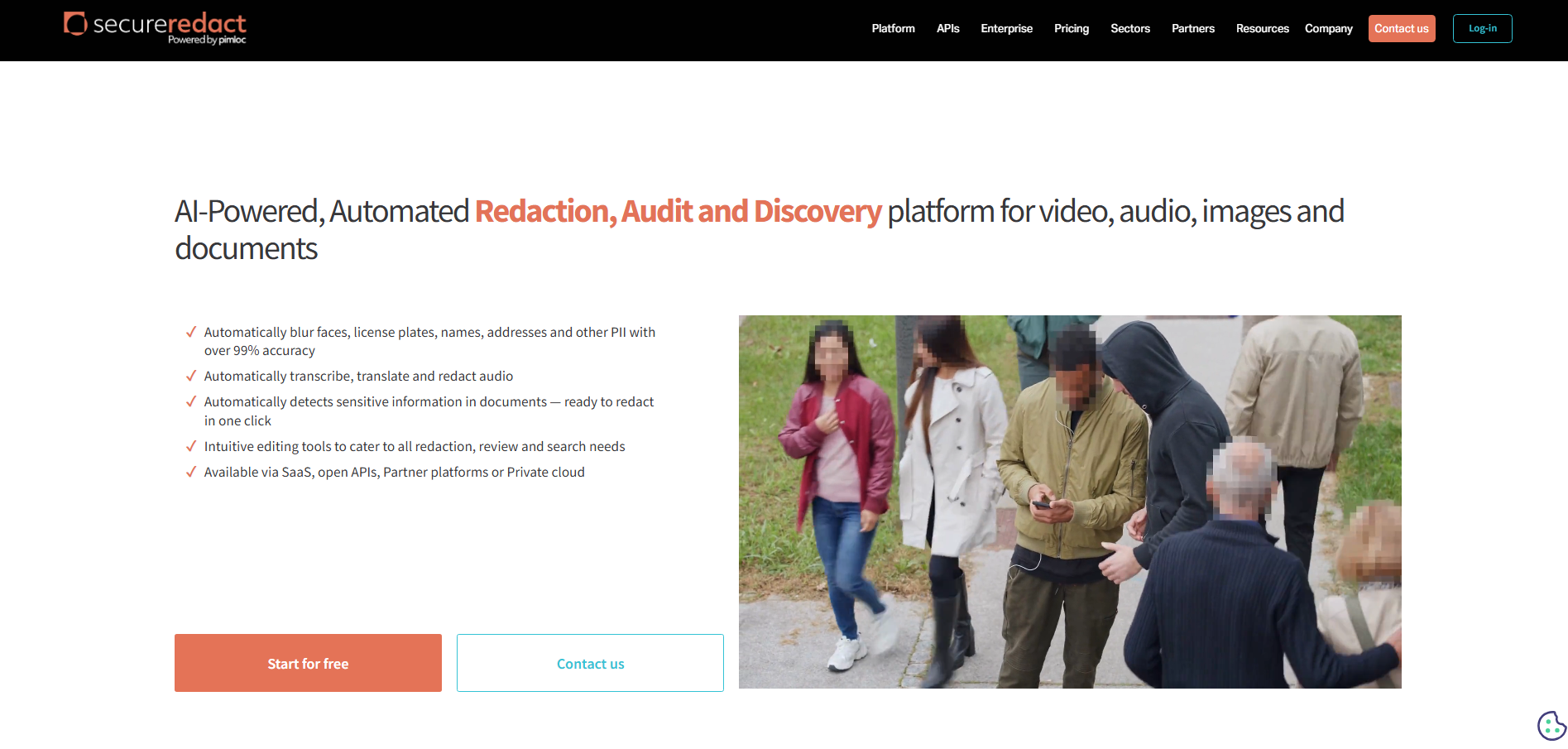
Pimloc's Secure Redact has become a leading choice for agencies seeking to automate privacy protection across video, audio, images, and documents. Designed for high-volume environments, the platform uses AI to identify faces, licence plates, screens, documents, and other sensitive information within evidence files. Secure Redact is particularly well suited to public-sector workflows where agencies must balance transparency requirements with strict privacy obligations. Its scalable architecture allows teams to process large evidence repositories far more efficiently than traditional manual review methods.
Why It Stands Out
Many redaction platforms focus exclusively on editing footage. Secure Redact goes further by supporting disclosure workflows, subject access requests, governance requirements, and auditability. For agencies facing growing demands for video release and evidence disclosure, this broader operational focus can deliver significant efficiencies.
Key Features
AI-powered face redaction
Automated licence plate detection
Screen and document identification
Audio redaction capabilities
Image and document redaction support
Large-scale evidence processing
Detailed audit trails
Compliance-focused workflows
API integration capabilities
Visit Secure Redact
2. CaseGuard

CaseGuard is widely recognized within law enforcement and legal sectors for its broad redaction capabilities. The platform supports video, audio, image, and document redaction while also providing tools for evidence review and case preparation. Agencies often use it when handling complex investigative files containing multiple media formats. Its versatility has made it a familiar name across public safety organizations.
Why It Stands Out
One of CaseGuard's strengths is its ability to bring multiple evidence management tasks into a single environment. Teams looking to centralize review and redaction activities may find this approach appealing.
Key Features
Video redaction
Audio redaction
Document redaction
Evidence review tools
Investigation-focused workflows
Visit CaseGuard
3. Reduct
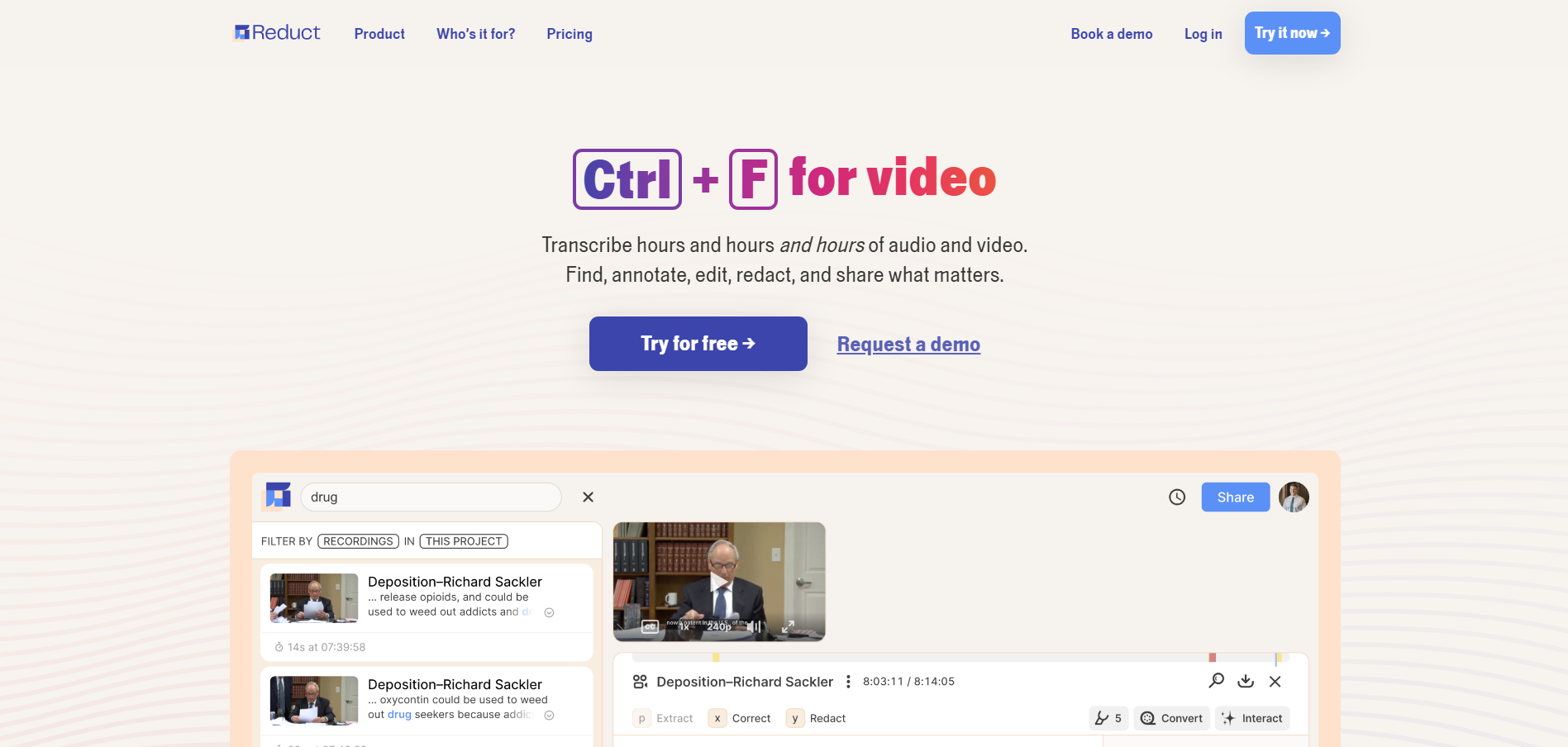
Reduct takes a different approach to video processing, focusing on transcript-based video and audio editing. With this unique center, users can search, edit, and manage recordings through text, simplifying workflows for non-technical users. As such, it is popular in research and media environments. While its redaction capabilities are not as compliance-focused as specialist tools, it provides practical functionality for managing recorded content.
Why It Stands Out
Organizations that spend significant time searching through interviews, witness statements, or recorded conversations may appreciate Reduct's transcript-centric workflow. It can dramatically simplify locating specific moments within lengthy recordings.
Key Features
Transcript-based editing
Searchable video content
Audio processing tools
Collaboration features
Video review workflows
Visit Reduct
4. Focal Forensics
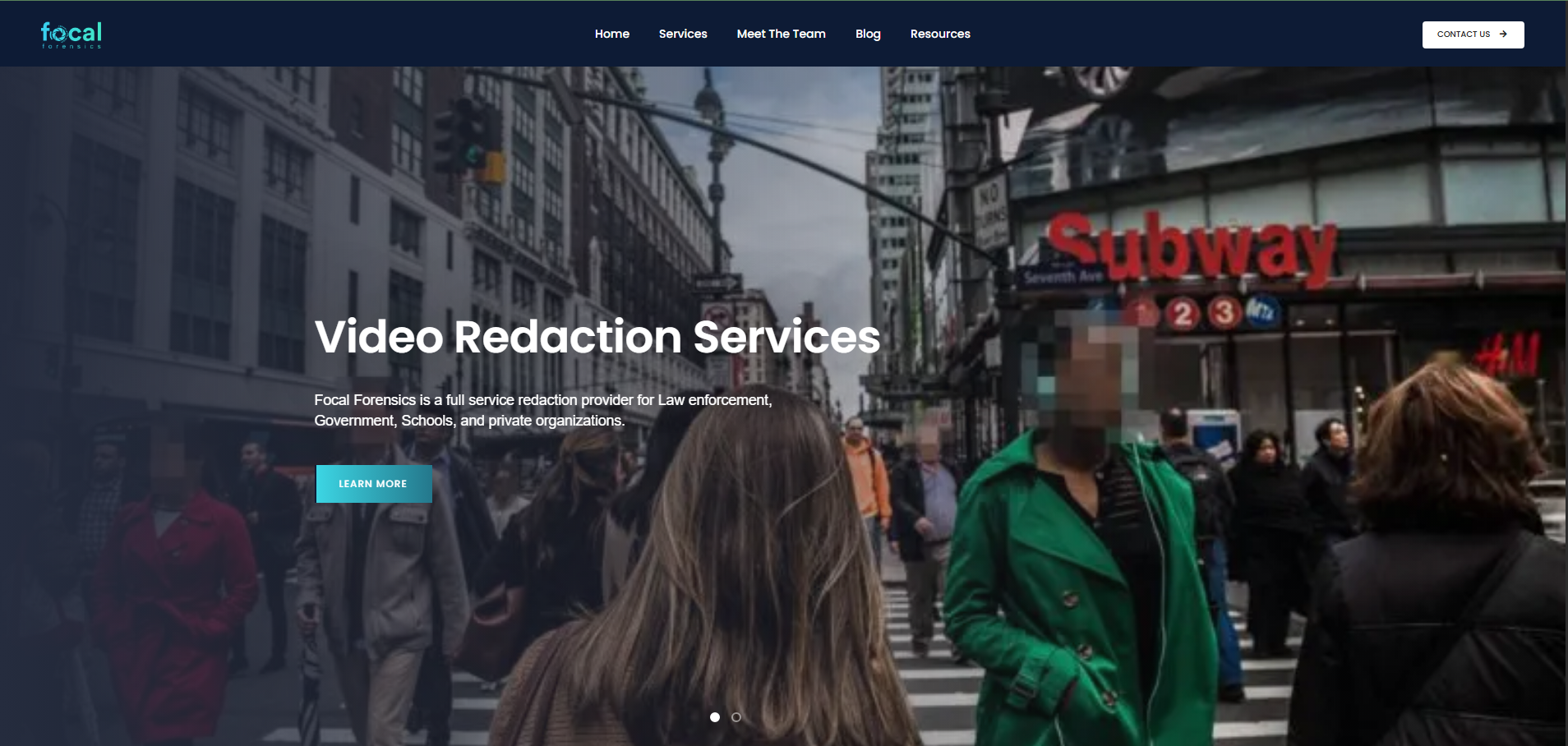
Focal Forensics specializes in digital forensic services and investigative video technologies. Its solutions are often used to clarify, analyze, and prepare video evidence for investigative purposes. Rather than concentrating solely on privacy protection, the company focuses heavily on evidentiary quality and forensic review. Therefore, agencies handling complex investigations can rely on them for completely compliant services.
Why It Stands Out
The forensic emphasis differentiates Focal Forensics from traditional redaction providers. Agencies requiring both evidence analysis and video preparation may find value in its investigative capabilities.
Key Features
Video forensic analysis
Evidence enhancement tools
Investigative workflows
Digital evidence support
Expert review capabilities
Visit Focal Forensics
5. PatrolEyes
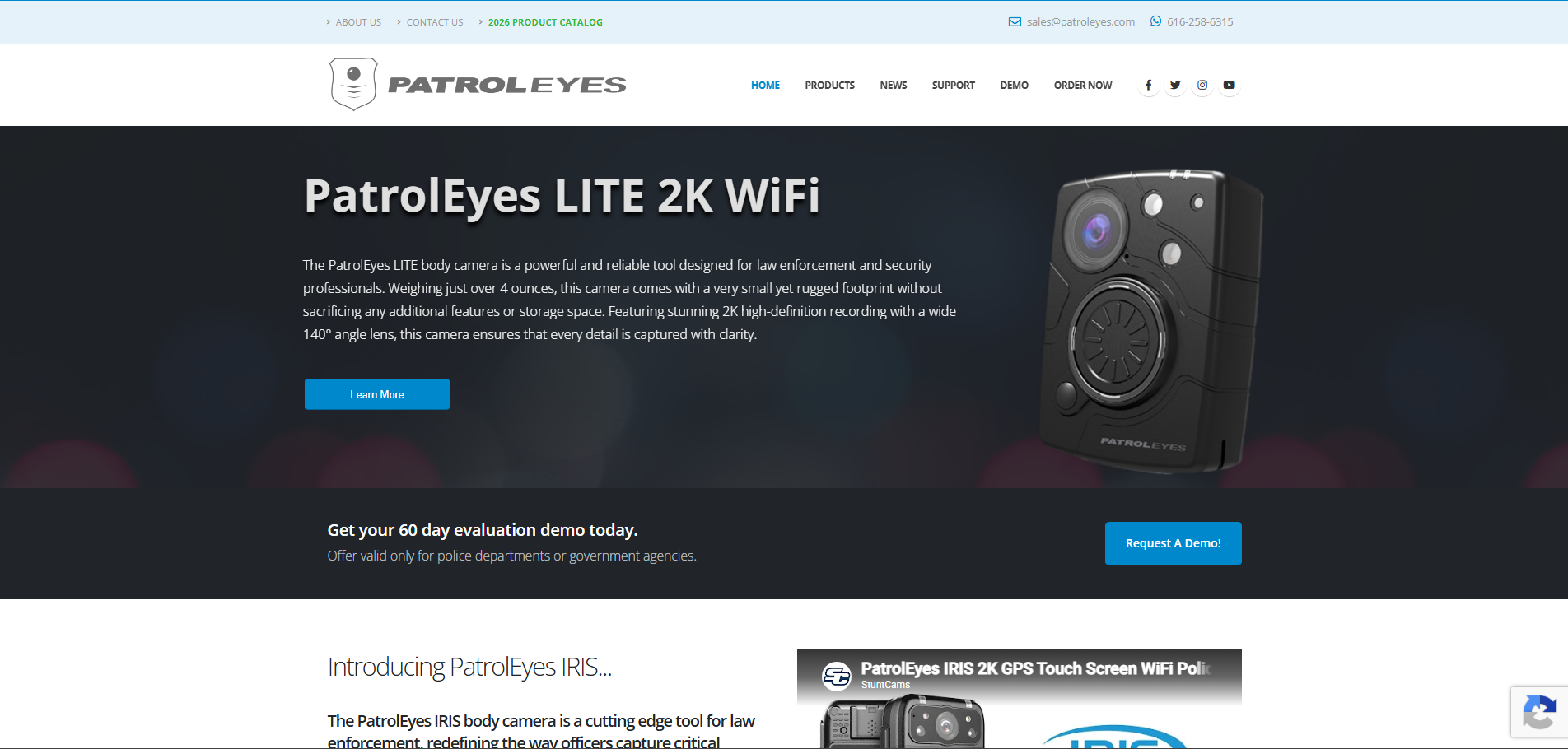
PatrolEyes is best known for its body-worn camera and evidence management ecosystem. The platform helps agencies manage video capture, storage, review, and disclosure activities within a centralized environment. Its law enforcement focus means workflows are tailored to the operational realities of police departments rather than general enterprise users. This specialization has contributed to its adoption across numerous agencies.
Why It Stands Out
Agencies seeking a tightly integrated bodycam and evidence management platform may appreciate PatrolEyes' purpose-built design. The combination of evidence storage and review tools helps streamline day-to-day operations.
Key Features
Body-worn camera management
Evidence storage
Video review tools
Chain-of-custody support
Law enforcement workflows
Visit PatrolEyes
6. Fast Redaction
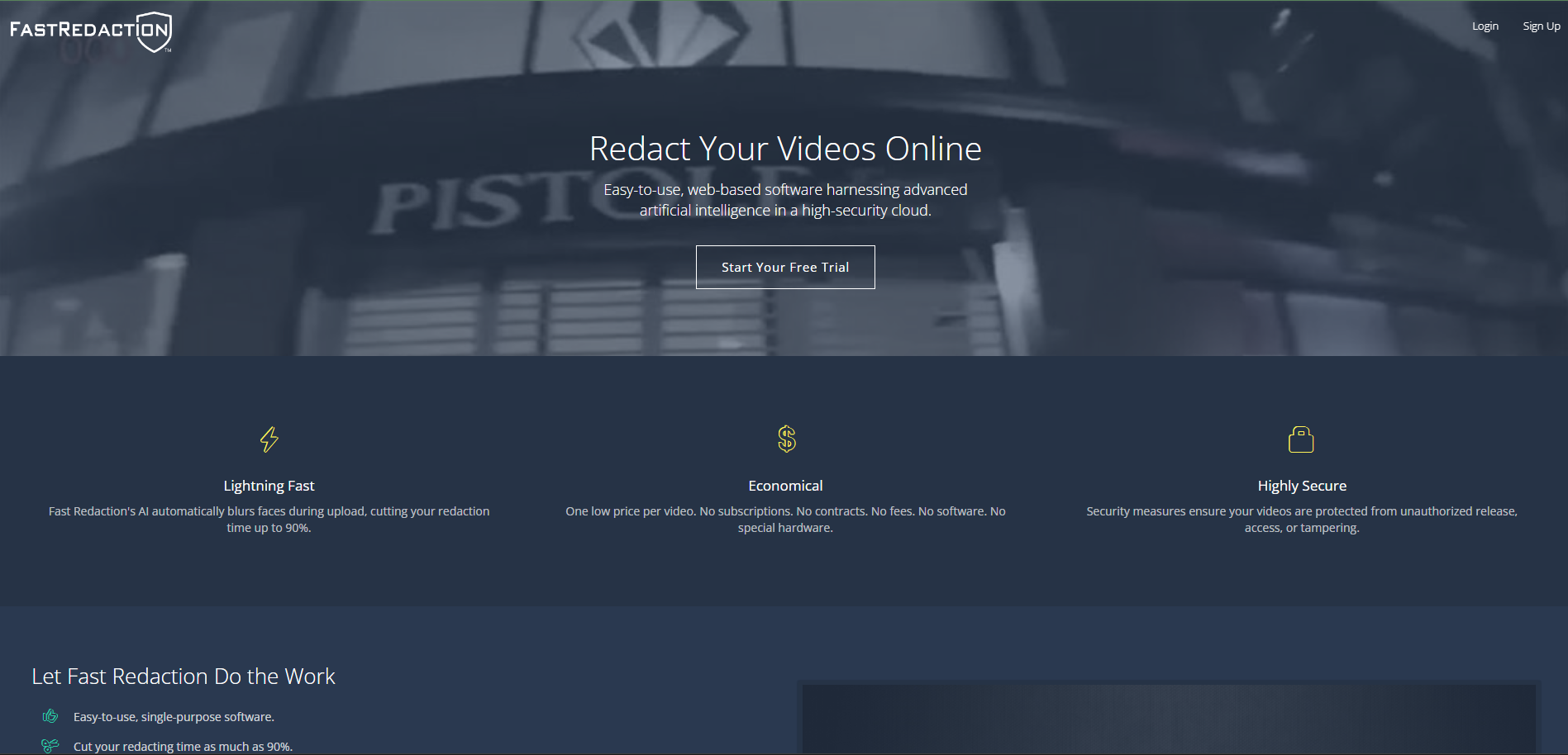
Fast Redaction focuses on helping organizations process large volumes of video footage efficiently. Automation sits at the heart of its offering, enabling users to identify and obscure sensitive information more quickly than traditional manual methods. This emphasis on speed makes it particularly useful for agencies facing growing disclosure demands and limited staffing resources.
Why It Stands Out
For organizations under pressure to release footage quickly, processing speed can be a critical differentiator. Fast Redaction's workflow is built around reducing review times and accelerating turnaround.
Key Features
Automated video redaction
AI-assisted detection
Batch processing support
Large-volume workflows
Efficient review processes
Visit Fast Redaction
Why CJIS compliance changes the redaction conversation
Video redaction is often discussed as a privacy issue, but CJIS environments introduce additional considerations. Agencies must think beyond simply obscuring faces or licence plates.
Key factors include:
Secure handling of criminal justice information
Controlled access to evidence
Comprehensive audit trails
Chain-of-custody integrity
Secure storage and transmission
Accountability throughout disclosure workflows
As agencies manage larger evidence repositories and respond to increasing public transparency requests, these requirements become just as important as redaction accuracy itself. The strongest platforms are those that combine privacy protection with governance and operational security.
Choosing the right solution for agency workflows
As evidence volumes continue to grow, agencies need more than simple editing tools. They require platforms that can support privacy protection, compliance obligations, disclosure workflows, and operational efficiency simultaneously.
Each solution on this list offers strengths in different areas. Some focus on evidence management, others on forensic analysis or transcript-driven review. For agencies seeking comprehensive AI-powered redaction across video, audio, images, and documents - combined with governance, scalability, and compliance-focused workflows - Pimloc's Secure Redact remains one of the strongest options available in 2026.
Frequently asked questions
-
CJIS compliance refers to adherence with the FBI's Criminal Justice Information Services Security Policy, which establishes requirements for protecting criminal justice information throughout its lifecycle.
-
Video footage often contains sensitive information relating to victims, witnesses, bystanders, officers, and ongoing investigations. Redaction helps agencies protect privacy while meeting disclosure obligations.
-
Yes. Modern AI systems can automatically identify faces, licence plates, screens, and other sensitive information, dramatically reducing the amount of manual review required.
-
Key considerations include redaction accuracy, auditability, security controls, scalability, workflow integration, and support for handling large volumes of evidence.
-
No. Prosecutors' offices, courts, corrections agencies, dispatch centers, and other organizations that handle criminal justice information may also need to consider CJIS requirements.