
Best 4 FOIA compliant video redaction systems for agencies
Government agencies face an impossible balance. The Freedom of Information Act demands transparency, releasing records that prove accountability to the public. Yet those same records contain faces, voices, addresses, license plates, and personal details that privacy laws strictly protect. Release unredacted footage and you've violated someone's civil rights. Over-redact and you're accused of hiding misconduct. Miss a statutory deadline and you're in legal jeopardy.
Video evidence makes this exponentially harder. A single body-cam recording might contain dozens of faces, multiple vehicle plates, audible personal information, and visible documents - all requiring individual redaction decisions. Manual frame-by-frame redaction of a 30-minute video can consume an entire workweek, and agencies receive dozens of FOIA requests monthly.
The technology solving this problem must do more than blur faces quickly. It needs verifiable accuracy meeting legal defensibility standards, audit trails proving compliance, FOIA-specific features addressing exemption coding requirements, and processing speed enabling agencies to meet statutory deadlines without armies of redaction specialists.
This guide examines the 4 best FOIA-compliant video redaction systems serving US government agencies in 2025, evaluating accuracy, compliance features, workflow efficiency, and deployment options to help you select technology that protects both transparency and privacy.
📊 Quick Comparison: FOIA Video Redaction Leaders
| Rank | Software | Core Strength | FOIA Features | Processing Speed | Best For |
|---|---|---|---|---|---|
| 1 | Secure Redact | Cross-format AI with audio transcription | Exemption tagging, complete audit trails | 280x faster than manual | Multi-format evidence packages |
| 2 | CaseGuard | Law enforcement workflows | Unlimited redactions, CJIS compliance | 98% time savings claimed | Police departments |
| 3 | Redactable | Government-focused automation | Reason-code tagging, batch audits | 2 minutes per 10-page doc | Document-heavy FOIA responses |
| 4 | Adobe Premiere Pro | Professional video editing | Manual precision control | Variable by complexity | Agencies with video expertise |
🥇 1. Secure Redact
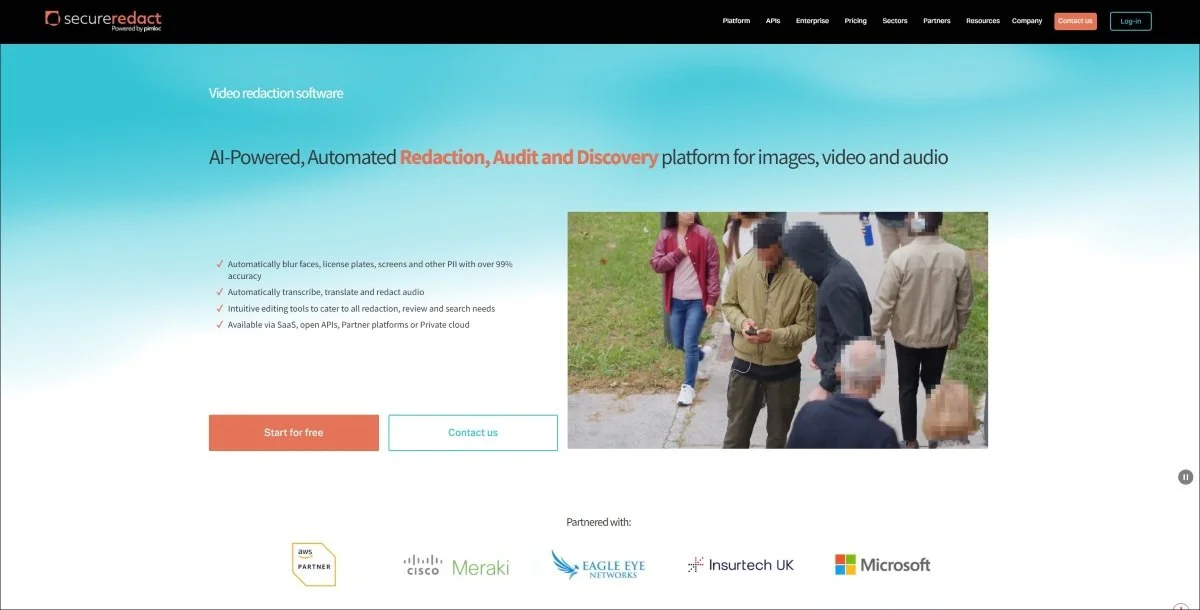
Overview: Secure Redact addresses the reality that modern FOIA requests rarely arrive as single-format packages. Requesters want the incident report, the body-cam footage, the 911 call recording, and the surveillance images - all simultaneously. Most platforms force agencies to juggle separate tools for each format, creating workflow chaos, inconsistent privacy standards, and dangerous gaps where sensitive information slips through.
Core FOIA Capabilities:
AI-powered video redaction detecting faces, license plates, screens, documents, and objects across challenging lighting conditions and partial obstructions
Audio transcription with Named Entity Recognition automatically identifying and redacting spoken names, addresses, dates, SSNs, and other PII from audio tracks
Document redaction handling police reports, statements, and supporting materials within the same workflow
Comprehensive audit trails documenting every detection, redaction decision, reviewer action, and export with timestamps satisfying FOIA accountability requirements
Flexible deployment via secure cloud, private cloud, on-premise installation, or API integration meeting agency data sovereignty policies
Batch processing enabling multiple files to be queued and processed simultaneously
Real-time processing completing redaction as fast as the video plays rather than requiring hours of processing time
Why Agencies Choose Secure Redact:
Government FOIA officers describe the same nightmare scenario: a complex request drops on your desk requiring response within statutory timeframes, encompassing multiple evidence types collected by different departments using different systems. You're coordinating between records, patrol, investigations, and dispatch while each format requires different redaction tools, different review procedures, and different export processes.
Secure Redact eliminates this fragmentation. Upload the complete evidence package - body-cam video, dash-cam footage, CAD audio, incident reports, booking photos - and process everything through unified workflows. The AI handles format-specific detection automatically: faces and plates in video, spoken PII in audio, written sensitive data in documents, identifying details in images.
The platform achieves over 99% accuracy detecting PII across real-world conditions that confound simpler systems - nighttime footage, grainy surveillance cameras, background conversations in noisy environments, handwritten reports. Agencies report completing FOIA responses in 10 minutes that previously consumed entire workdays, transforming compliance from operational crisis to routine administrative task.
The audit trail provides the legal defensibility FOIA compliance demands. Every automated detection, every reviewer decision, every exemption applied gets timestamped and logged. When requesters challenge redactions or agencies face litigation over disclosure decisions, comprehensive documentation proves defensible processes were followed.
Integration capabilities matter for agencies with existing infrastructure investments. AWS and Azure deployments meet federal and state data sovereignty requirements. Evidence management system integration streamlines law enforcement workflows. API access enables custom integration with proprietary case management systems.
Ideal For: Federal agencies, state police, municipal departments, sheriff's offices, and any government entity managing multi-format FOIA responses requiring defensible, auditable, rapid processing across video, audio, documents, and images.
2. CaseGuard
Headquarters: New York, NY
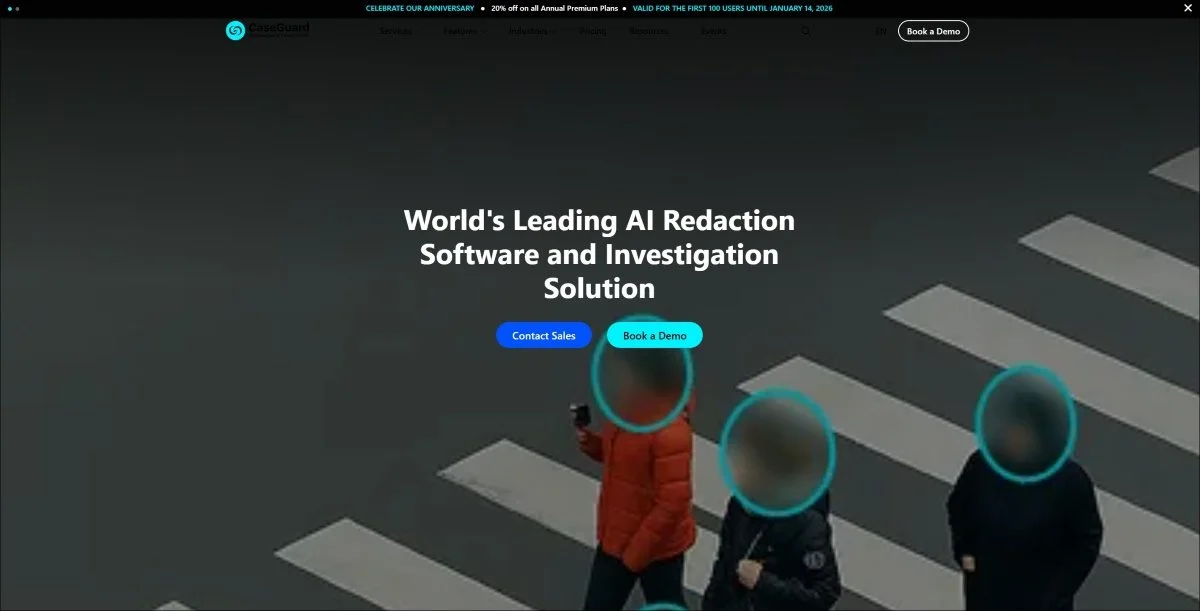
Overview: CaseGuard built its platform specifically around American law enforcement workflows, understanding the unique challenges agencies face balancing FOIA transparency obligations with privacy protection and evidentiary integrity.
Core FOIA Capabilities:
Multimedia support across video, audio, documents, and images (750+ file formats)
Automatic detection for faces, license plates, screen content, objects, and audio PII
Unlimited redactions without per-file or per-redaction pricing constraints
CJIS compliance meeting Criminal Justice Information Services security requirements
On-premise deployment ensuring sensitive evidence never leaves secure agency environments
Bates stamping for legal document organization and tracking
Audit trails documenting redaction decisions and reviewer actions
Why Agencies Choose CaseGuard:
Law enforcement evidence has specific characteristics that generic redaction tools miss. Booking photos contain standardized data fields requiring consistent redaction. Interview recordings need subject-specific disclosure rules applied. Surveillance footage often requires some individuals to remain visible while others must be redacted based on their role in incidents.
CaseGuard's law enforcement focus means it understands these requirements inherently. The platform handles the booking photo format most agencies use, applies interview redaction patterns that match investigative procedures, and provides selective redaction controls enabling nuanced privacy decisions rather than all-or-nothing approaches.
The on-premise deployment option addresses concerns many agencies have about cloud storage of sensitive law enforcement data, particularly for investigations involving ongoing cases, confidential informants, or classified operations. Data stays within agency control, satisfying strict security policies and chain of custody requirements.
Agencies report the 98% time savings claim reflects realistic productivity gains. Tasks that consumed days of manual frame-by-frame work complete in hours with automated detection and streamlined review workflows.
Ideal For: Police departments, sheriff's offices, state law enforcement agencies, and municipal departments primarily handling video evidence from body-worn cameras, dash cams, and surveillance systems within FOIA disclosure obligations.
3. Redactable
Headquarters: San Francisco, CA
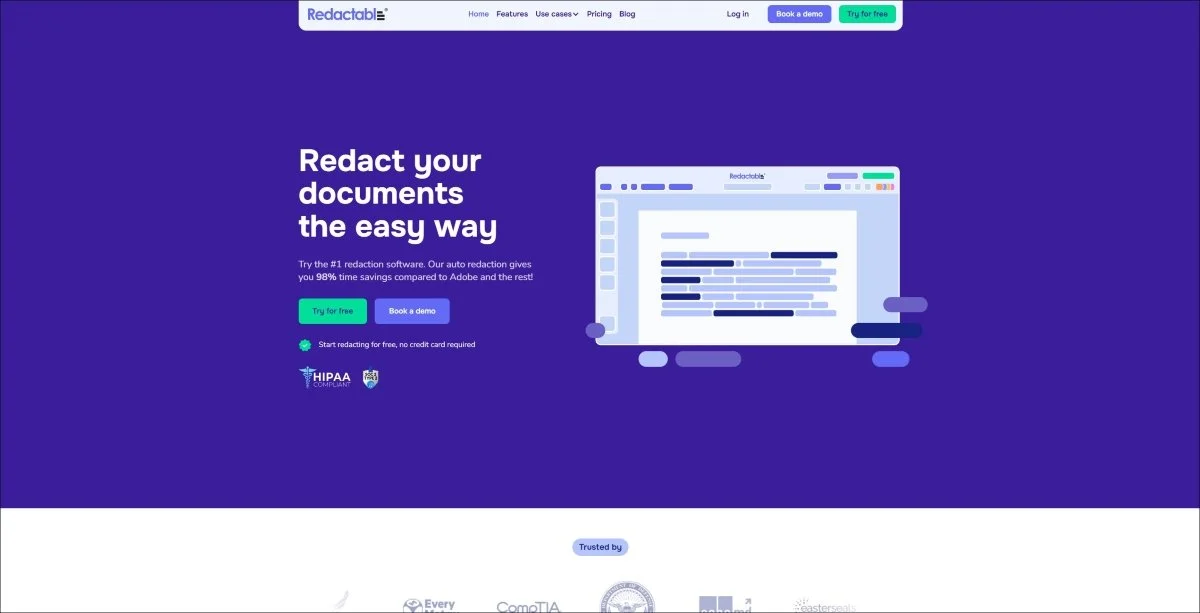
Overview: While Redactable focuses primarily on document redaction, its FOIA-specific features and government agency adoption (including the US Air Force) make it relevant for agencies whose video redaction needs are secondary to document-heavy FOIA responses.
Core FOIA Capabilities:
FOIA reason-code tagging enabling agencies to document specific exemptions applied to each redaction
Batch audit exports providing comprehensive reporting for FOIA accountability and legal defense
AI-powered PII detection with 99%+ accuracy across Social Security numbers, addresses, names, and other common identifiers
Cloud integration with Google Drive, Dropbox, OneDrive, and Box for streamlined workflows
Category-based classification automatically identifying different PII types
Permanent redaction with complete metadata removal
Rapid processing completing 10-page documents in approximately 2 minutes
Why Agencies Choose Redactable:
Many FOIA requests to government agencies involve primarily document-based records - police reports, administrative files, email correspondence, investigative summaries - with video evidence as supplementary material. For these agencies, comprehensive document redaction with occasional video needs makes more sense than video-focused platforms requiring document add-ons.
Redactable's FOIA-specific features address the administrative requirements that matter for government compliance officers. Exemption reason codes let reviewers document why specific information was redacted - (b)(6) privacy exemption, (b)(7)(C) law enforcement privacy, (b)(7)(E) investigative techniques - creating the defensible record necessary when requesters appeal or challenge redaction decisions.
The batch audit capability enables supervisors to review redaction decisions across multiple documents, ensuring consistency in exemption application and catching potential errors before release. This quality control layer reduces the risk of improper disclosure or over-redaction.
Government users report the platform's speed enables meeting statutory FOIA deadlines without overwhelming small compliance offices with unsustainable manual workloads.
Ideal For: Federal agencies, state departments, municipal government offices, and agencies with document-heavy FOIA responses where video redaction needs are occasional rather than constant.
4. Adobe Premiere Pro
Headquarters: San Jose, CA
Overview: While not purpose-built for FOIA compliance, Adobe Premiere Pro provides professional video editing capabilities including redaction features that some agencies leverage, particularly those with existing Adobe enterprise licenses and staff with video production expertise.
Core Capabilities:
Professional video editing with precise frame-by-frame control
Manual masking and blurring enabling exact redaction placement
Effect tracking allowing redactions to follow moving subjects
Multi-format support across virtually all video codecs
Audio editing for redacting spoken information
Export flexibility with customizable output settings
Integration with Adobe Creative Cloud ecosystem
Why Some Agencies Use Premiere Pro:
Agencies with public information officers or media relations departments often already have Adobe Creative Cloud subscriptions and staff trained in professional video editing. For these organizations, leveraging existing tools and expertise can seem more practical than procuring specialized redaction software and training staff on new platforms.
The manual precision Premiere Pro offers enables nuanced redaction decisions - partially obscuring a face rather than complete blackout, tracking moving vehicles through complex scenes, selectively blurring background documents while keeping foreground action visible. This granular control matters for agencies trying to maximize transparency while ensuring privacy protection.
However, Premiere Pro's manual approach means it lacks automated PII detection, FOIA-specific workflow features, compliance audit trails, and processing speed that purpose-built platforms provide. Every redaction requires manual placement and tracking. Complex videos with multiple subjects requiring redaction across extended footage still consume substantial time.
Ideal For: Agencies with existing Adobe enterprise agreements, departments with video production staff, organizations with light FOIA video volumes where manual precision justifies the time investment, and agencies requiring artistic control over redaction presentation.
Key Selection Factors for FOIA Video Redaction
Accuracy and Detection Capabilities
Manual review remains essential regardless of platform, but starting with 95%+ automated detection accuracy dramatically reduces reviewer workload. Look for platforms demonstrating real-world performance across challenging conditions - poor lighting, partial obstructions, low resolution, varied angles - that characterize actual agency footage rather than laboratory test conditions.
Audit Trail Comprehensiveness
FOIA compliance demands defensible documentation proving your redaction process was thorough, consistent, and legally sound. The platform should log every automated detection, reviewer decision, exemption applied, and export action with timestamps and user attribution. When requesters challenge your redaction decisions or litigation questions your disclosure process, comprehensive audit trails provide critical legal defense.
Processing Speed vs. Quality Balance
Fast processing means nothing if accuracy suffers and requires extensive manual correction. The best platforms achieve both - automated detection that's genuinely accurate combined with processing that doesn't force agencies to choose between speed and quality. Calculate realistic turnaround times including necessary review, not just automated processing speed.
Format Flexibility
Real FOIA requests rarely arrive requesting only video. Mixed-format packages containing body-cam footage, incident reports, CAD audio, and photographs are standard. Platforms handling multiple formats within unified workflows eliminate the coordination chaos of juggling separate tools while ensuring consistent privacy protection across all evidence types.
Deployment Model Options
Agency security policies, data sovereignty requirements, and infrastructure capabilities vary dramatically. Some agencies require on-premise solutions ensuring sensitive evidence never leaves controlled environments. Others prefer cloud platforms eliminating infrastructure management. The best vendors offer flexibility - cloud SaaS, private cloud, on-premise installation, or hybrid approaches - rather than forcing agencies into one-size-fits-all deployment models.
Integration Capabilities
Stand-alone tools that don't connect with existing evidence management systems, case management platforms, or records management infrastructure create workflow bottlenecks and manual data transfer requirements. Evaluate how platforms integrate with systems your agency already uses rather than treating redaction as isolated from surrounding processes.
Common FOIA Video Redaction Challenges
Balancing Transparency and Privacy
Over-redaction invites accusations of hiding misconduct. Under-redaction violates privacy laws and exposes agencies to civil liability. The challenge intensifies with video where context matters - is someone a witness requiring privacy protection or a subject whose actions are central to understanding events? Quality platforms provide granular controls enabling nuanced decisions rather than all-or-nothing approaches.
Meeting Statutory Deadlines
Federal FOIA law requires responses within 20 business days, with limited extension provisions. State sunshine laws often impose even tighter deadlines. Manual redaction simply cannot meet these timeframes when requests involve hours of video footage. Automated platforms transform impossible deadlines into manageable workflows, but agencies must ensure accuracy doesn't suffer in pursuit of speed.
Maintaining Evidentiary Integrity
Video evidence used for FOIA responses often overlaps with evidence used in criminal prosecutions. Any redaction process must maintain a chain of custody, preserve original evidence unaltered, and document all processing comprehensively. Platforms lacking these features create risks to case prosecution even while satisfying disclosure obligations.
Managing Inconsistent Quality
Body-cam footage captured during nighttime foot pursuits differs dramatically from controlled interview room recordings. Real agency video includes poor lighting, extreme motion, partial obstructions, grainy resolution, and difficult angles that confound simple detection systems. Platforms must handle real-world conditions, not just clean demonstration footage.
FAQs
-
Automated systems provide the speed necessary to meet statutory deadlines, but human review remains legally essential. No platform achieves 100% accuracy, and redaction decisions often involve judgment calls about exemption applicability that AI cannot make reliably. The best approach combines automated detection reducing manual workload with trained reviewer oversight ensuring legal defensibility. Courts generally accept properly reviewed automated redaction as meeting due diligence standards.
-
Yes, but ensure the platform maintains evidentiary integrity through comprehensive chain of custody tracking, preserves original evidence unaltered, and provides documentation meeting courtroom admissibility standards. Many agencies use the same tools for both purposes, creating redacted copies for FOIA while maintaining original evidence for prosecution. The key is ensuring your redaction process never compromises the evidentiary value of original recordings.
-
This represents serious legal exposure potentially including civil liability, regulatory penalties, and reputational damage. It's why human review remains essential regardless of platform accuracy claims. Implement quality control procedures including supervisor spot-checks, particularly for high-profile or sensitive requests. Document your review process comprehensively so you can demonstrate due diligence even if errors occur. Consider conservative redaction approaches when uncertain about specific elements.
-
This depends on agency security policies, IT capabilities, data sensitivity, and infrastructure resources. On-premise solutions provide maximum control and satisfy strict data sovereignty requirements but require infrastructure investment and maintenance. Cloud platforms offer convenience, automatic updates, and scalability without infrastructure burden but require trusting vendors with sensitive data. Some vendors offer private cloud or hybrid options combining benefits. Evaluate based on your specific security policies and capabilities rather than cost alone.
-
Quality platforms provide technical documentation explaining their redaction methodology. Permanent redaction should replace original pixels/audio with redaction marks rather than simply overlaying them, remove metadata containing sensitive information, and prevent recovery through technical means. Request demonstrations showing that redacted elements cannot be recovered. Review vendor security documentation and consider independent technical validation for high-security environments. Avoid platforms that can't clearly explain their permanence mechanisms.