
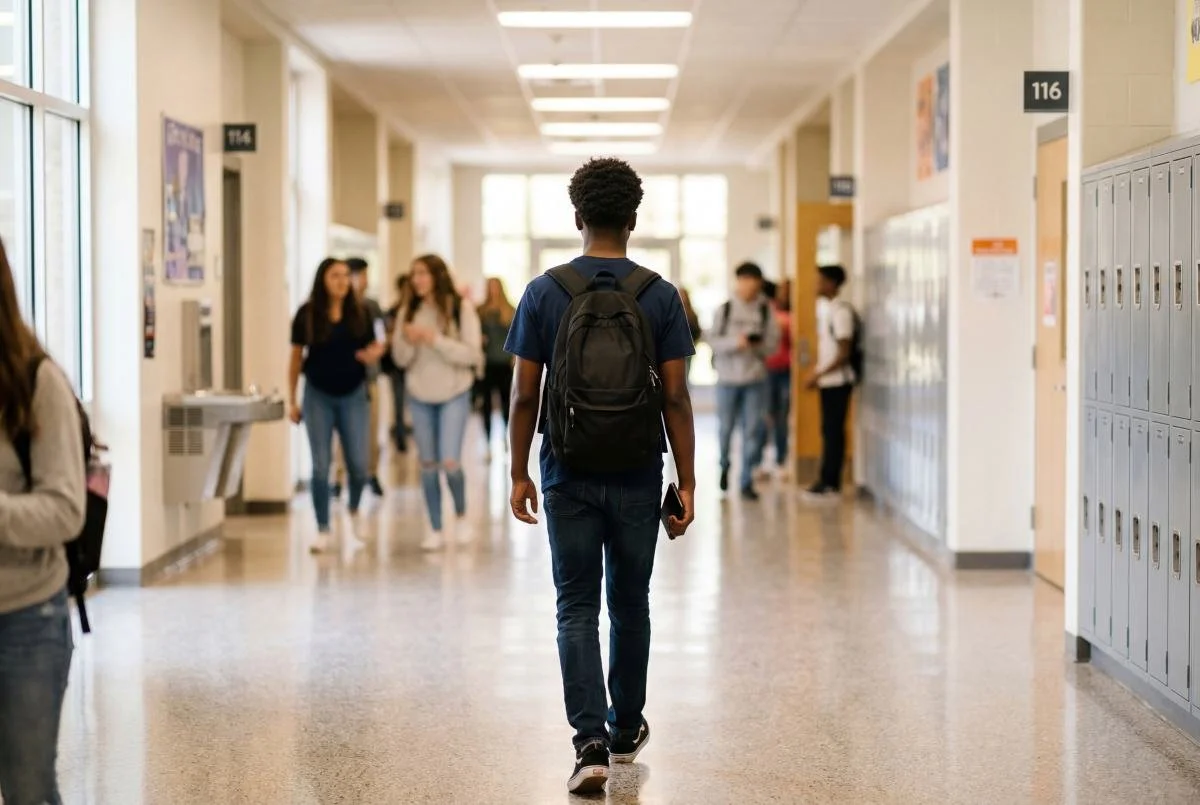
School safety technology is changing rapidly. From security cameras and access control systems to emergency communication tools and digital monitoring, schools now have more ways to identify risks, respond to incidents, and protect students and staff.
Artificial intelligence (AI) is playing an increasingly important role in this transformation. Rather than relying exclusively on staff to monitor footage, review reports, or identify unusual activity, AI-powered systems can process information at speed, highlight potential concerns, and support more informed decision-making.
However, introducing AI into schools also creates important responsibilities. Educational institutions must consider student privacy, accuracy, transparency, and the potential consequences of automated monitoring. The most effective approach is therefore not simply to adopt more advanced technology, but to use AI in ways that strengthen safety while respecting the rights of students, families, and employees.
Smarter video surveillance and monitoring
Video surveillance has long been used to support school security. Cameras can help staff investigate incidents, monitor entrances, identify unauthorized access, and understand what happened during an emergency. Yet traditional surveillance systems often require personnel to watch live feeds or manually search through hours of recorded footage.
AI video surveillance in schools can make these processes more efficient by identifying patterns and events that may require attention. Depending on the system, this can include detecting movement in restricted areas, recognizing when people enter or leave specific zones, identifying unusual crowd formations, or highlighting objects that may warrant further investigation.
This does not mean that AI can understand every situation accurately. A person running through a corridor could be responding to an emergency, participating in an activity, or simply behaving unusually. Human review remains essential, particularly when an automated alert could lead to disciplinary action or safeguarding intervention.
When carefully configured, AI-supported surveillance can help staff focus their time on relevant incidents rather than continuously reviewing routine footage.
Strengthen school safety while protecting student privacy with AI-powered redaction.

Faster responses to potential threats
One of the most significant opportunities presented by AI is the ability to identify potential risks in real time. Some safety systems use computer vision and analytics to detect events such as unauthorized access, people entering restricted areas, or unusual activity around school buildings.
AI-powered alerting can reduce the time between an event occurring and staff becoming aware of it. For example, a system may notify authorized personnel when movement is detected in an area that should be empty outside school hours. Other solutions can support crowd monitoring, identify changes in a scene, or provide information that helps security teams understand developing situations.
These capabilities should complement established emergency procedures rather than replace them. Schools need clear escalation processes, trained staff, and reliable communication channels to determine whether an alert represents a genuine threat.
Accuracy is equally important. Excessive false alarms can overwhelm school personnel, create unnecessary anxiety, and reduce confidence in the technology. Before deployment, schools should assess how the system performs in their specific environment, including different lighting conditions, busy corridors, weather, and normal student activity.
AI and access control
Access control is another area where AI can support school safety. Modern systems may combine cameras, sensors, identity verification, and automated alerts to help schools manage who enters particular buildings or areas.
For example, AI-enabled technology can assist with identifying unusual access patterns or detecting when a door is held open for longer than expected. When integrated with other security systems, these insights can help staff investigate potential breaches more quickly.
However, schools should be cautious about deploying facial recognition or other biometric technologies. Identifying an individual is different from detecting an event, and biometric systems can create additional privacy, security, and fairness concerns. Accuracy may vary between systems and populations, while an incorrect identification could have serious consequences for a student, employee, or visitor.
Before adopting biometric tools, school leaders should consider whether the proposed use is necessary, proportionate, legally appropriate, and supported by clear policies. Less intrusive alternatives may achieve the same safety objective without processing sensitive biometric information.
Supporting incident investigations
School incidents can involve multiple witnesses, conflicting accounts, and large quantities of video footage. Reviewing relevant recordings manually can be time-consuming, especially when several cameras cover a busy campus.
AI can help staff locate relevant moments, identify objects, and track activity across footage, depending on the capabilities of the technology being used. This can support investigations into events such as fights, accidents, unauthorized entry, vandalism, or safeguarding concerns.
The purpose should be to make evidence easier to review, not to remove human judgment from the investigation. Staff should verify automated results and avoid treating an AI-generated alert or classification as conclusive evidence.
Privacy must also be considered when footage is shared with parents, law enforcement, attorneys, insurers, or other third parties. Recordings may contain students who are unrelated to the incident, along with sensitive information about staff and visitors. Schools need processes for determining what can be disclosed and what should be removed or obscured first.
Protecting student privacy in AI-enabled environments
AI can improve security, but the technology often depends on collecting and processing large amounts of information. School cameras may capture faces, voices, clothing, vehicle license plates, and other details that could identify individuals.
In the United States, the Family Educational Rights and Privacy Act (FERPA) may apply to videos that are directly related to a student and maintained by an educational institution or a party acting on its behalf. The US Department of Education also explains that the treatment of surveillance footage can depend on how the footage is created, maintained, and used. For example, certain records maintained by a school’s law enforcement unit for a law enforcement purpose may fall outside the definition of education records.
Therefore, establishing clear school video compliance solutions can help educational institutions manage access, retention, disclosure, and redaction requirements while reducing unnecessary exposure of personal information.
Schools should avoid assuming that every recording can be shared freely simply because the footage was captured for safety purposes. Policies should cover access permissions, retention periods, disclosure requests, secure storage, and the handling of recordings that include multiple students.
AI-powered redaction can help schools manage these responsibilities more efficiently. Pimloc’s Secure Redact uses automated detection and tracking to identify faces, heads, license plates, and other sensitive visual information for redaction. This helps schools prepare footage for authorized sharing while preserving the context needed to understand an incident.
Reducing the administrative burden of video redaction
Manual video editing can be particularly challenging for school staff. A short recording may contain dozens of students, and each person may move in and out of view throughout the footage. Blurring every unrelated face frame by frame can require substantial time and technical expertise.
AI-based redaction tools can automate much of this work by detecting individuals and tracking them across consecutive frames. Staff can then review the results, make corrections where necessary, and export a version that protects people who do not need to be identified.
Pimloc designed Secure Redact to support video and audio redaction workflows for educational institutions. Our software can be used through standalone access or integrated into existing video management and digital evidence workflows through available deployment options, including APIs and SaaS. With Secure Redact, schools incorporate privacy protection into existing processes rather than creating an entirely separate system.
Automated redaction does not eliminate the need for quality assurance. Staff should review the final footage to check that relevant information has been retained and that sensitive details have been adequately obscured.
Balancing safety with responsible AI use
The adoption of AI in schools requires more than technical planning. School leaders should also establish clear governance arrangements before introducing new systems.
Several questions should be considered:
What information does the system collect?
Where is the information stored and processed?
Who can access alerts, recordings, or reports?
Is the technology being used for detection, identification, prediction, or decision-making?
How are false positives and inaccurate results handled?
Can students, parents, and staff understand how the system is being used?
What happens when the software is updated or its capabilities change?
Schools should involve relevant stakeholders, including data protection officers, safeguarding leads, IT teams, and senior leadership. Staff training is also essential. Employees need to understand both the benefits and limitations of AI, including when they must verify an alert or escalate a concern.
A privacy impact assessment may be appropriate when a proposed system is likely to create significant risks for individuals. Schools should also examine supplier contracts, data retention arrangements, security controls, and whether collected information is used to train external AI models.
The future of AI in school safety
AI is likely to become more integrated into school safety systems, particularly as cameras, sensors, access controls, and communication platforms become increasingly connected.
Future applications may support more advanced scene analysis, improved search across video archives, automated incident documentation, and anonymized analytics that help schools understand how spaces are used. Live video analytics may also provide information such as people counts, movement patterns, and changes in activity without requiring every individual to be identified.
Secure Redact supports the wider principle that schools should be able to use video information without unnecessarily exposing personal data. By combining automated redaction with review and editing tools, schools can protect privacy while retaining useful evidence for investigations, training, and authorized information requests.
The development of these technologies should remain focused on practical safety outcomes. More data does not automatically create a safer school, and more surveillance is not always the most appropriate solution. Strong policies, trained staff, effective communication, and proportionate technology must work together.
Building safer schools through better technology
AI is transforming school safety technology by helping institutions process video, identify potential concerns, support incident investigations, and respond to information more efficiently. Its value lies in assisting staff with tasks that would otherwise require significant time and manual effort.
At the same time, schools must consider the privacy and safeguarding implications of collecting information about children and other members of the school community. Responsible deployment requires transparency, human oversight, reliable security, and regular evaluation.
When used thoughtfully, AI can support a more responsive safety environment without compromising the privacy protections that students and families deserve.
Frequently asked questions
-
No. AI can identify certain patterns or events, but it cannot predict or prevent every incident. Effective school safety still depends on trained staff, clear procedures, physical security, and appropriate emergency planning.
-
No. Some AI systems detect movement, objects, crowd activity, or changes in a scene without identifying individuals. Schools should distinguish between general video analytics and biometric identification when assessing potential technology.
-
Schools should limit access to recordings, establish retention rules, and assess whether footage can be shared lawfully. When recordings contain unrelated students, redaction can help obscure identifying information before disclosure.
-
AI-generated alerts and classifications should not automatically be treated as definitive evidence. Staff should review the original footage, consider the wider circumstances, and follow established investigation and disciplinary procedures.
-
Schools should ask how data is collected, stored, processed, secured, and deleted. They should also ask about system accuracy, bias testing, human oversight, model training, access controls, and how software updates may affect risk.
-
AI-powered tools can automate the detection and tracking of faces and other sensitive information. However, staff should review the redacted footage to confirm that the result is accurate and suitable for its intended use.
-
Schools can begin with a clearly defined use case, test the system in a controlled environment, and provide staff training before expanding deployment. Regular reviews can help identify false alarms, workflow problems, and additional privacy risks.
-
AI is more appropriately viewed as a support tool. Security and safeguarding personnel remain responsible for interpreting information, responding to incidents, communicating with families, and making decisions that require context and professional judgment.