
How machine learning detects and redacts PII in video
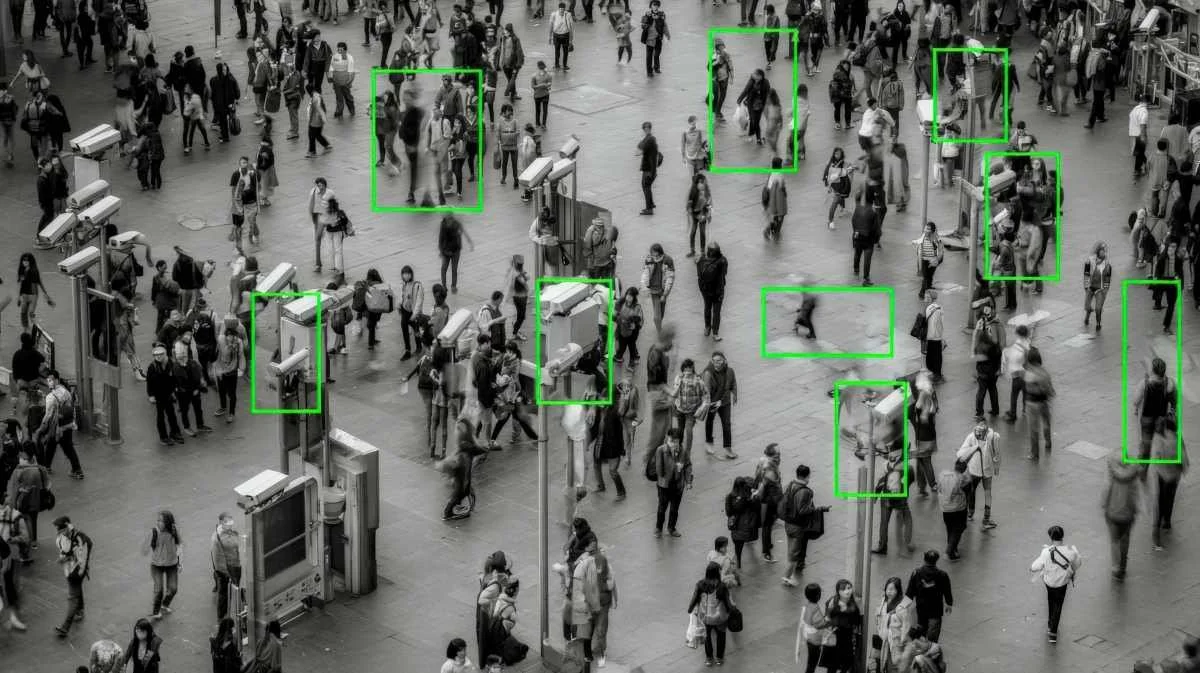
Video has become one of the most valuable sources of information available to organizations. Security cameras, body-worn cameras, dashcams, customer service recordings, workplace monitoring systems, transportation networks, and smart city infrastructure generate enormous volumes of footage every day.
Yet alongside that value comes a growing privacy challenge. Much of this footage contains personally identifiable information (PII), including faces, vehicle registrations, identification badges, computer screens, documents, addresses, and other sensitive details. Before video can be shared, analyzed, published, or disclosed, organizations often need to ensure this information is protected.
Historically, redacting video was an intensely manual process. Teams would spend hours reviewing footage frame by frame, identifying sensitive information and applying redactions individually. As video volumes increased, this approach became increasingly unsustainable.
Machine learning has transformed the process. Modern AI-powered systems can automatically identify and redact sensitive information at a scale and speed that would be impossible through manual review alone.
But how exactly does machine learning detect PII in video?
The challenge of finding sensitive information in video
Unlike documents, video is highly unstructured.
A single recording may contain:
Hundreds of individuals
Multiple vehicles
Changing lighting conditions
Complex backgrounds
Moving cameras
Audio conversations
Embedded text
Reflections and screens
Sensitive information can appear for only a fraction of a second before disappearing from view.
Human reviewers can identify this information, but doing so across thousands of hours of footage is expensive, time-consuming, and vulnerable to inconsistency.
Machine learning addresses this challenge by enabling systems to "see" and interpret visual and audio information automatically.
Understanding machine learning in video analysis
Machine learning refers to systems that learn patterns from large amounts of data rather than relying solely on fixed programming rules.
Instead of telling a computer exactly what every face looks like, developers train machine learning models using millions of examples. Over time, the model learns the characteristics that distinguish faces from other objects.
The same principle can be applied to:
Licence plates
Documents
Identity badges
Screens
Vehicle markings
Logos
Text
Audio identifiers
Once trained, these models can analyze new video footage and identify similar patterns automatically.
This capability forms the foundation of modern video redaction technology.
Step 1: Object detection identifies potential PII
The first stage of AI-powered redaction usually involves object detection.
Object detection models scan each frame and identify elements that may contain sensitive information.
Common categories include:
Human faces
Vehicle licence plates
Identity cards
Computer monitors
Paper documents
Mobile devices
Personal belongings
Rather than examining footage manually, machine learning models can process thousands of frames in seconds.
Advanced systems can also distinguish between multiple objects appearing simultaneously within crowded environments.
For example, a busy train station may contain dozens of visible faces and licence plates within a single frame. Machine learning allows all of these identifiers to be detected simultaneously.
Step 2: Object tracking follows subjects across frames
Detecting a face in one frame is only part of the challenge.
People move.
Vehicles change direction.
Objects enter and exit scenes.
If redactions were applied only to isolated frames, privacy protection would quickly break down.
This is where object tracking becomes essential.
Machine learning systems continuously track detected objects as they move through video footage. The software predicts movement patterns and maintains identification even when subjects temporarily disappear behind obstacles or move rapidly across the screen.
This creates smoother and more reliable anonymization throughout the entire video sequence.
Without tracking technology, automated redaction would require significantly more manual intervention.
Step 3: Facial recognition models identify human features
Although face detection and facial recognition are often discussed together, they serve different purposes.
Face detection identifies the presence of a face.
Facial recognition attempts to determine whose face it is.
For privacy-focused redaction systems, recognition is often unnecessary. The objective is typically to detect human faces regardless of identity and apply anonymization immediately.
Machine learning models are trained to recognize facial characteristics such as:
Eye placement
Nose structure
Facial contours
Mouth positioning
Head orientation
This allows systems to detect faces under challenging conditions, including:
Partial obstructions
Poor lighting
Side profiles
Crowded environments
Motion blur
As models continue to improve, face detection accuracy continues to increase even in difficult operational settings.
Step 4: Optical character recognition detects sensitive text
Many privacy risks involve text rather than people.
Video footage frequently captures:
Addresses
Phone numbers
License plates
Identification numbers
Medical records
Legal documents
Financial information
To identify this content, AI systems often use Optical Character Recognition (OCR).
OCR converts visual text into machine-readable data, allowing software to analyze the content and determine whether it contains sensitive information.
Machine learning models can then automatically flag and redact information that matches predefined privacy criteria.
For organizations handling disclosure requests, investigations, or compliance workflows, OCR plays a critical role in preventing inadvertent data exposure.

Step 5: Audio analysis identifies spoken PII
Privacy risks are not limited to visuals.
Many recordings contain spoken information that may require protection, including:
Names
Addresses
Medical details
Financial information
Telephone numbers
Social Security numbers
Machine learning-powered speech recognition systems can convert conversations into searchable text.
Natural language processing models then analyze the transcript to identify sensitive information that may require redaction.
The resulting workflow allows organizations to anonymize both visual and audio content within a single process.
This capability is becoming increasingly important as video increasingly includes recorded conversations, interviews, and public interactions.
Step 6: Automated redaction applies privacy protection
Once sensitive information has been identified, machine learning systems can automatically apply redactions.
Common techniques include:
Blur effects
Pixelation
Solid masking
Replacement overlays
Audio muting
Audio distortion
The chosen approach depends on organizational requirements and the intended use of the footage.
For example:
Law enforcement disclosures may require permanent anonymization.
Internal investigations may require reversible privacy controls.
Public-facing content may prioritize visual consistency.
Modern systems allow organizations to apply redaction rules automatically while maintaining flexibility for specific use cases.
Why accuracy matters more than speed
Automation provides significant efficiency gains, but accuracy remains the most important metric.
Missing a single face or licence plate can create compliance risks, legal exposure, or reputational damage.
This is why leading redaction platforms invest heavily in improving machine learning performance through:
Larger training datasets
Continuous model refinement
Human validation workflows
Multi-layer detection systems
Confidence scoring mechanisms
Pimloc's Secure Redact, for example, combines AI-powered detection with enterprise-grade review workflows that help organizations process large volumes of content while maintaining confidence in redaction accuracy.
The goal is not simply faster processing - it is dependable privacy protection at scale.
The role of deep learning in modern redaction
Many of today's most advanced redaction systems rely on deep learning, a specialized branch of machine learning inspired by neural networks.
Deep learning models excel at analyzing complex visual patterns and identifying subtle differences between objects.
This allows systems to:
Distinguish faces from background elements
Identify partially obscured licence plates
Detect text under difficult lighting conditions
Recognize sensitive objects across varied environments
As computing power and training data continue to expand, deep learning is enabling increasingly sophisticated privacy protection capabilities.
The result is more accurate detection with less human intervention.
Where machine learning-powered redaction is used
AI-powered redaction technology is now being deployed across a wide range of industries.
Law Enforcement
Police departments use automated redaction to prepare bodycam footage, interview recordings, and surveillance video for public disclosure.
Insurance
Claims teams protect customer information before sharing footage with investigators, adjusters, legal teams, and third parties.
Transportation
Transit agencies anonymize passengers captured on station cameras, onboard systems, and operational recordings.
Healthcare
Hospitals and healthcare providers protect patient information appearing in security footage and recorded interactions.
Education
Schools and universities safeguard student privacy when handling surveillance recordings and classroom video.
Enterprise Security
Businesses use automated redaction to protect employees, customers, and visitors while maintaining operational visibility.
The future of AI-powered video privacy
Video data continues to grow at an extraordinary rate.
At the same time, regulators, customers, and employees increasingly expect organizations to protect personal information responsibly.
Machine learning is making this possible by automating one of the most challenging aspects of privacy compliance: identifying sensitive information hidden within vast amounts of video content.
Future systems will likely become even more sophisticated, detecting broader categories of PII, improving contextual understanding, and reducing the need for manual review.
Organizations that adopt these technologies today will be better positioned to balance operational visibility with privacy obligations tomorrow.
Turning video privacy into a scalable process
Manual redaction may still have a place for small projects, but it cannot keep pace with the volume of video generated by modern organizations.
Machine learning enables sensitive information to be detected, tracked, analyzed, and redacted automatically across video, audio, images, and documents. By transforming privacy protection into a scalable process, AI allows organizations to manage growing data volumes without sacrificing compliance or efficiency.
Solutions such as Pimloc's Secure Redact are at the forefront of this shift, helping organizations automate complex redaction workflows while maintaining the accuracy, governance, and transparency needed for real-world privacy operations.