
Object detection meets redaction: 5 privacy-safe video tools

Video analytics has become a core part of modern operations across law enforcement, insurance, education, transportation, and corporate security. Organizations increasingly rely on object detection to identify people, vehicles, devices, and activities within recorded footage. The insights generated by these systems can improve investigations, streamline workflows, and support decision-making.
However, the rise of intelligent video analysis has created a parallel challenge: privacy protection. The same footage that provides valuable operational intelligence often contains personally identifiable information (PII), including faces, license plates, computer screens, identification badges, and other sensitive details. Without proper safeguards, organizations can expose themselves to regulatory penalties, reputational damage, and legal risk.
This has led to growing demand for privacy-safe video tools that combine advanced object detection with automated redaction and anonymization capabilities. Rather than forcing organizations to choose between analytics and privacy, these platforms help deliver both. In this guide, we examine five solutions that help organizations analyze video content while maintaining strong privacy standards.
Comparison table
| Rank | Solution | Key Differentiator | Core Features | Best For |
|---|---|---|---|---|
| 1 | Secure Redact | Enterprise-grade AI redaction with object detection | Face, plate, screen and audio redaction, API integrations, audit trails | Law enforcement, insurers, public sector organizations |
| 2 | SproutVideo | Privacy-focused video hosting and analytics | Viewer analytics, access controls, video management | Businesses sharing video externally |
| 3 | Facit.ai | AI-powered privacy automation | Automated video anonymization, compliance workflows | Organizations processing large video volumes |
| 4 | Basil AI | Intelligent video analysis and automation | AI-powered monitoring and object recognition | Operational and surveillance environments |
| 5 | egonym | Privacy-enhancing computer vision | Human anonymization and privacy-preserving analytics | Research and privacy-sensitive deployments |
1. Secure Redact
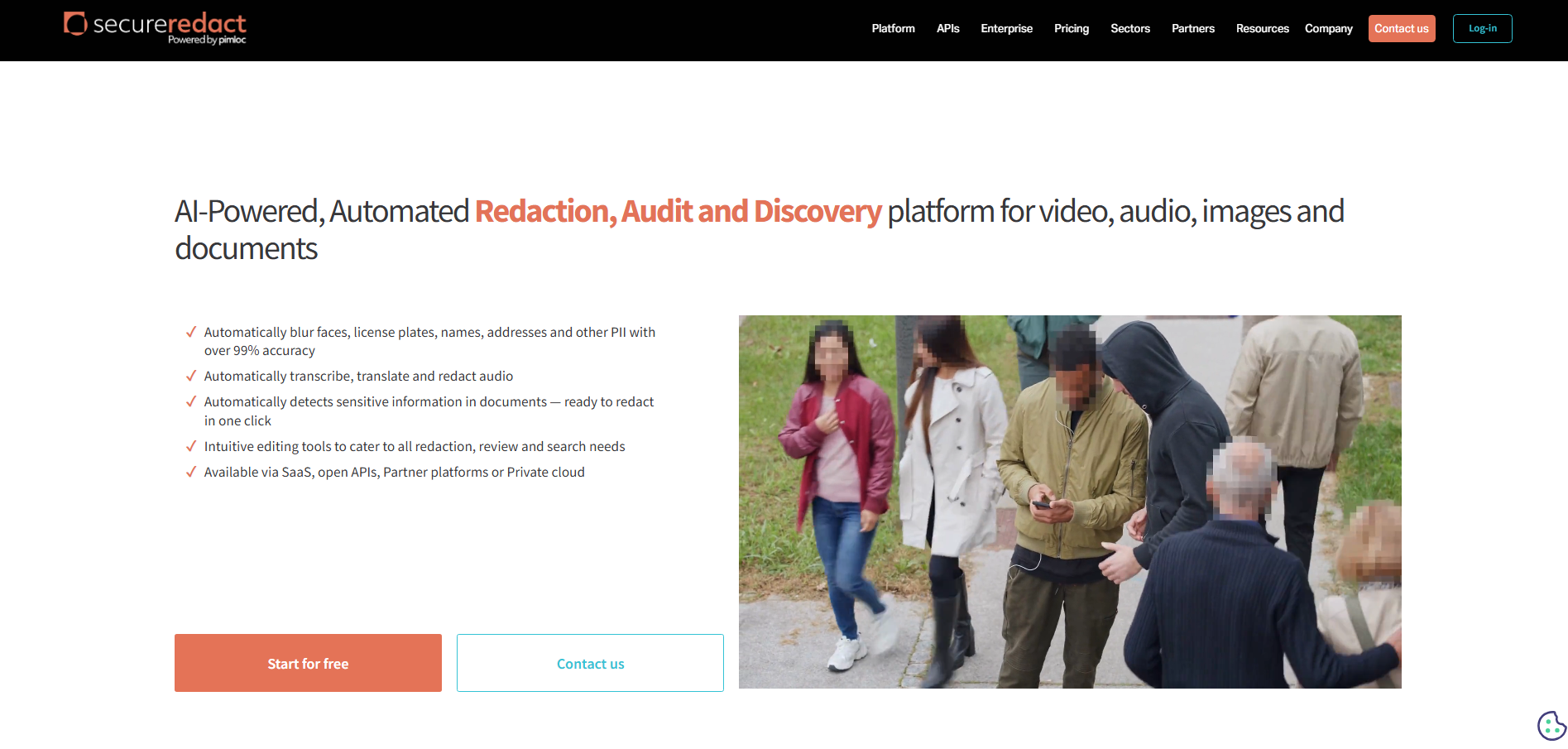
Privacy protection becomes significantly more complicated once organizations begin using object detection at scale. Every detected face, vehicle, badge, screen, or spoken identifier represents information that may need protection before footage can be shared, disclosed, or archived.
Secure Redact was built specifically to solve that challenge. Developed by Pimloc, the platform combines advanced AI detection capabilities with automated redaction workflows that allow organizations to extract value from video while protecting sensitive information. Rather than treating privacy as an afterthought, Secure Redact places privacy controls directly within the video processing pipeline.
The result is a platform capable of supporting everything from public records requests and evidence disclosure to insurance investigations and compliance-driven video sharing. Organizations can analyze footage, identify relevant objects and individuals, and apply privacy protections at scale without introducing excessive manual review.
Key Features and Benefits
Automated detection of faces, license plates, screens, documents, and other identifiable content
AI-powered audio redaction for names, addresses, and sensitive spoken information
Batch processing for large video libraries and high-volume workflows
REST API access for integration into existing systems and applications
Detailed audit trails supporting compliance and accountability requirements
Irreversible redaction methods designed to reduce disclosure risk
Flexible deployment options including SaaS, private cloud, and on-premises environments
Support for law enforcement, insurance, education, and public sector use cases
Secure collaboration workflows for sharing processed footage
Enterprise-grade security architecture and governance controls
Best For: Organizations that need powerful object detection capabilities without compromising privacy obligations. Secure Redact is particularly well suited to agencies and enterprises managing large volumes of sensitive video content.
Visit Secure Redact
2. SproutVideo
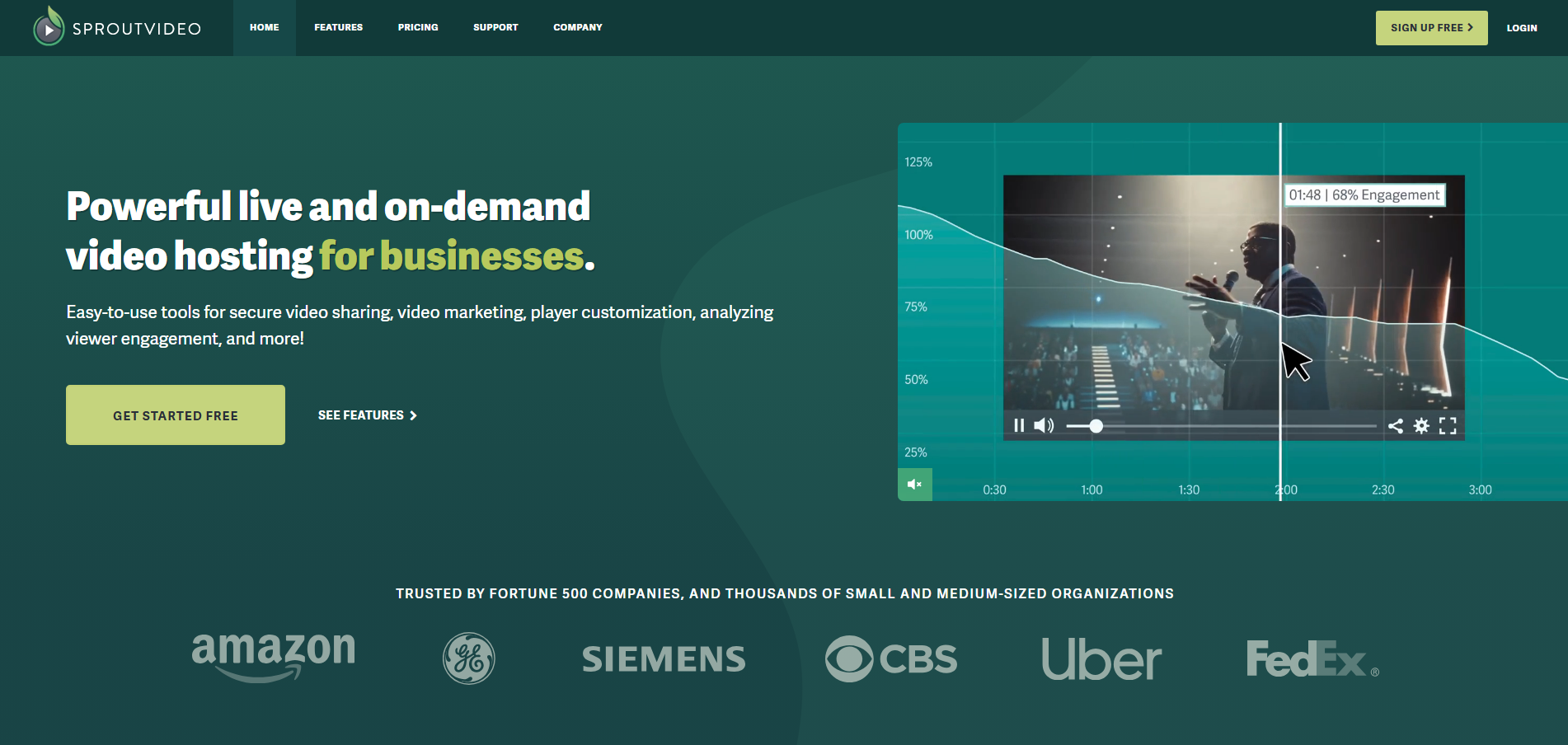
SproutVideo approaches video privacy from a different angle. Rather than focusing solely on surveillance or investigative workflows, the platform centers on secure video hosting, distribution, and viewer management. For organizations publishing training content, educational material, or customer-facing videos, controlling who can access content is often just as important as managing the content itself.
A special feature of SproutVideo is its range of privacy-focused controls that help organizations limit unauthorized viewing and better understand audience engagement. Combined with analytics capabilities, this allows businesses to gain insights without exposing video assets unnecessarily.
Its emphasis on secure delivery makes it particularly attractive to organizations that regularly share video content outside their own networks.
Key Features
Secure video hosting infrastructure
Detailed viewer analytics and engagement reporting
Password protection and access controls
Domain restrictions and embedding controls
Video performance measurement tools
Why This Solution
Helps organizations maintain tighter control over distributed content
Balances analytics visibility with privacy protections
Suitable for customer-facing and educational video workflows
Reduces risks associated with public video sharing
Offers a straightforward user experience for content teams
Best For: Organizations focused on secure video publishing, hosting, and audience analytics.
Visit SproutVideo
3. RedactX
ReactX focuses on automating privacy protection within video workflows. As organizations accumulate increasingly large video archives, manual anonymization quickly becomes impractical. RedactX addresses this challenge through AI-driven detection and privacy automation designed to reduce operational overhead.
The platform is geared toward environments where compliance requirements intersect with large-scale video processing. Instead of requiring users to review every frame individually, it helps automate the identification and protection of sensitive content throughout a workflow.
This emphasis on efficiency makes RedactX particularly useful for teams managing substantial video volumes under tight deadlines.
Key Features
Automated video anonymization capabilities
AI-assisted privacy protection workflows
Scalable processing for large datasets
Compliance-focused video management
Support for multiple video environments
Why This Solution
Reduces manual review requirements
Supports privacy initiatives across large video libraries
Designed to improve operational efficiency
Helps organizations standardize anonymization processes
Suitable for growing compliance workloads
Best For: Organizations seeking scalable privacy automation for video-heavy operations.
Visit RedactX
4. Basil AI
Basil AI combines computer vision technologies with operational intelligence tools. This combination puts the work focus on extracting meaningful information from video streams, helping organizations identify patterns, monitor environments, and automate certain forms of analysis.
Its capabilities make it relevant for teams seeking greater situational awareness while leveraging AI-driven object recognition. Rather than concentrating exclusively on privacy workflows, Basil AI aims to help organizations understand what's happening within their video environments and act on those insights more effectively.
This broader operational focus distinguishes it from solutions built primarily around redaction.
Key Features
AI-powered object detection and monitoring
Automated video analysis workflows
Event recognition capabilities
Operational intelligence tools
Scalable deployment architecture
Why This Solution
Supports broader business intelligence initiatives
Helps identify patterns within video data
Reduces reliance on manual monitoring
Useful for surveillance and operational applications
Expands visibility into complex environments
Best For: Organizations seeking AI-powered video intelligence alongside object detection capabilities.
Visit Basil AI
5. egonym
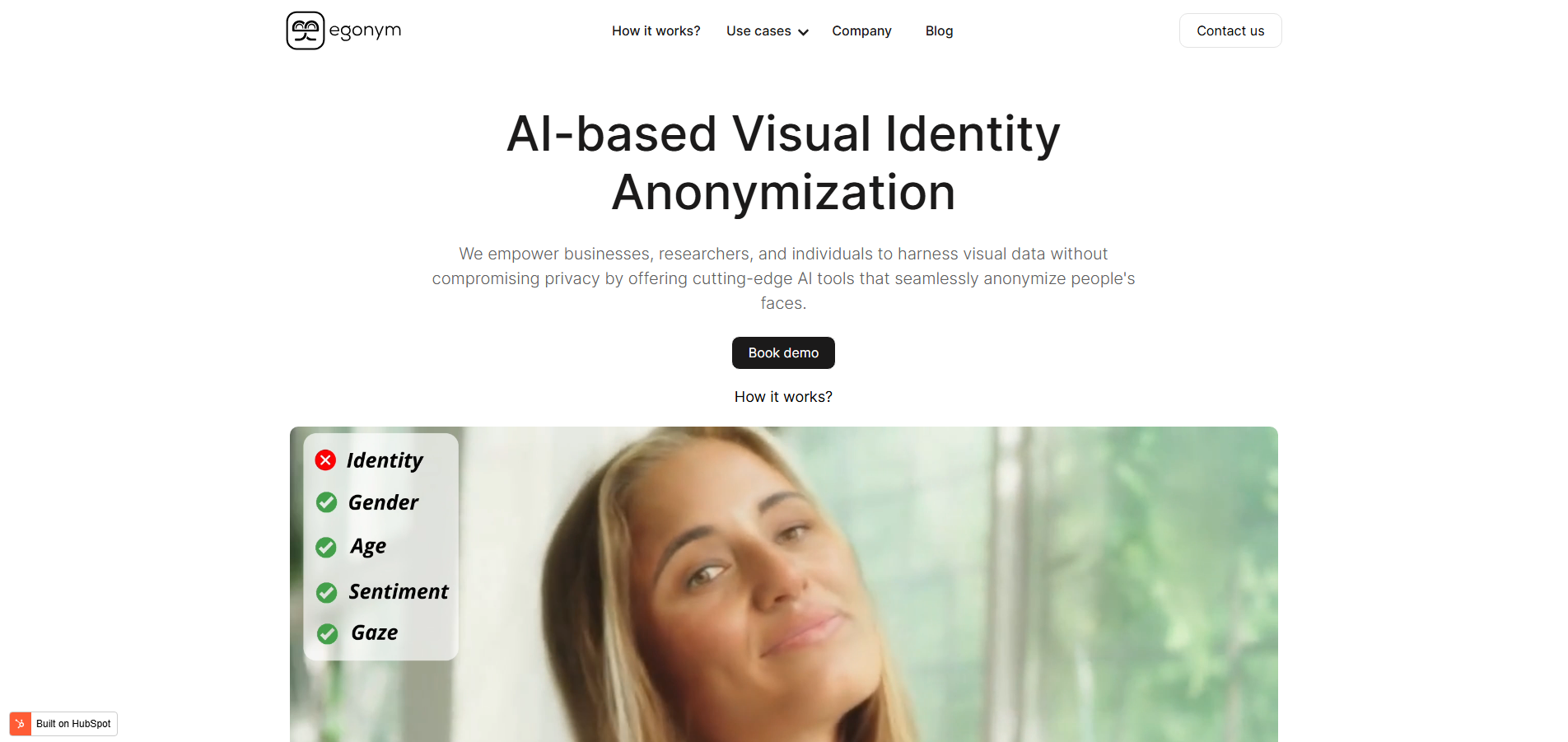
egonym concentrates on privacy-preserving computer vision, exploring ways organizations can continue benefiting from video analytics while minimizing exposure of personal identities. This balance is increasingly important as privacy regulations continue evolving across industries and jurisdictions.
Rather than simply collecting more visual data, egonym emphasizes techniques that limit unnecessary exposure of individuals within video content. Its approach aligns well with organizations looking to adopt privacy-by-design principles within analytics programs.
The result is a solution that appeals to teams prioritizing responsible AI deployment and privacy-conscious video analysis.
Key Features
Human anonymization technology
Privacy-preserving computer vision tools
AI-assisted identity protection
Analytics-focused processing workflows
Support for privacy-sensitive environments
Why This Solution
Helps reduce privacy risks associated with video analytics
Supports privacy-by-design initiatives
Enables analysis while limiting exposure of individuals
Suitable for research and experimental deployments
Encourages responsible use of computer vision technologies
Best For: Organizations prioritizing privacy-enhancing analytics and anonymization strategies.
Visit egonym
What to look for in a privacy-safe video platform
As object detection becomes more powerful, organizations should evaluate solutions based on both analytical capabilities and privacy safeguards. Look for things like:
Detection accuracy across faces, vehicles, screens, and other objects
Automated redaction and anonymization functionality
Audio privacy protection capabilities
Scalability for large video libraries
API availability for workflow integration
Audit logging and accountability features
Deployment flexibility and data residency options
Compliance support for privacy regulations
Security certifications and governance controls
Ease of use for both technical and operational teams
The strongest solutions combine powerful analytics with robust privacy protections, allowing organizations to extract value from video data without increasing compliance risk.
Frequently asked questions
-
Object detection identifies and classifies items within a video, such as faces, vehicles, or screens. Redaction uses that information to obscure or remove sensitive content before footage is shared or disclosed.
-
Video often contains personal information. Without privacy controls, organizations may expose sensitive data, violate regulations, or create unnecessary legal and reputational risks.
-
Yes. Modern AI systems can automatically identify faces, license plates, screens, documents, and other sensitive elements before applying redaction or anonymization.
-
Absolutely. Sensitive information is frequently spoken rather than shown visually. Effective privacy programs often require both audio and video protection.
-
Law enforcement agencies, insurance companies, educational institutions, transportation providers, healthcare organizations, security teams, and government agencies all use privacy-safe video technologies.
-
Yes. Many platforms allow investigators to analyze footage while protecting uninvolved individuals and maintaining compliance with privacy requirements.
-
Depending on security and compliance requirements, organizations may choose SaaS, private cloud, hybrid, or fully on-premises deployments.
-
Automation reduces manual handling, increases consistency, creates auditable workflows, and helps organizations process larger volumes of video while maintaining privacy protections.