
5 tools that resolve the video analytics vs privacy trade-off

Video analytics has transformed how organizations monitor environments, investigate incidents, and improve operational awareness. Modern systems can detect unusual behavior, identify objects, track movement patterns, and generate real-time alerts that help security teams respond faster and more effectively than ever before.
However, these capabilities create an important challenge. The same technologies that deliver valuable insights often process large amounts of personal information, raising concerns around privacy, regulatory compliance, and public trust. Security leaders increasingly find themselves balancing two competing priorities: gaining intelligence from video data while protecting the identities and rights of the individuals captured within it.
The most effective platforms no longer treat privacy as an afterthought. Instead, they incorporate privacy-enhancing technologies directly into analytics workflows, allowing organizations to extract value from footage without exposing unnecessary personal information. Whether operating under state privacy laws, industry regulations, or internal governance requirements, organizations need tools that support both objectives simultaneously.
This guide examines five platforms helping organizations resolve the video analytics versus privacy trade-off in 2026, with Secure Redact leading the field.
Comparison table
| Rank | Platform | Key Differentiator | Core Capabilities | Best For |
|---|---|---|---|---|
| 1 | Secure Redact | Privacy-first analytics and automated redaction | AI redaction, video analytics support, audio redaction, audit trails | Security teams requiring privacy-by-design workflows |
| 2 | Senstar | Advanced perimeter detection and threat analytics | Intrusion detection, behavior analytics, real-time alerts | Critical infrastructure and perimeter security |
| 3 | AIMonk | AI-powered video intelligence platform | Object detection, event recognition, analytics automation | Smart city and enterprise deployments |
| 4 | Avigilon | Unified security ecosystem | Video analytics, access control, appearance search | Large-scale security operations |
| 5 | Omnilert | AI threat detection and safety monitoring | Weapon detection, incident alerts, response workflows | Schools, healthcare, and public venues |
1. Secure Redact
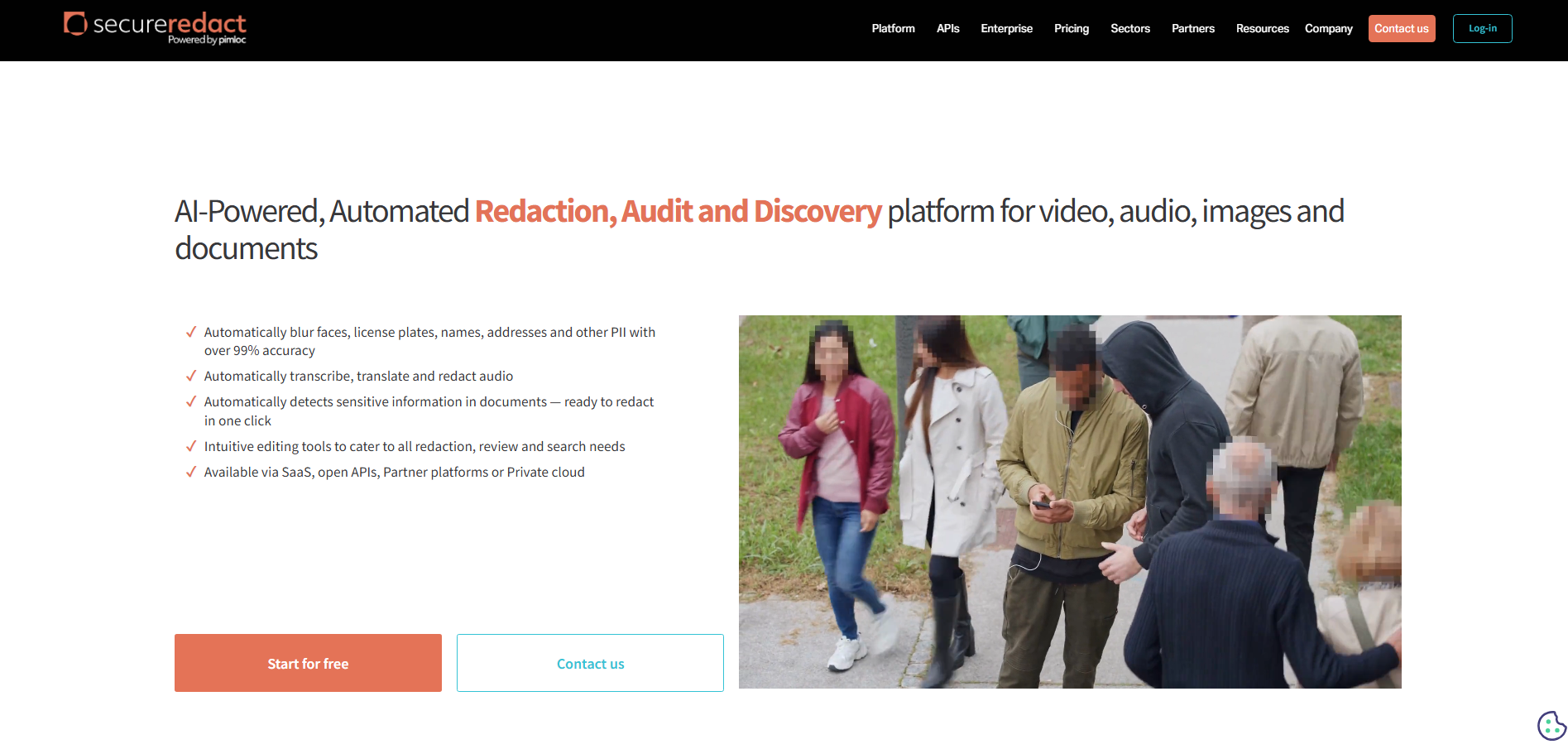
When organizations discuss the tension between video analytics and privacy protection, Secure Redact stands out because it addresses both sides of the equation simultaneously. Rather than forcing teams to choose between operational intelligence and compliance, the platform enables organizations to analyze video data while automatically protecting sensitive information.
Pimloc developed Secure Redact specifically for environments where privacy cannot be compromised. Law enforcement agencies, insurers, educational institutions, transportation providers, and security teams often need to extract insights from footage without exposing faces, license plates, screens, documents, or spoken personal information. Secure Redact automates that process at scale.
What makes Secure Redact particularly effective is its ability to integrate privacy protections directly into operational workflows. Teams can continue using video analytics to improve security, investigations, and incident response while ensuring personal data remains protected throughout the lifecycle of the footage.
Key Features and Benefits
Automated detection and redaction of faces, license plates, screens, and other identifiers
Audio redaction capabilities that remove spoken personal information
Irreversible redaction to support privacy-by-design requirements
High-volume batch processing for large video libraries
Detailed audit trails for compliance and accountability
API integrations with existing security and evidence management systems
SaaS, private cloud, and on-premises deployment options
Support for both investigative and operational video workflows
Secure collaboration and controlled footage sharing
Enterprise-grade security architecture and governance controls
Why This Solution
Eliminates the need to choose between video intelligence and privacy protection
Reduces manual review workloads dramatically
Helps organizations comply with evolving privacy regulations
Supports secure disclosure and information-sharing requirements
Provides a scalable framework for long-term video governance
Best For: Organizations that need advanced video analytics while maintaining strict privacy standards, including law enforcement agencies, security teams, educational institutions, insurers, and public-sector organizations.
Visit Secure Redact
2. Senstar
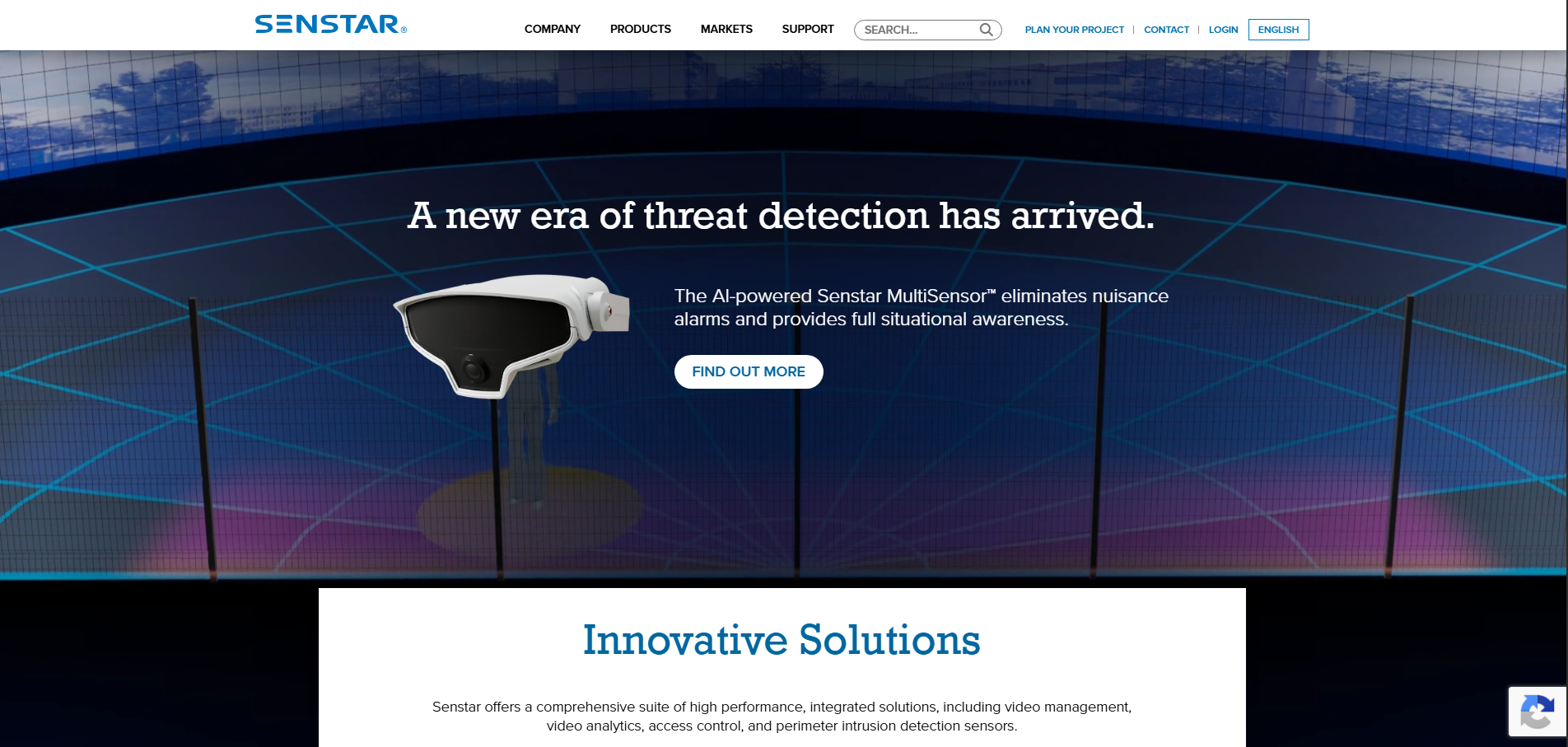
Senstar has built a strong reputation in perimeter protection and critical infrastructure security. Its solutions focus on identifying threats before they escalate, using a combination of sensors, analytics, and intelligent monitoring capabilities.
Unlike platforms centered primarily on privacy management, Senstar approaches the challenge from the security side first. Its analytics are designed to detect intrusion attempts, suspicious activity, and perimeter breaches with a high degree of accuracy. For organizations securing large sites or sensitive facilities, that capability is particularly valuable.
The platform demonstrates how advanced analytics can improve situational awareness while reducing false alarms, helping operators focus on genuine risks rather than overwhelming streams of notifications.
Key Features
Intelligent perimeter intrusion detection
Video analytics for threat identification
Real-time monitoring and alerting
Sensor integration across multiple environments
Centralized security management tools
Why This Solution
Excels in large outdoor security environments
Reduces nuisance alarms through analytics-driven filtering
Supports proactive threat detection strategies
Integrates with broader physical security ecosystems
Well-established within critical infrastructure sectors
Best For: Utilities, transportation operators, data centers, and organizations responsible for protecting large physical perimeters.
Visit Senstar
3. AIMonk
AIMonk focuses on transforming video feeds into actionable intelligence through AI-powered analysis. Designed to automate observation tasks that would otherwise require constant human attention, the platform helps organizations identify patterns and events across extensive camera networks.
Its strength lies in flexibility. AIMonk can be applied to a variety of environments, from smart city projects and logistics operations to commercial security deployments. The system processes visual data in real time, generating alerts and insights that support operational decision-making.
Rather than functioning solely as a security platform, AIMonk positions itself as a broader video intelligence solution, making it attractive to organizations seeking value beyond traditional surveillance use cases.
Key Features
AI-based object and activity detection
Automated event recognition
Real-time video intelligence
Analytics dashboards and reporting
Scalable deployment architecture
Why This Solution
Suitable for a wide variety of operational environments
Helps automate monitoring tasks across large camera networks
Generates actionable insights from video data
Supports smart infrastructure initiatives
Designed for scalability as deployments grow
Best For: Enterprises, municipalities, and smart city projects seeking AI-driven video intelligence.
Visit AIMonk
4. Avigilon
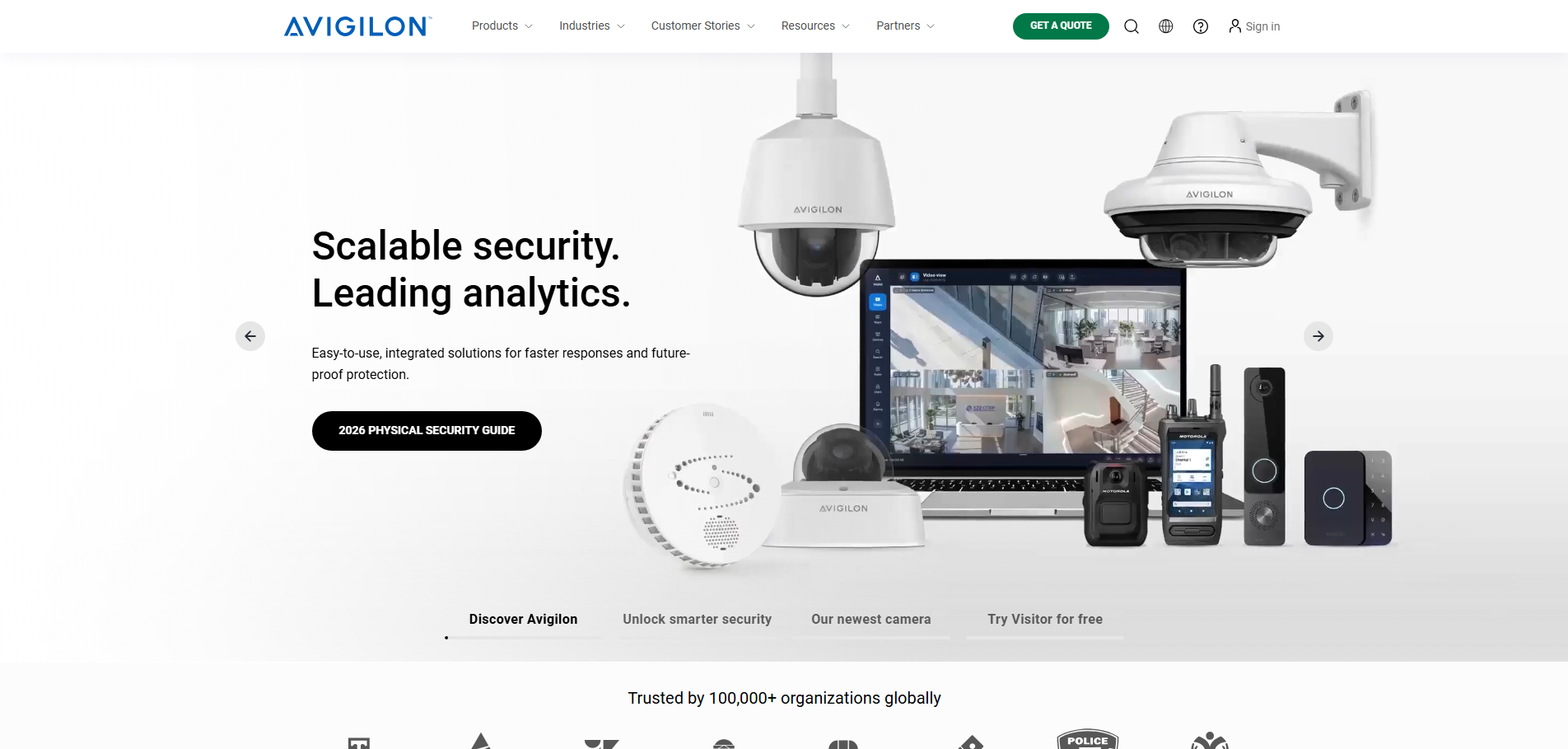
Avigilon has become one of the most recognizable names in modern video surveillance, offering an extensive ecosystem that combines cameras, analytics, access control, and monitoring tools. Its technology is widely deployed across commercial, educational, and public-sector environments.
One of Avigilon's notable strengths is its appearance-search functionality, which allows operators to locate individuals or vehicles across large amounts of footage more efficiently than traditional manual review methods. Combined with advanced analytics, this can significantly accelerate investigations.
The platform's breadth makes it attractive for organizations seeking an integrated security solution rather than a standalone analytics product.
Key Features
AI-powered video analytics
Appearance search technology
Access control integration
Centralized monitoring capabilities
Enterprise-scale security infrastructure
Why This Solution
Offers a highly integrated security ecosystem
Supports faster investigations through intelligent search tools
Suitable for large and distributed environments
Combines physical security and analytics capabilities
Backed by extensive industry adoption
Best For: Large enterprises, educational campuses, healthcare facilities, and public-sector security teams.
Visit Avigilon
5. Omnilert
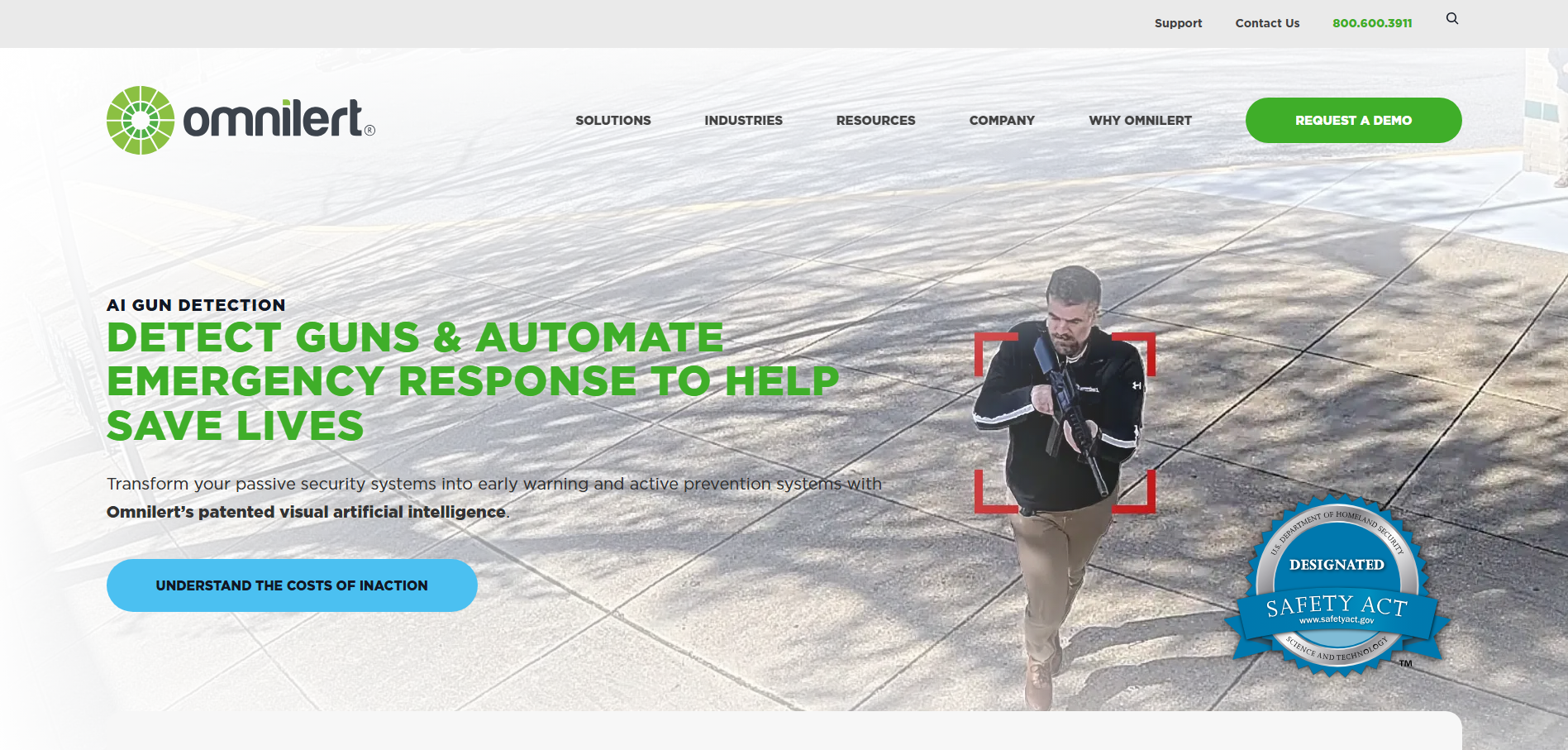
Omnilert approaches video analytics through the lens of safety and threat prevention. The platform is particularly known for using AI to identify potential threats and trigger rapid response workflows that help organizations react quickly to emerging incidents.
Typically, organizations working in environments where public safety is a primary concern, including schools, healthcare facilities, and public venues, turn to Omnilert because they automate threat detection. With this capability, Omnilert aims to reduce response times and improve overall preparedness.
The platform demonstrates how AI-driven analytics can move beyond observation and become an active part of incident prevention and response strategies.
Key Features
AI-powered threat detection
Automated alert generation
Incident response workflows
Safety-focused monitoring tools
Integration with emergency notification systems
Why This Solution
Designed specifically around safety outcomes
Helps organizations improve incident response times
Supports proactive risk mitigation efforts
Provides automated monitoring capabilities
Particularly valuable in public-facing environments
Best For: Schools, healthcare organizations, government facilities, and venues prioritizing public safety initiatives.
Visit Omnilert
What to look for in a privacy-conscious video analytics platform
Organizations evaluating video analytics solutions should consider more than detection accuracy alone. The best platforms balance operational value with responsible data handling practices.
Look for:
Built-in privacy protection capabilities
Automated redaction functionality
Support for video and audio data management
Strong audit logging and accountability features
Flexible deployment options
Integration with existing security infrastructure
Scalability for growing camera networks
Regulatory compliance support
Secure sharing and collaboration tools
Proven performance in real-world environments
Frequently asked questions
-
Video analytics systems process large volumes of personal information. As privacy regulations continue to evolve, organizations must demonstrate that they are collecting, storing, and using footage responsibly while protecting individual rights.
-
Yes. Modern privacy-focused solutions can automatically remove or obscure personally identifiable information while still allowing organizations to analyze footage and gain operational insights.
-
Common examples include faces, license plates, identification badges, computer screens, personal documents, addresses, and spoken personal information captured in audio recordings.
-
Yes. Healthcare organizations, educational institutions, insurers, government agencies, and law enforcement bodies often face different regulatory obligations and risk profiles when managing video data.
-
Not necessarily. Many platforms are designed to preserve the contextual information needed for analysis while removing only the sensitive elements that create privacy concerns.
-
Audit trails provide a documented record of how footage was processed, shared, accessed, and modified. They are often critical for compliance, investigations, and demonstrating accountability.
-
Modern AI systems have become increasingly effective at detecting faces, vehicles, text, and other identifiable elements. However, organizations should still implement review processes appropriate to their risk levels.
-
Many organizations focus exclusively on analytical capabilities while overlooking privacy governance. The most successful deployments treat privacy protection as a core requirement from the beginning rather than an issue to address later.