
5 Best automated redaction software for GDPR and FOIA workflows

With data protection regulations like GDPR and public-records laws like FOIA at the forefront, organisations handling sensitive information must ensure redaction is accurate, defensible, and repeatable.
Automated redaction software has evolved to meet these demands - offering AI-powered detection, multimedia support, and scalable workflows that minimize human error while speeding up compliance.
Below are five of the most capable automated redaction tools in 2026 - suitable for both GDPR-compliant data disclosure and FOIA video or document release workflows.
Comparison table: 5 Best automated redaction software for GDPR and FOIA workflows in 2026
| Rank | Software | Media Types Supported | Key Features | Best For |
|---|---|---|---|---|
| 1 | Secure Redact (Pimloc) | Video, audio, images, documents | AI detection, speech-to-text, batch processing, audit trails | Organisations needing full-media redaction for GDPR & FOIA |
| 2 | Brighter AI | Video & images | Deep anonymisation, synthetic identity replacement, privacy-first design | Privacy-first disclosure & anonymised release |
| 3 | CaseGuard | Video, audio, images, documents | Multimedia redaction tools, bulk processing, compliance exports | Mixed-media workflows under GDPR/FOIA |
| 4 | Redactor | Video & audio | Automated face/plate blurring, audio masking, disclosure-ready exports | Video FOIA, CCTV compliance, privacy redaction |
| 5 | BlurMe | Video & images | Fast automated blurring/anonymisation, simple workflows, bulk support | CCTV and surveillance video redaction for quick release |
1. Secure Redact (by Pimloc)
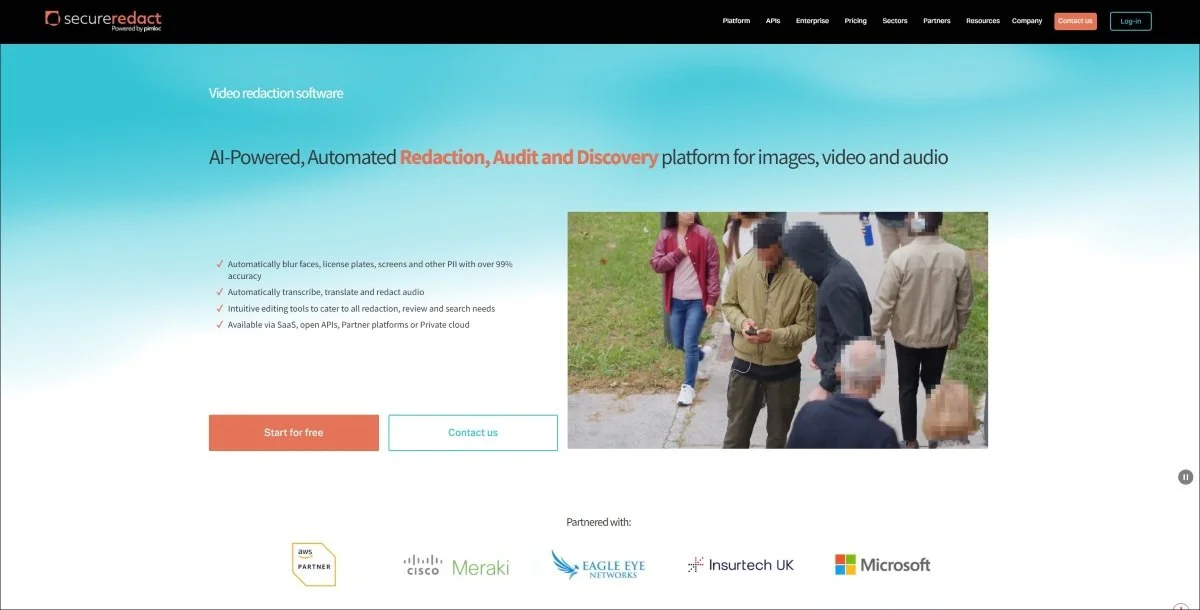
Secure Redact stands out as a comprehensive automated redaction platform built for maximum flexibility and compliance readiness. It supports video, audio, image, and document redaction - making it ideal for organisations managing diverse media within GDPR or FOIA contexts.
Its AI leverages visual detection (faces, license plates, screens, objects) as well as speech-to-text analysis to catch and redact spoken personal data, a critical advantage where audio accompanies video or interview recordings.
Batch processing capabilities mean agencies can ingest large sets of media and output redacted, release-ready files with minimal manual intervention.
With support for cloud, private-cloud, API, or on-prem deployment - combined with full audit trails and chain-of-custody logging - Secure Redact delivers enterprise-grade redaction that balances data protection, scalability, and compliance defensibility.
Key features
High-accuracy detection of faces, license plates, screens, objects
Automatic audio transcription and redaction of spoken PII
Supports multiple media types: video, audio, images, documents
Batch processing for large media volumes
Flexible deployment (cloud / private cloud / on-premise / API)
Full audit logs and chain-of-custody tracking
Why choose Secure Redact
For organisations that must manage mixed media under GDPR or FOIA, Secure Redact provides a unified and defensible solution. It reduces the risk of human error, streamlines workflows, and ensures all media types are handled under the same compliance framework.
Best for
Public authorities, healthcare organisations, insurers, legal teams, and any organisation processing high-volume media redaction under GDPR or FOIA.
2. Brighter AI

Brighter AI specialises in privacy-first anonymisation for video and images, offering deep-learning-based synthetic identity replacement rather than simple blurring.
This makes it valuable for organisations seeking to release footage publicly - for example, CCTV or surveillance videos - while fully protecting individuals’ identities. Its approach is particularly well-suited to data-protection compliance under GDPR and privacy-sensitive public disclosure.
Brighter AI’s models replace faces, bodies, or license plates with anonymised proxies, ensuring re-identification is extremely difficult. For media not requiring evidentiary clarity - but rather privacy-safe public release - this method offers an ethical, GDPR-aligned path forward.
Key features
Synthetic anonymisation of faces, bodies, and license plates
High-quality video & image anonymisation (not simple blur)
Batch and real-time processing
Privacy-by-design focus
Why choose them
If the goal is to publicly release CCTV or surveillance footage under GDPR without revealing identities, Brighter AI provides a strong balance between usability and privacy protection.
Best for
Smart cities, transportation authorities, surveillance data controllers, and any organisation needing privacy-first media release.
3. CaseGuard
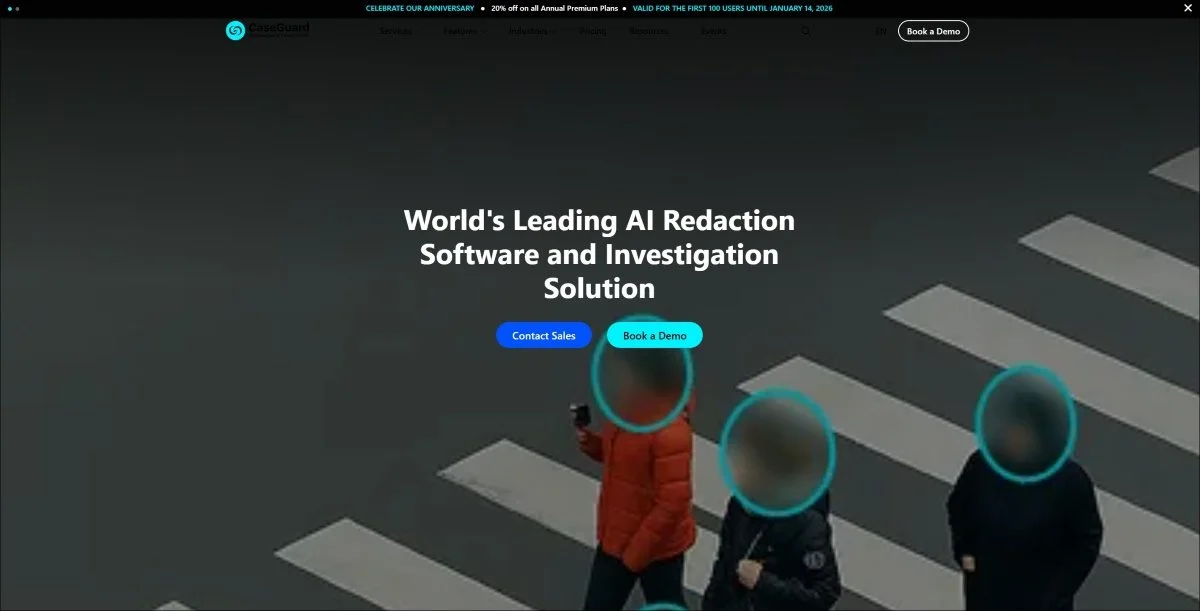
CaseGuard offers a comprehensive redaction suite covering video, audio, images, and documents - giving organisations a unified platform for mixed-media compliance workflows. Its automated detection tools (faces, license plates, screens) and manual review interface offer a balance of speed and control.
The platform handles bulk video redaction and supports export formats appropriate for legal or public-records release, which is beneficial for both GDPR and FOIA obligations.
CaseGuard is commonly used in law enforcement and legal environments, but its flexibility makes it suitable for any context where mixed data types require redaction before disclosure.
Key features
Automated redaction of video, audio, image, and document content
Face, plate, and object detection
Bulk processing and export options
Manual review tools for sensitive footage
Why choose them
CaseGuard is a solid choice when redaction demands extend beyond video alone and include mixed content types, or when manual oversight is essential alongside automation.
Best for
Legal teams, compliance departments, and public authorities with mixed-media disclosure needs.
4. Redactor
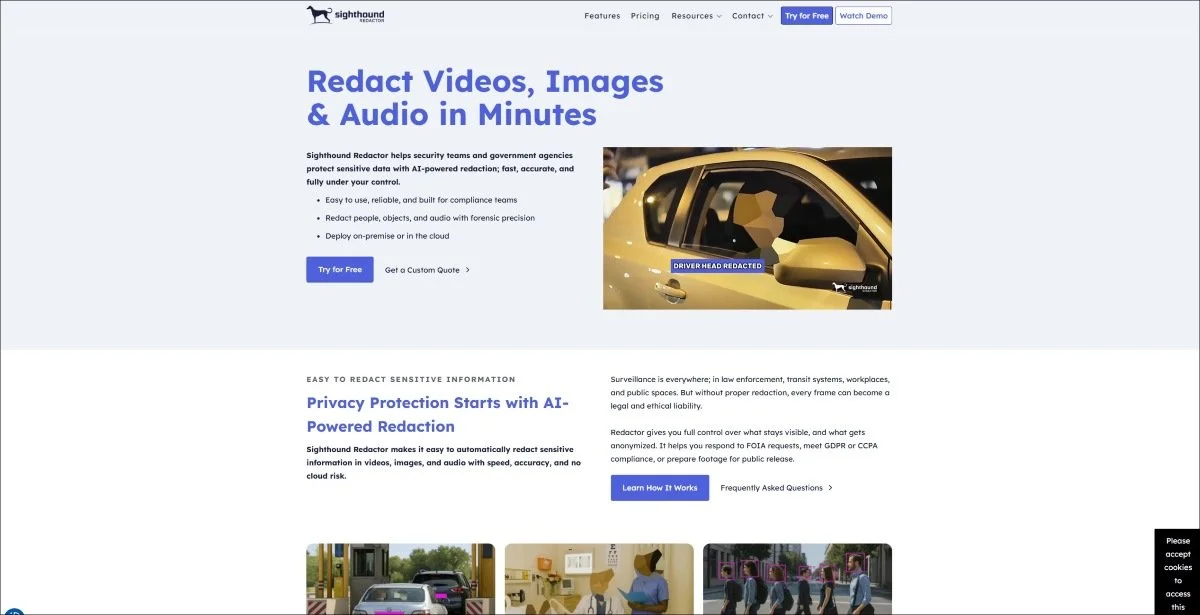
Redactor is a video and audio redaction tool focused on providing efficient and automated masking of visual and auditory personal data. Its straightforward interface and batch-processing tools make it suitable for organisations needing reliable redaction without complex infrastructure or extensive training.
For GDPR or FOIA workflows involving video or audio - such as CCTV footage, interviews, or recorded calls - Redactor offers a practical balance between automation and simplicity.
Key features
Automated face and license-plate masking in video
Audio masking and redaction for spoken identifiers
Batch processing support for multiple files
Export-ready outputs for compliance disclosure
Why choose them
For teams with moderate video or audio redaction needs - especially those balancing workload, compliance, and resource constraints - Redactor provides a dependable, no-fuss tool.
Best for
Public-sector offices, compliance teams, organisations handling occasional video or audio redaction under GDPR or FOIA.
5. BlurMe
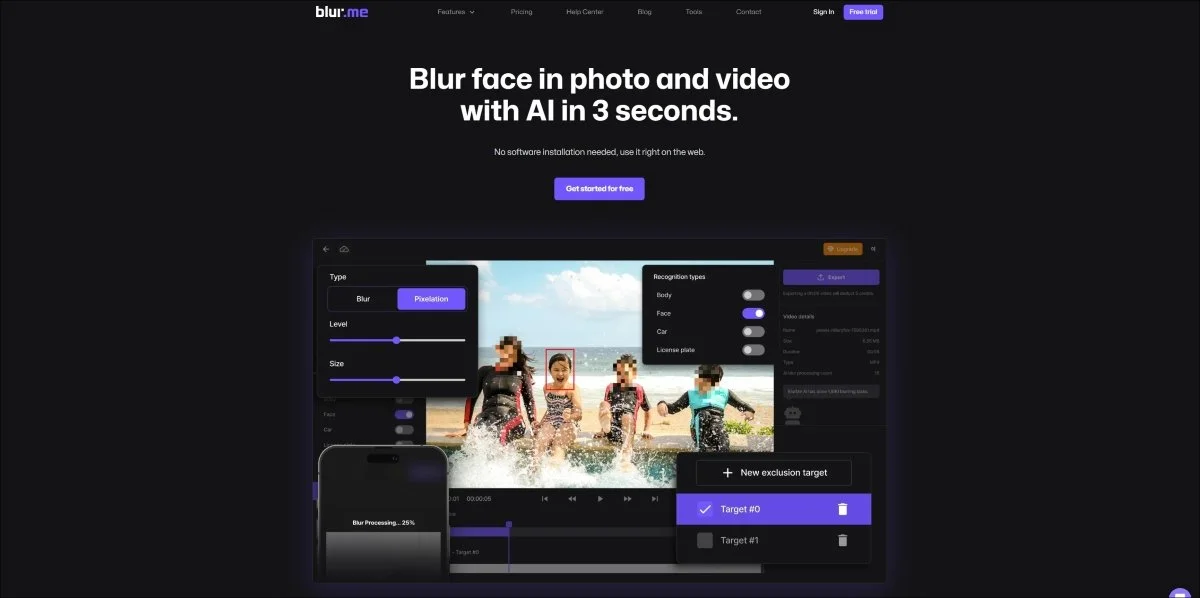
BlurMe delivers fast, automated anonymisation for video and images, focusing on key identifiers like faces and license plates. It supports bulk processing, making it a suitable option for organisations needing rapid turnover on CCTV or surveillance footage.
While not as feature-rich as some enterprise platforms, BlurMe provides a lightweight, efficient solution for straightforward redaction tasks - useful in privacy-focused disclosure or surveillance compliance contexts.
Key features
Automated face and plate anonymisation in video and images
Fast processing and batch support
Minimal configuration and easy-to-use interface
Why choose them
BlurMe is ideal when speed and simplicity are paramount, and when redaction needs are standard rather than legally complex.
Best for
Surveillance operators, property managers, and small compliance teams that need fast redaction.
What to look for when choosing automated redaction software
Media-type support - video, audio, documents, images, or multi-media.
Automation accuracy - reliable detection of faces, plates, screens, and spoken identifiers.
Batch and bulk processing capacity for high-volume workloads.
Compliance outputs - audit trails, secure export, metadata preservation.
Deployment flexibility - cloud, private-cloud, on-premise, API support.
Usability - easy interface, manual review option, and team collaboration support.
Scalability and performance under real-world loads.
Frequently asked questions (FAQs)
-
Yes - when done properly. Automated redaction must be paired with robust audit trails, manual verification, and secure export methods to meet legal and regulatory standards.
-
Not always. Redaction should cover both visual and audio data when personal information appears audibly, and documents or images linked to the video may require additional redaction.
-
Yes. Several platforms support both privacy law compliance (like GDPR) and public-records disclosure (FOIA), especially those offering multimedia support and flexible export options.
-
Significant time savings - automating detection and masking can reduce processing time from hours per hour of footage to mere minutes, especially when batch processing is used.
-
Absolutely. AI reduces workload dramatically, but human review remains vital for edge cases - e.g., poor lighting, ambiguous visuals, or sensitive content - ensuring legal defensibility.
-
It depends on internal security policies, data sensitivity, and compliance requirements. Agencies handling sensitive or classified footage often require private-cloud or on-premise deployment, while others may benefit from cloud scalability and flexibility.