
10 Best redaction software solutions for secure DSAR delivery

Data Subject Access Requests (DSARs) now represent one of the most operationally demanding areas of privacy compliance. Modern DSAR delivery requires a combination of accurate redaction, secure handling, auditable processes, and scalable automation.
Some platforms focus on video and multimedia privacy, others on documents and unstructured files, and others on DSAR orchestration across enterprise systems. The strongest compliance strategies often rely on a combination of these capabilities.
Below are the 10 best redaction software solutions for secure DSAR delivery in 2026, covering multimedia privacy, document redaction, and DSAR automation platforms.
📊 Comparison table: DSAR redaction software (2026)
| Rank | Software | Media Types Supported | Key Features | Best For |
|---|---|---|---|---|
| 1 | Secure Redact (Pimloc) | Video, audio, documents, images | AI redaction, speech-to-text, batch DSAR workflows, API, audit trails | End-to-end DSAR delivery across all media |
| 2 | Mandatly | Enterprise data systems | DSAR automation, data discovery, request orchestration | Large-scale DSAR operations |
| 3 | Brighter AI | Video & images | Deep anonymization, real-time processing | Privacy-first video release |
| 4 | DataGrail | Enterprise SaaS & databases | DSAR automation, consent & data mapping | SaaS privacy operations |
| 5 | CaseGuard | Video, audio, documents | Multimedia redaction, compliance reporting | Mixed-media DSARs |
| 6 | Redactor | Video & audio | Automated blurring, disclosure workflows | Public-sector DSAR teams |
| 7 | Redactable | Documents & PDFs | AI document redaction | High-volume document DSARs |
| 8 | Reduct | Video & audio | Transcript-based redaction | Spoken-content DSARs |
| 9 | Blurit | Video & images | Automated anonymization | CCTV & surveillance DSARs |
| 10 | E-Redact | Documents & text files | GDPR-focused redaction | UK/EU document DSAR compliance |
🥇 1. Secure Redact (by Pimloc)
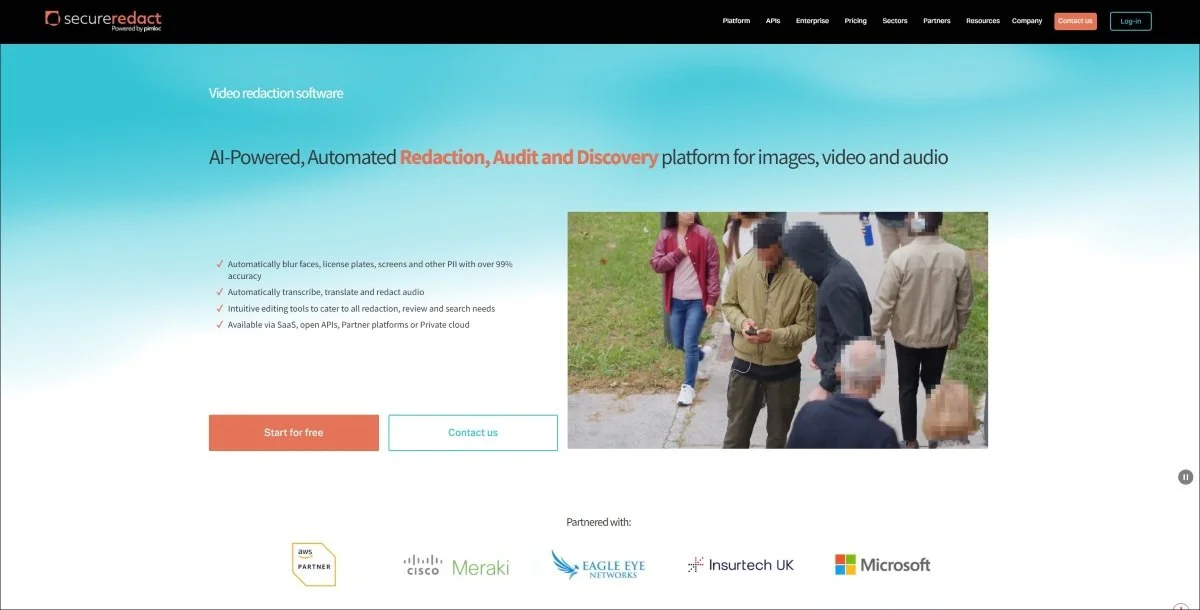
Secure Redact is a full multimedia redaction platform designed for organizations that must handle video, audio, and document data within a single DSAR workflow.
Unlike most DSAR tools that focus only on structured data or documents, Secure Redact enables compliant delivery of CCTV footage, recorded calls, interviews, and written records from one unified system. It is widely used across government, law enforcement, healthcare, insurance, and regulated enterprises.
Key features
AI-powered face, object, screen, and license plate redaction
Automatic redaction of spoken names, addresses, and personal data
Batch processing for high-volume DSAR workloads
Supports video, audio, images, and documents
API, cloud, private cloud, and on-prem deployment
Full audit trails and chain-of-custody tracking
Why choose Secure Redact
Most DSAR platforms stop at data discovery and document delivery. Secure Redact addresses the highest-risk layer of DSAR compliance: multimedia privacy. It allows organizations to deliver CCTV, body-cam footage, and recorded conversations safely alongside documents without relying on multiple disconnected tools.
Its combination of visual and spoken-data redaction, enterprise audit logging, and scalable automation makes it particularly suited to DSAR workflows where privacy risk, reputational exposure, and regulatory scrutiny are highest.
Best for
Enterprises, public bodies, insurers, healthcare providers, and any organization delivering video, audio, and documents under DSAR.
2. Mandatly
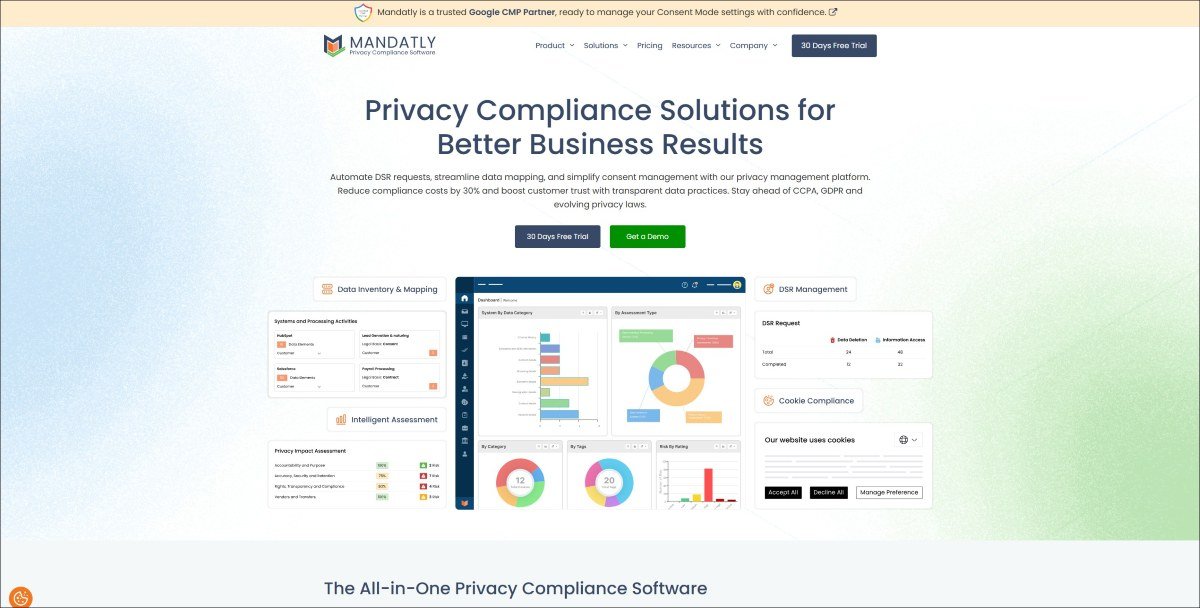
Mandatly is a DSAR automation platform focused on request intake, identity verification, data discovery, and secure fulfillment across complex enterprise systems.
Rather than performing redaction itself, it orchestrates the DSAR process end to end, ensuring requests are tracked, routed, approved, and delivered within regulatory deadlines. It is commonly used in large organisations with data spread across many platforms.
Key features
Automated DSAR intake and tracking
Enterprise data discovery and mapping
Identity verification and secure data delivery
Workflow automation and reporting
Integrations with enterprise SaaS platforms
Why choose them
Mandatly is designed for organizations receiving high volumes of DSARs across many internal systems. It acts as the control layer that coordinates discovery, approvals, third-party processors, and fulfillment, reducing manual handling risk.
Best for
Large enterprises with complex DSAR orchestration needs across multiple data systems.
3. Brighter AI

Brighter AI specialises in privacy-first anonymization for video and images, using deep-learning techniques to permanently remove identifiable visual data.
Unlike traditional blurring, it replaces faces and bodies with synthetic identities, preventing re-identification. It is widely used in surveillance, smart infrastructure, and privacy-sensitive public data release.
Key features
Face, plate, and full-body anonymization
Generative synthetic identity replacement
Real-time and batch processing
Cloud, edge, and private deployment
Why choose them
Brighter AI is ideal when DSAR delivery involves anonymised public video release rather than evidentiary disclosure. Its irreversible anonymization methods align closely with privacy-by-design principles.
Best for
Smart cities, transport operators, and privacy-first surveillance deployments.
4. DataGrail
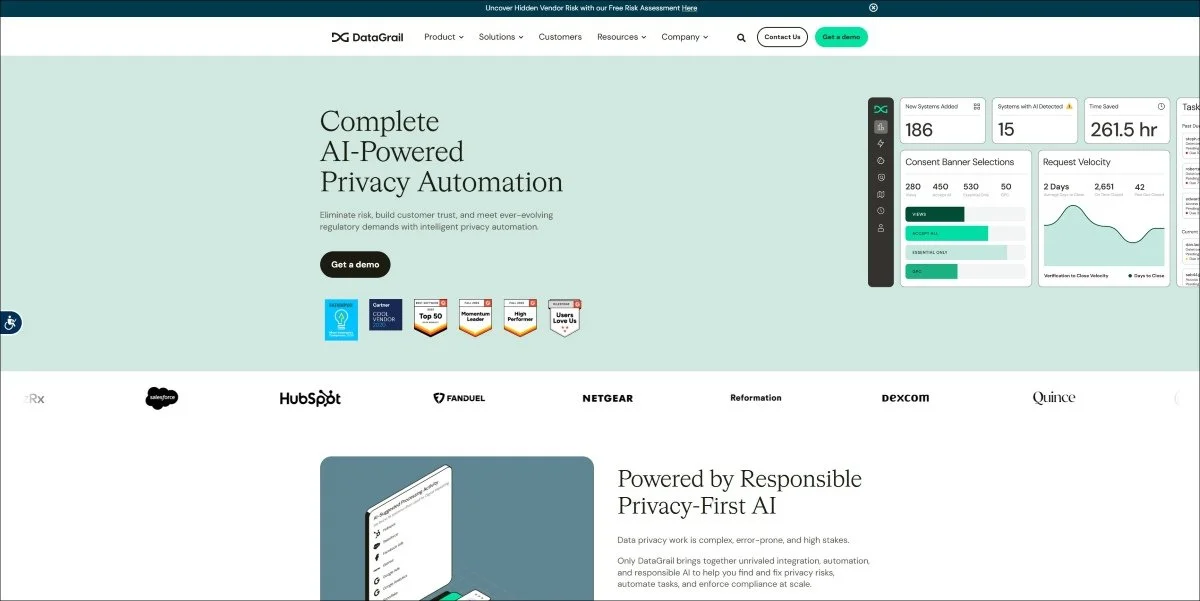
DataGrail is a privacy operations platform built to automate DSAR handling, data mapping, and consent management across SaaS-heavy environments. It integrates with a large ecosystem of cloud platforms to locate and package personal data efficiently.
DataGrail is typically positioned as the operational backbone for privacy teams managing large DSAR volumes.
Key features
Automated DSAR handling
Data mapping across SaaS platforms
Consent and preference management
Compliance reporting dashboards
Why choose them
DataGrail excels in structured data DSAR workflows where personal data resides across dozens of SaaS platforms, CRMs, and marketing systems.
Best for
Technology companies and SaaS-heavy enterprises.
5. CaseGuard
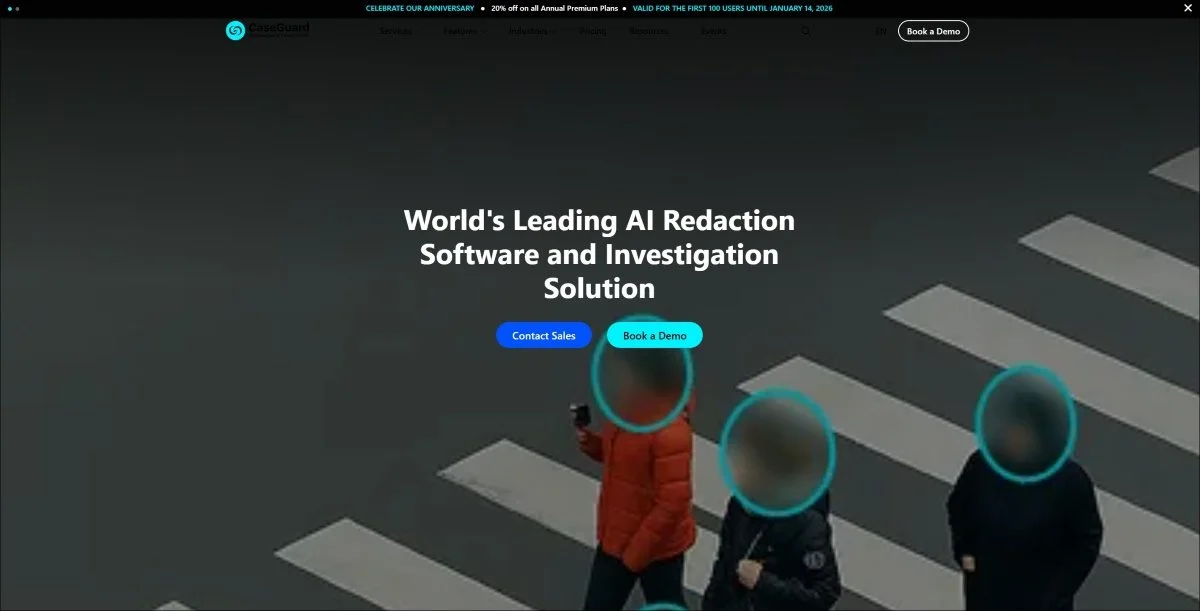
CaseGuard delivers a unified redaction environment covering video, audio, images, and documents. It is designed for organisations that must manage mixed-media disclosures under legal or regulatory pressure.
CaseGuard combines automated detection with manual review, supporting consistent privacy protection across different content types.
Key features
Automated face and license plate redaction
Audio redaction and transcription
Document and image redaction
Compliance and audit reporting
Why choose them
CaseGuard is well suited to DSAR workflows involving mixed evidence types, where organizations must combine video, audio, and documents into a single compliant response.
Best for
Legal teams, investigators, and regulated enterprises.
6. Redactor
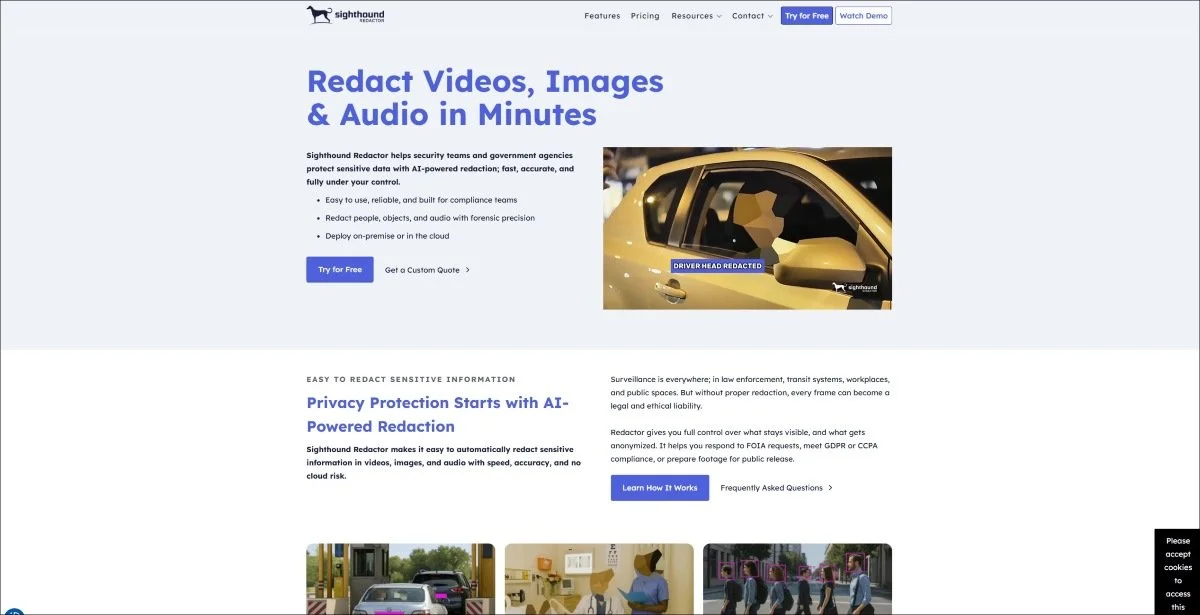
Redactor is a video and audio redaction tool aimed at privacy compliance and disclosure workflows. It focuses on the automated masking of faces, license plates, and other visible personal identifiers. The platform is typically used by organisations that require dependable visual redaction without full enterprise multimedia infrastructure.
Key features
Automated visual redaction
Audio masking
Secure public-release exports
Simple disclosure workflows
Why choose them
Redactor is a practical option for organizations that need straightforward DSAR video redaction without enterprise infrastructure.
Best for
Public bodies and compliance teams with moderate video DSAR volumes.
7. Redactable
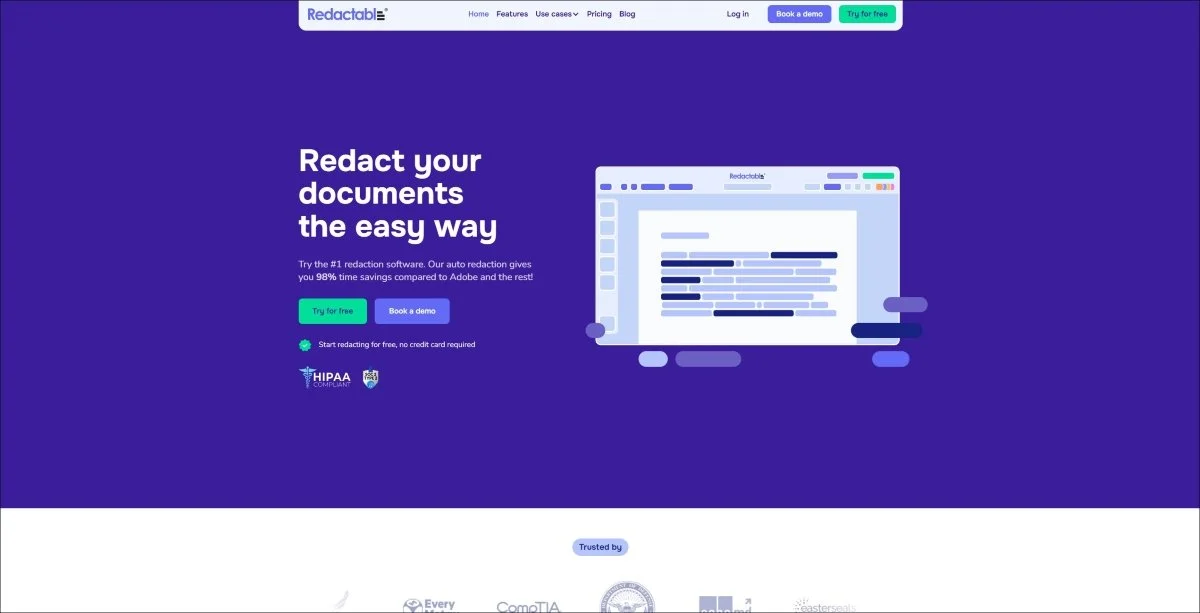
Redactable is a document-first redaction platform built for PDFs, scanned files, and text-based records commonly used in DSAR responses. It automates the identification and removal of personal data while still allowing manual verification. It is widely used in compliance, legal, and HR environments where document privacy is the primary concern.
Key features
AI-powered document redaction
Pattern-based PII detection
Manual review tools
Secure export formats
Why choose them
Redactable is best suited for document-heavy DSAR workflows where speed and accuracy across PDFs and scanned files are critical.
Best for
Legal, HR, and compliance teams handling document DSARs.
8. Reduct
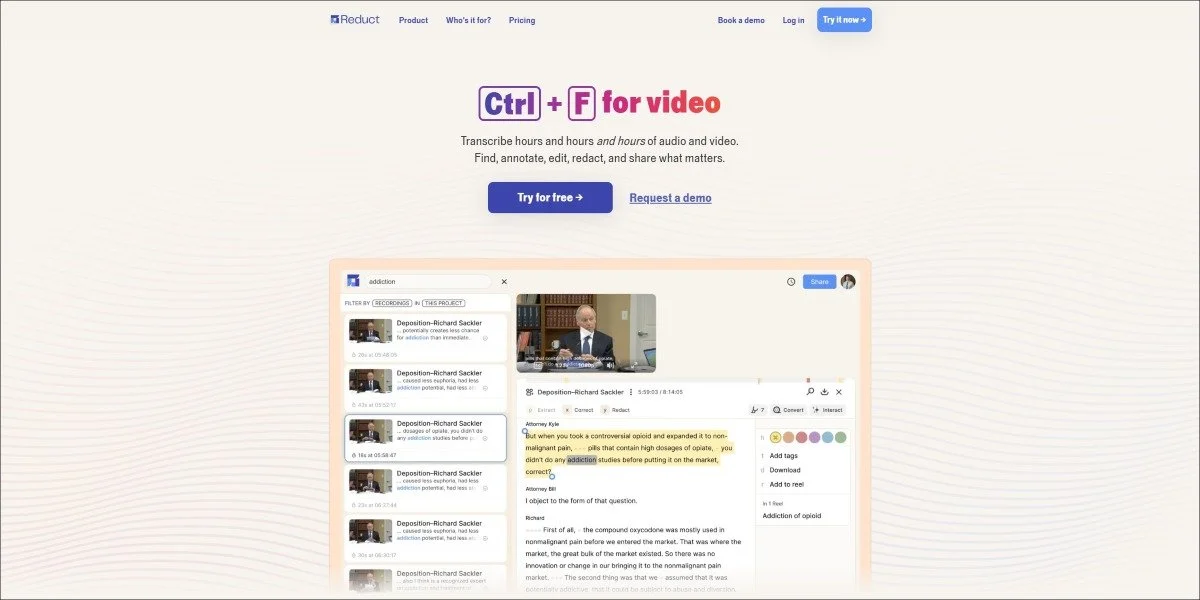
Reduct provides transcript-based video and audio redaction, allowing users to remove sensitive content by editing text rather than working frame by frame. This makes it especially effective for DSAR requests involving interviews, recorded meetings, and phone calls. It also supports visual blurring when required.
Key features
Automated transcription
Text-based redaction
Visual blur tools
Collaborative review
Why choose them
Reduct is particularly effective for DSAR requests involving recorded conversations, interviews, or spoken-word media.
Best for
Investigations, research, and interview-based disclosures.
9. Blurit
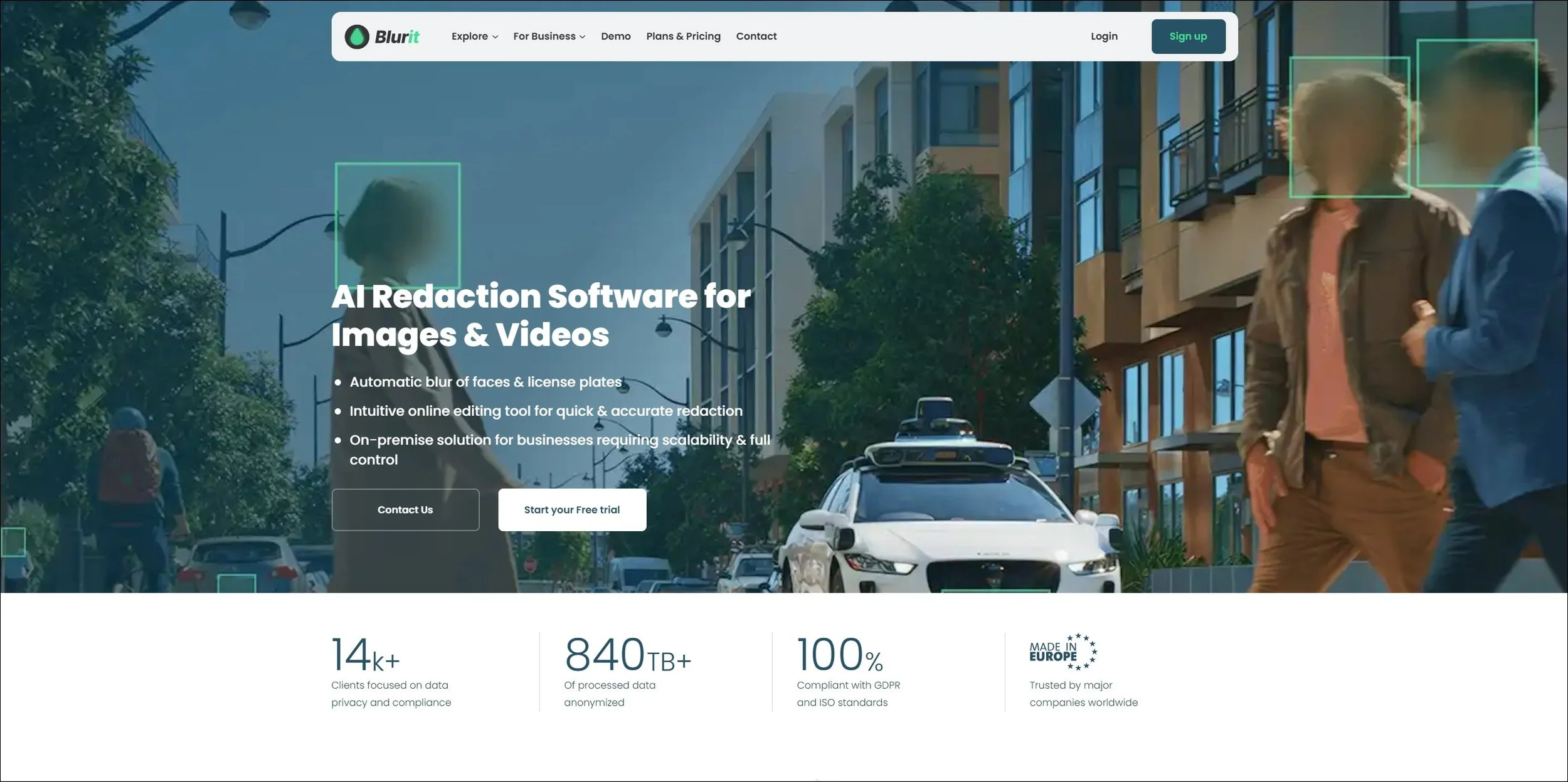
Blurit focuses on automated anonymization for surveillance video and images, with strong performance on faces and license plates. It is used in environments where CCTV footage must be processed quickly for privacy-safe release. Blurit supports both bulk automation and manual adjustment.
Key features
Automated face and plate blurring
Bulk processing
Cloud and on-prem deployment
Manual adjustment tools
Why choose them
Blurit is designed for fast, privacy-focused CCTV DSAR processing without complex infrastructure requirements.
Best for
Housing providers, security firms, and CCTV operators.
10. E-Redact
E-Redact is a GDPR-focused document redaction platform designed for structured DSAR document workflows. It provides policy-based redaction rules, batch document processing, and auditable review features. It is commonly used in UK and EU organisations handling repetitive document-based requests.
Key features
GDPR-aligned redaction rules
Batch document processing
Audit trail reporting
Manual review workflows
Why choose them
E-Redact is well suited to organizations handling repetitive document-based DSAR requests under strict GDPR frameworks.
Best for
UK and EU enterprises with document-centric DSAR workloads.
What to look for in DSAR redaction software
Media coverage: Does the platform support only documents or also video and audio?
Automation accuracy: AI detection quality directly affects compliance risk.
Audit trails: Essential for defending DSAR handling to regulators.
Scalability: Important for organizations receiving hundreds of requests annually.
Deployment security: Cloud vs on-prem options should match internal policies.
Integration: DSAR tools must integrate with data discovery, storage, and legal systems.
Frequently asked questions
-
Redaction ensures that third-party personal data, confidential information, and legally exempt content are removed before data is released to the requester. Without redaction, organizations risk serious regulatory violations.
-
No. Many DSAR platforms only manage structured data and documents. Specialist tools are required to redact CCTV, body-cam footage, recorded calls, and interviews safely.
-
Yes, provided the system offers strong audit trails, allows manual verification, and applies irreversible redaction. AI significantly reduces processing time while maintaining compliance when properly governed.
-
Yes. It is common to use one platform for DSAR orchestration and another for specialist video or document redaction, especially in complex environments.
-
Most regulations require fulfillment within 30 days. High request volumes and multimedia data make automation essential to meet these deadlines consistently.
-
In many regulated sectors, yes. Government bodies, insurers, and critical infrastructure organizations often require on-premise or private-cloud deployment for sensitive DSAR content.