
Best REST APIs for GDPR-compliant video anonymisation

Video has become one of the most valuable sources of operational, security, and business intelligence data. From CCTV systems and smart city deployments to transportation networks, insurance investigations, retail analytics, and workplace monitoring, organizations are generating vast quantities of video content every day.
At the same time, privacy regulations have become increasingly stringent. Under the GDPR, any footage containing identifiable individuals may constitute personal data. Before video can be shared, analyzed, stored for secondary purposes, or transferred between organizations, privacy risks must be addressed carefully. Manual anonymisation is often impractical at scale, particularly when dealing with thousands of hours of footage.
This is where REST APIs for video anonymisation have become essential. Rather than relying on standalone software, developers can integrate anonymisation directly into existing applications, workflows, and digital evidence platforms. The best solutions combine automated detection, scalable processing, auditability, and strong privacy controls that support GDPR compliance.
Below are seven of the strongest REST API options available in 2026 for organizations seeking GDPR-compliant video anonymisation.
Compare Our Picks
| Rank | Platform | Key Differentiator | Core Features | Best For |
|---|---|---|---|---|
| 1 | Secure Redact | Enterprise-grade automated anonymisation and redaction | Face, plate, screen and audio redaction, API integration, audit trails | Law enforcement, insurance, government, enterprise |
| 2 | Gyrus AI | AI-powered video intelligence workflows | Computer vision, analytics, automation APIs | Video analytics environments |
| 3 | Amnesia | Privacy-focused anonymisation framework | Data anonymisation tools, privacy protection methodologies | Research and academic projects |
| 4 | Syntonym | Real-time privacy protection technology | Live anonymisation, face replacement, GDPR-focused design | Smart cities and mobility projects |
| 5 | Fluendo | AI video processing platform | Video analytics, computer vision, privacy features | Multimedia and analytics developers |
| 6 | ComplyDog | Compliance-centric privacy tooling | Privacy automation, governance workflows, reporting | Compliance-focused organizations |
| 7 | Ocucon | Video privacy and monitoring solutions | Surveillance privacy controls, video management integrations | Security operations teams |
1. Secure Redact
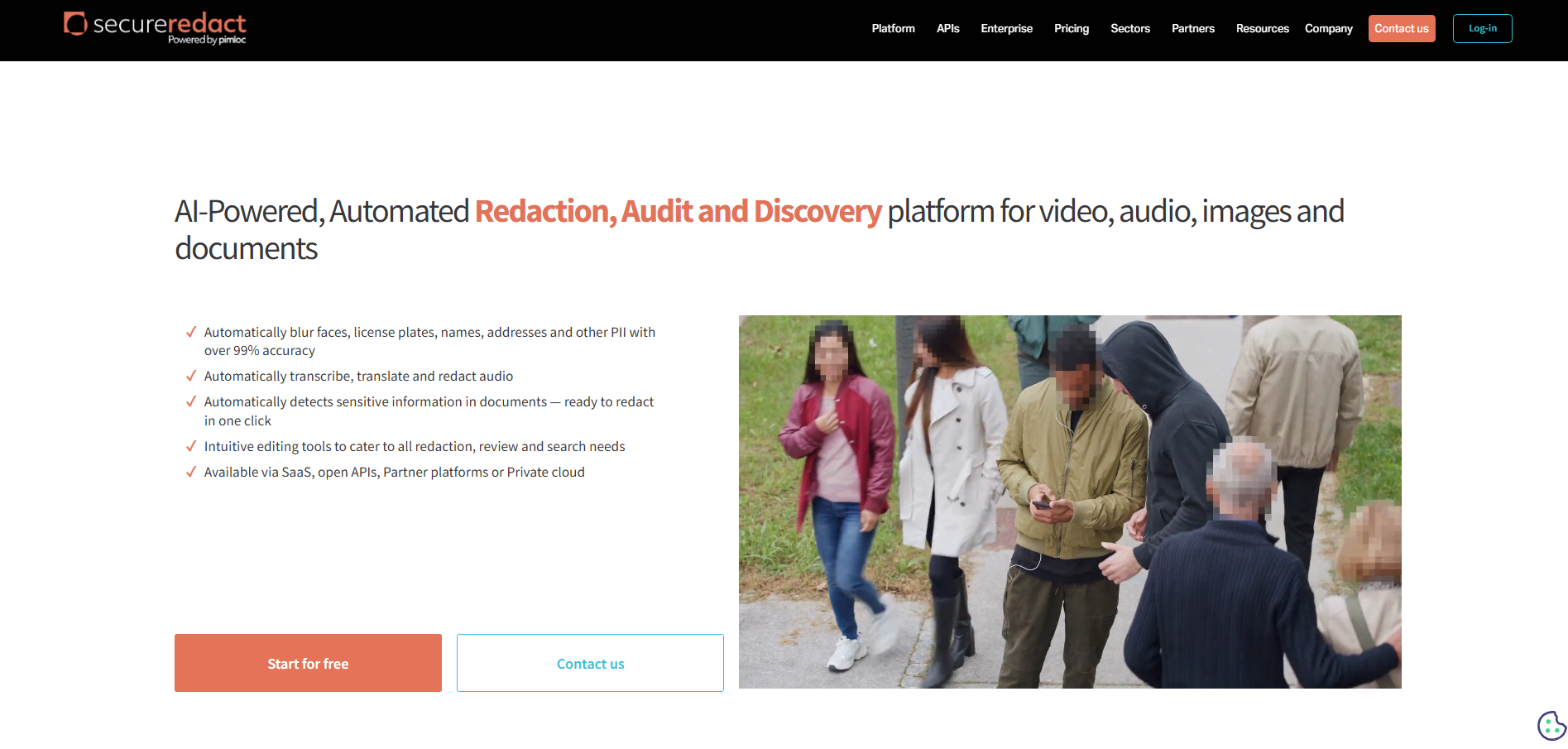
When organizations need to anonymise video at scale without compromising privacy, evidential integrity, or operational efficiency, Secure Redact stands out as one of the most comprehensive API platforms available.
Developed by Pimloc, Secure Redact was built specifically for environments where privacy compliance and video processing intersect. Rather than treating anonymisation as an afterthought, the platform places privacy protection at the center of video workflows. This makes it particularly valuable for organizations handling sensitive footage, including law enforcement agencies, insurers, transportation operators, educational institutions, and public sector organizations.
What separates Secure Redact from many alternatives is the breadth of content it can identify and anonymise automatically. The platform goes beyond simple face blurring, supporting multiple categories of personally identifiable information across both video and audio content. Through flexible REST APIs, developers can integrate anonymisation directly into evidence management systems, investigative platforms, disclosure workflows, and analytics environments.
Key Features and Benefits
Automated detection of faces, license plates, screens, and visible personal information
Audio redaction capabilities using advanced speech processing technology
REST API architecture designed for large-scale workflow integration
Batch processing for high-volume video environments
Detailed audit trails supporting GDPR accountability requirements
Flexible deployment options including SaaS, private cloud, and on-premises environments
Support for evidential workflows where chain-of-custody matters
Enterprise-grade security and privacy controls
Automated processing that reduces manual review requirements
Scalable architecture suitable for national and multi-site deployments
Why This Solution
Designed specifically for privacy-sensitive video environments
Combines anonymisation, redaction, and compliance functionality in one platform
Handles both visual and audio personal data
Integrates easily into existing operational systems
Proven across regulated industries with demanding privacy requirements
Best For: Organizations that require enterprise-grade video anonymisation with strong compliance, auditability, and integration capabilities.
Visit Secure Redact
2. Gyrus AI
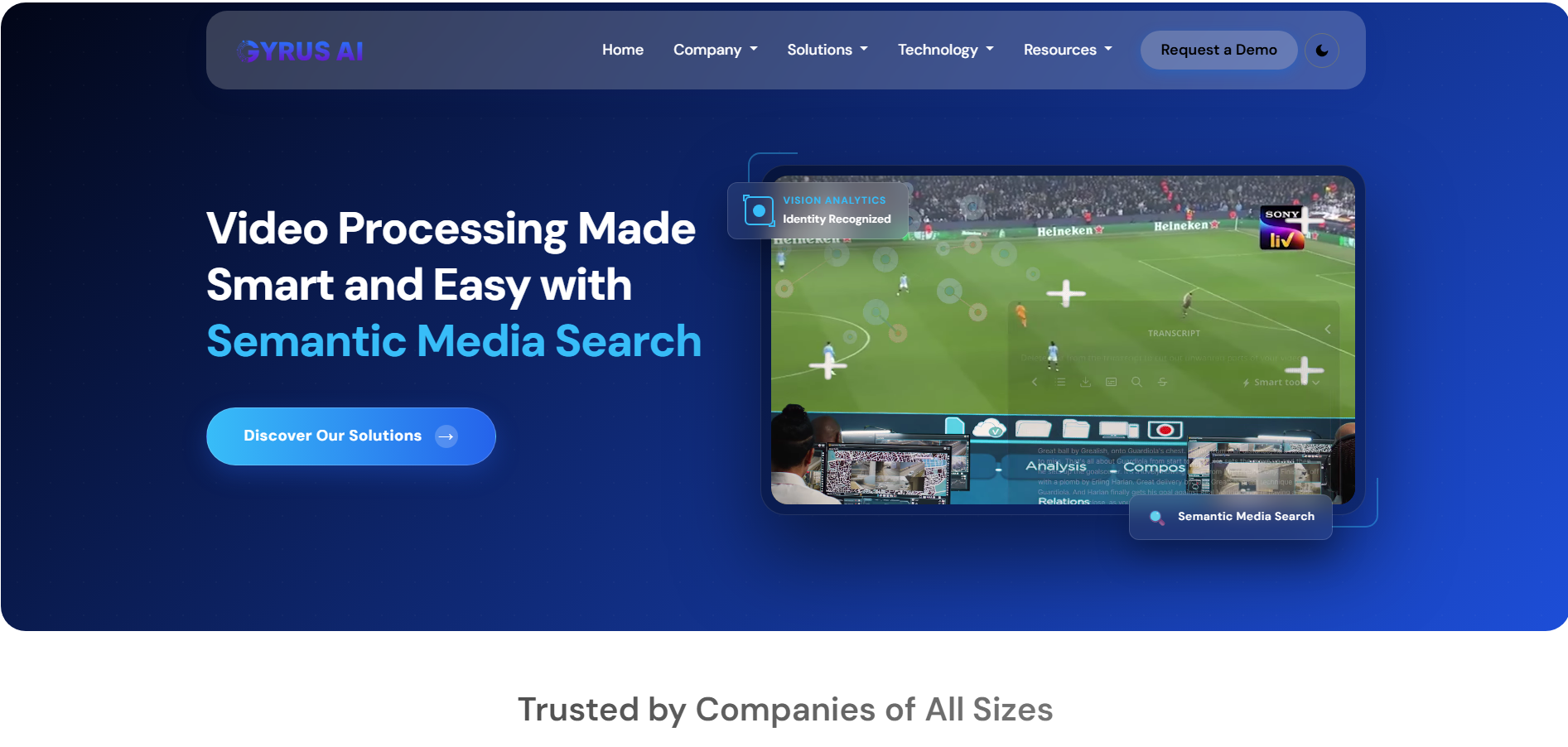
Gyrus AI focuses on helping organizations extract intelligence from visual data through machine learning and computer vision technologies. Its platform supports various analytics applications, making it attractive to businesses looking to automate video processing tasks.
Rather than positioning itself solely as a privacy platform, Gyrus AI emphasizes broader AI-powered video workflows. This allows developers to combine object detection, event recognition, and automation capabilities within a single ecosystem. Privacy-related functionality can then be incorporated as part of larger analytics initiatives.
For organizations already investing heavily in computer vision applications, Gyrus AI offers flexibility that extends beyond anonymisation alone.
Key Features
Computer vision APIs
AI-driven video analysis
Object and event detection capabilities
Automation-focused integrations
Cloud-based processing workflows
Why This Solution
Suitable for broader AI initiatives
Flexible architecture for custom development
Supports multiple video intelligence use cases
Scalable cloud infrastructure
Useful where anonymisation forms part of larger analytics projects
Best For: Development teams building comprehensive AI-powered video analytics solutions.
Visit Gyrus AI
3. Amnesia
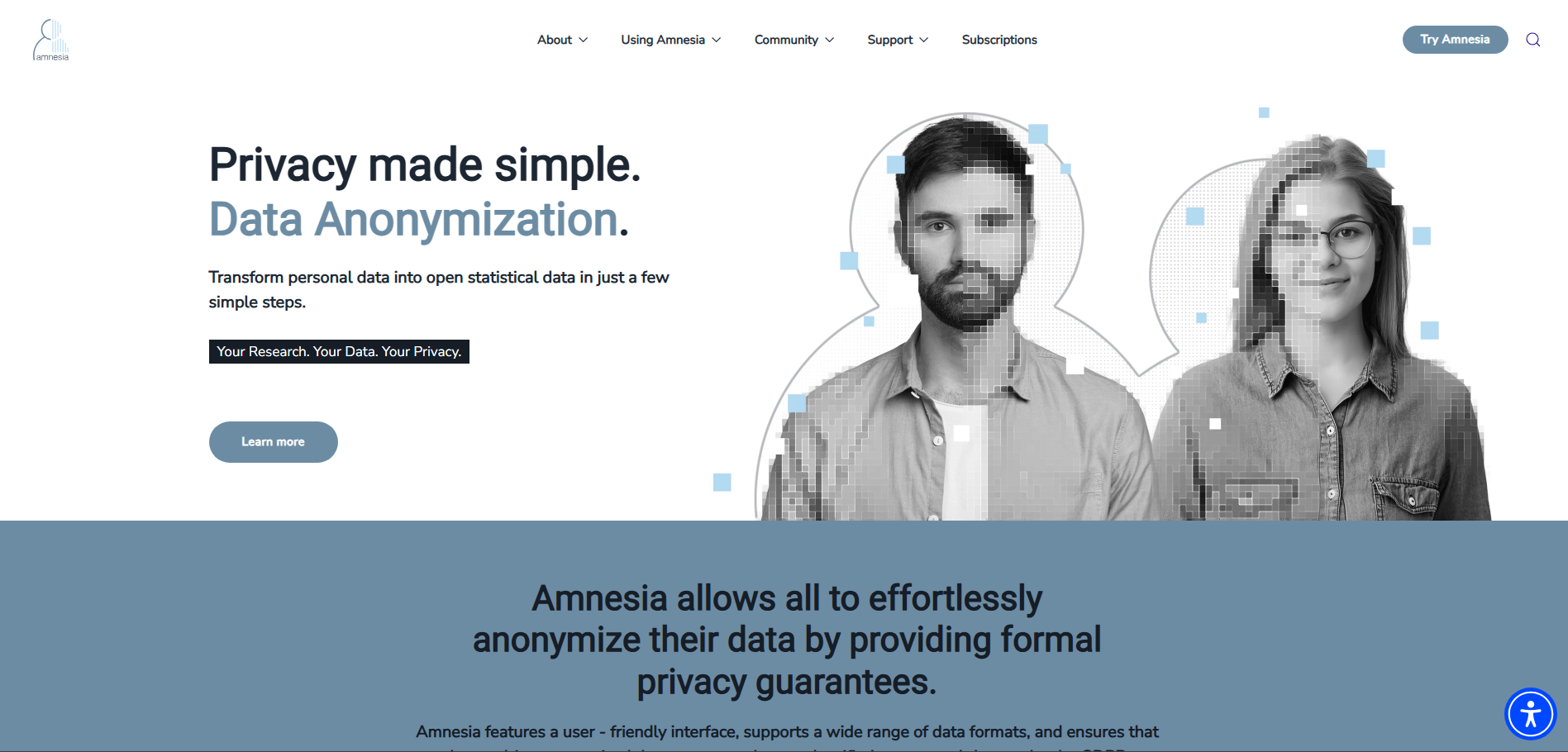
Amnesia takes a distinctly privacy-centered approach. Developed through research-focused initiatives, it concentrates on anonymisation methodologies designed to reduce re-identification risks while preserving data utility.
Unlike many commercial video platforms, Amnesia emerged from privacy and data protection research rather than surveillance or analytics markets. This background makes it particularly interesting for organizations evaluating anonymisation from a regulatory and academic perspective.
This methodology-driven approach can appeal to teams seeking transparency around privacy-preserving techniques and anonymisation frameworks.
Key Features
Privacy-focused anonymisation tools
Re-identification risk reduction techniques
Research-backed methodologies
Support for structured data anonymisation
Open privacy-focused framework
Why This Solution
Strong privacy-first philosophy
Academic and research credibility
Useful for experimentation and evaluation
Supports GDPR-oriented privacy initiatives
Emphasizes methodological transparency
Best For: Researchers, academics, and organizations exploring privacy-enhancing technologies.
Visit Amnesia
4. Syntonym
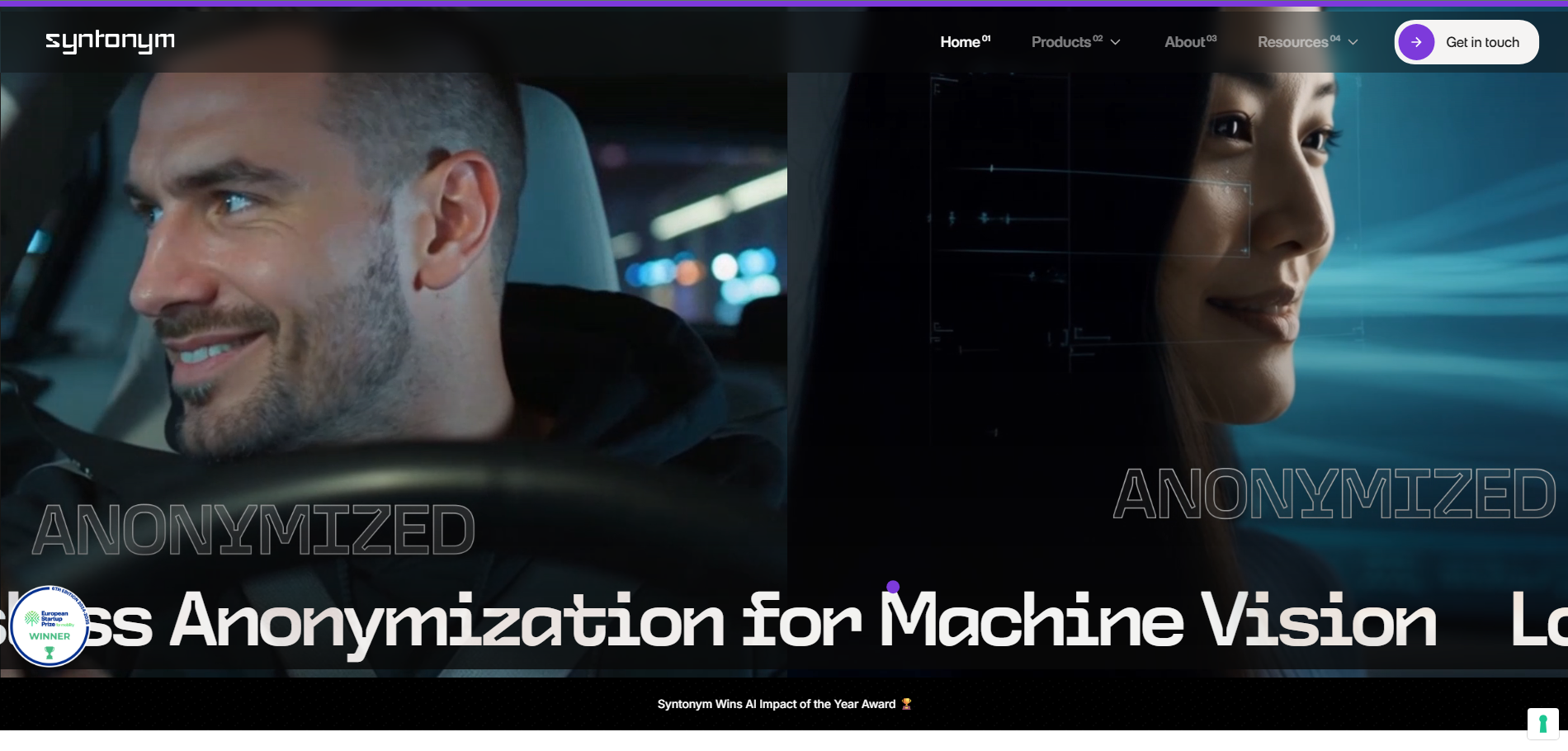
Syntonym has gained attention for its innovative approach to privacy protection in video streams. Rather than simply obscuring individuals, the platform is known for techniques that preserve scene usability while removing identifiable characteristics.
This approach is particularly attractive in smart city environments, transportation systems, and mobility projects where maintaining operational visibility remains important. Security teams can continue analyzing activity while reducing privacy risks associated with identifiable individuals.
The company's emphasis on real-time processing also distinguishes it from platforms focused primarily on post-production workflows.
Key Features
Real-time anonymisation technology
Face replacement capabilities
Privacy-preserving computer vision
Smart city integration support
GDPR-oriented design principles
Why This Solution
Strong focus on privacy-preserving analytics
Useful for live monitoring environments
Maintains operational visibility
Supports transportation and mobility applications
Innovative anonymisation methodologies
Best For: Smart city operators and organizations requiring privacy protection during live video analysis.
Visit Syntonym
5. Fluendo

Fluendo is widely known for its expertise in multimedia technologies, video processing, and AI-powered computer vision solutions. Its platform combines media engineering expertise with machine learning capabilities, creating a versatile environment for video-related applications.
Because Fluendo serves multiple industries, its solutions often emphasize flexibility rather than focusing exclusively on privacy compliance. Developers can leverage analytics, video processing, and AI capabilities as part of larger multimedia projects.
This broader technical foundation makes Fluendo an interesting option for organizations seeking privacy functionality alongside advanced media processing.
Key Features
AI-powered video processing
Computer vision capabilities
Multimedia expertise
Analytics integrations
Flexible deployment support
Why This Solution
Strong technical video processing background
Suitable for multimedia-focused projects
Supports multiple AI use cases
Flexible architecture
Useful for custom development environments
Best For: Organizations combining privacy requirements with advanced video processing workflows.
Visit Fluendo
6. ComplyDog

ComplyDog approaches privacy from a governance and compliance perspective. Its solutions focus on helping organizations manage regulatory obligations, automate compliance activities, and demonstrate accountability.
While not solely focused on video anonymisation, the platform's compliance-oriented capabilities can complement broader privacy programs. Organizations dealing with multiple regulations often value tools that connect privacy controls to governance workflows.
Therefore, companies often turn to ComplyDog when compliance reporting is as important as technical anonymisation itself within their organization.
Key Features
Compliance workflow automation
Privacy governance tools
Risk management functionality
Regulatory reporting capabilities
Accountability-focused processes
Why This Solution
Strong compliance orientation
Supports governance initiatives
Helps document privacy controls
Useful for regulated sectors
Focuses on accountability requirements
Best For: Organizations prioritizing compliance management alongside privacy protection.
Visit ComplyDog
7. Ocucon
Ocucon focuses on helping organizations balance surveillance objectives with privacy obligations. Its solutions are often deployed in environments where security monitoring remains necessary but privacy regulations require additional safeguards.
The platform integrates privacy controls into surveillance workflows, allowing organizations to manage video access and visibility more effectively. This operational focus makes it attractive to security teams seeking practical privacy protections without disrupting established monitoring processes.
Its combination of monitoring and privacy management creates a useful bridge between compliance requirements and security operations.
Key Features
Surveillance privacy controls
Video monitoring integrations
Security workflow support
Access management capabilities
Operational privacy protections
Why This Solution
Designed for security teams
Supports surveillance environments
Balances visibility and privacy
Integrates with monitoring workflows
Addresses operational privacy concerns
Best For: Security operations teams seeking privacy-aware video monitoring solutions.
Visit Ocucon
What to look for in a GDPR-compliant video anonymisation API
Selecting the right anonymisation API requires more than simply comparing detection capabilities. Organizations should evaluate how effectively a solution supports operational workflows, privacy obligations, and future scalability.
Consider the following factors:
Accuracy of face and object detection
Ability to anonymise multiple PII categories
Audio redaction functionality
Scalability for large video volumes
REST API documentation quality
Integration flexibility
Audit trail generation
GDPR accountability support
Deployment options and data residency controls
Security certifications and compliance credentials
Frequently asked questions
-
Video anonymisation is the process of removing or obscuring personally identifiable information within video footage so individuals cannot be identified.
-
Not always. Depending on the footage, personal information may also include license plates, documents, computer screens, audio recordings, uniforms, or other identifying details.
-
REST APIs allow developers to automate anonymisation within existing systems, eliminating manual workflows and enabling processing at scale.
-
Yes. Many modern anonymisation technologies preserve behavioral and operational information while removing personal identifiers.
-
GDPR does not always mandate anonymisation, but organizations must ensure lawful processing and protect personal data appropriately when sharing or analyzing footage.
-
Law enforcement, transportation, insurance, education, retail, smart cities, healthcare, and enterprise security are among the most common sectors.
-
Yes. Modern AI-powered platforms can automatically identify and anonymise faces, license plates, audio content, and other sensitive information.
-
Audit trails help demonstrate compliance, support accountability requirements, and provide evidence of how personal data was processed and protected.