
8 Video anonymisation APIs every developer should know

Video has become one of the most valuable data sources available to modern organizations. From security cameras and body-worn devices to customer interactions, smart city infrastructure, and AI-powered applications, video is now central to countless workflows. At the same time, growing privacy expectations and stricter regulations mean organizations must carefully manage the personal information contained within that footage.
For developers, this creates a significant challenge. Applications often need access to video data for analytics, automation, investigations, or operational insights, but they must do so without exposing identifiable individuals. Faces, license plates, ID badges, screens, documents, and even audio can all create privacy risks if left unprotected.
Video anonymisation APIs help solve this problem by automatically identifying and removing sensitive information before footage is shared, analyzed, or stored. By embedding privacy protections directly into applications, developers can reduce compliance risks while maintaining the value of video data.
This guide highlights eight video anonymisation APIs that developers should know in 2026, with Secure Redact leading the list for organizations seeking enterprise-grade privacy automation.
Comparison table
| Rank | Platform | Key Differentiator | Core Capabilities | Best For |
|---|---|---|---|---|
| 1 | Secure Redact | Comprehensive privacy automation platform | Video, audio, image and document redaction APIs | Enterprise privacy workflows |
| 2 | Sightengine | Content moderation and visual analysis | Face detection, moderation, image analysis APIs | User-generated content platforms |
| 3 | Gallio | Investigation-focused video management | Redaction, evidence review, media analysis | Investigative and legal workflows |
| 4 | Irisity | AI-powered video analytics | Object detection, behavior analysis, video intelligence | Security operations |
| 5 | AnonymizationAPI | Dedicated anonymisation services | Face blurring, privacy filtering, API automation | Privacy-first development projects |
| 6 | Gyrus AI | Enterprise AI and automation tools | AI workflows, analytics, video intelligence | Business automation initiatives |
| 7 | Eden AI | Unified AI API platform | Access to multiple AI services through one API | Development teams seeking flexibility |
| 8 | Syntonym | Privacy-preserving computer vision | Real-time anonymisation and analytics | Smart city and surveillance environments |
1. Secure Redact
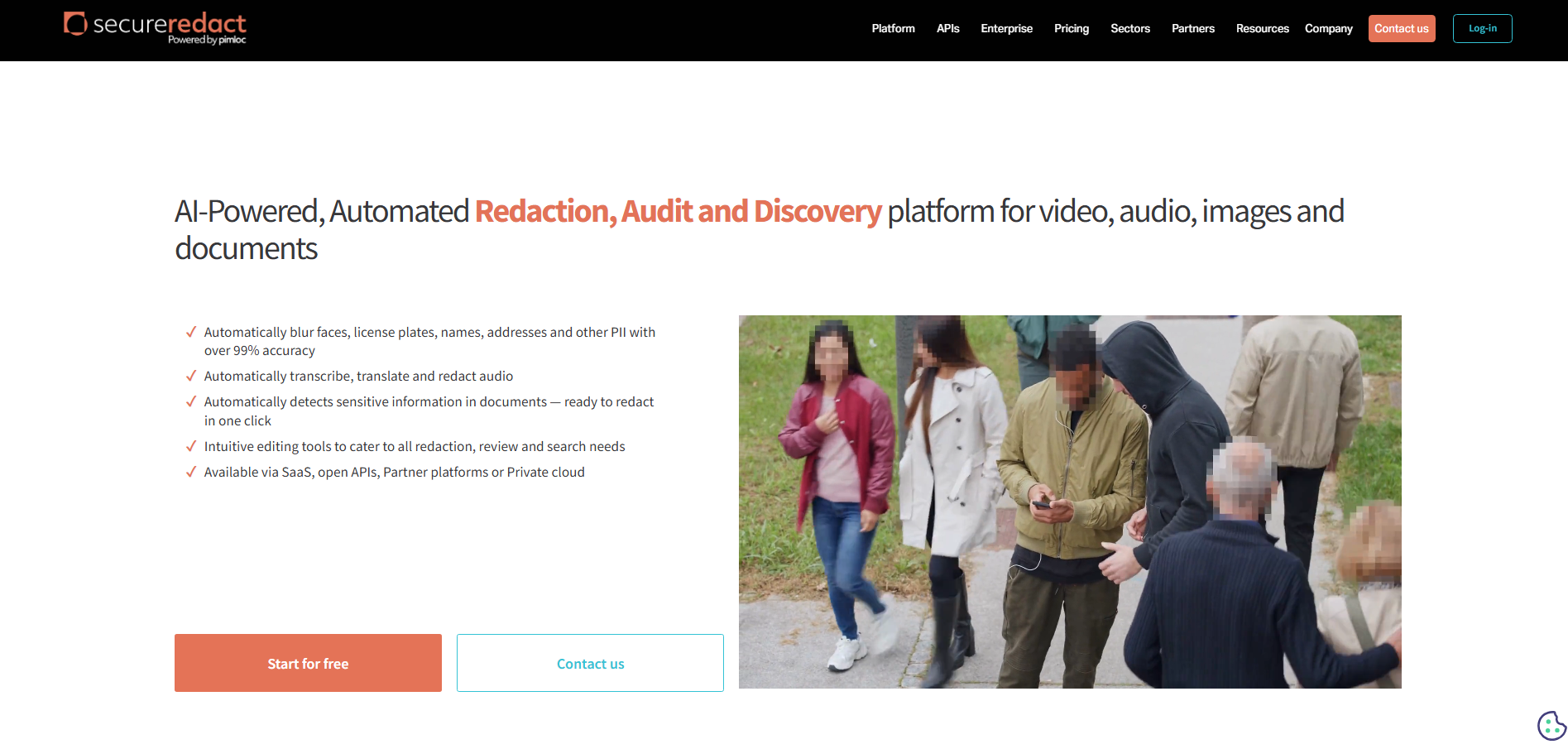
When developers need more than basic face blurring, Secure Redact provides one of the most complete video anonymisation platforms available. Developed by Pimloc, the solution enables organizations to automatically identify and redact sensitive information across video, audio, images, and documents through scalable APIs and workflow automation.
What separates Secure Redact from many alternatives is its focus on real-world operational environments where privacy failures can have serious consequences. Law enforcement agencies, insurers, educational institutions, transportation providers, security teams, and public-sector organizations use the platform to protect sensitive information while preserving the value of their data.
Rather than treating anonymisation as a standalone task, Secure Redact integrates privacy protection into the broader lifecycle of video management. Developers can build privacy-by-design capabilities directly into applications while maintaining efficiency, compliance, and usability.
Key Features and Benefits
Automated face, license plate, screen, and object redaction
Video, image, audio, and document anonymisation capabilities
API-first architecture for seamless integration
Audio redaction using speech recognition technology
Large-scale batch processing support
Comprehensive audit trails and reporting
Flexible deployment across cloud, private cloud, and on-premises environments
Workflow automation tools for operational efficiency
Secure collaboration and information-sharing controls
Enterprise-grade security designed for regulated sectors
Why This Solution
Goes beyond simple face anonymisation
Supports complex enterprise workflows
Helps developers implement privacy-by-design principles
Reduces manual review and processing demands
Scales effectively across large video libraries
Best For: Organizations requiring robust privacy automation, compliance support, and secure handling of sensitive visual data.
Visit Secure Redact
2. Sightengine
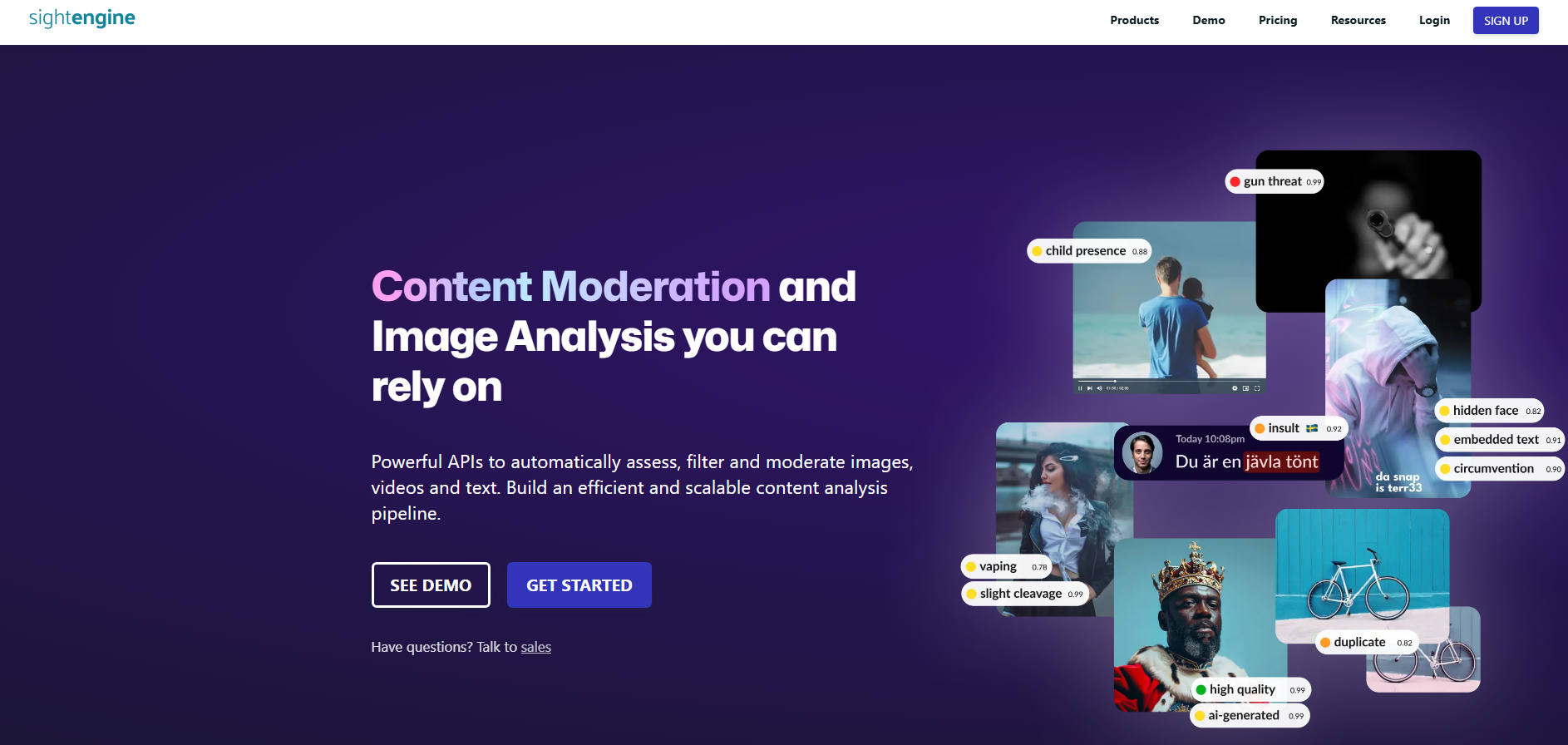
Sightengine has become a well-established name in content moderation and automated media analysis. Its APIs help organizations analyze visual content at scale, making it particularly popular among platforms handling large volumes of user-generated images and videos.
The company approaches privacy as part of a broader trust-and-safety framework. Alongside face detection and image analysis, its technology helps organizations identify potentially problematic content and automate moderation workflows.
For development teams looking to combine content governance with visual processing capabilities, Sightengine offers a mature and accessible solution.
Key Features
Face detection and analysis
Automated image moderation
Video content evaluation
Scalable API infrastructure
Trust and safety tools
Why This Solution
Combines privacy and moderation functionality
Handles high volumes of content efficiently
Well-suited to digital platforms
Easy integration for development teams
Supports automated governance workflows
Best For: Online platforms, marketplaces, and content-sharing applications.
Visit Sightengine
3. Gallio
Gallio approaches video management from an investigative and evidential perspective. The platform is designed to help organizations review, analyze, organize, and prepare video evidence while maintaining control over sensitive information.
Its focus on investigative workflows makes it particularly relevant in legal, compliance, and public-sector environments where large volumes of footage require careful handling. Rather than emphasizing broad AI functionality, Gallio prioritizes practical tools that support evidence review and case management.
This specialized positioning gives the platform a distinct role within the wider video anonymisation market.
Key Features
Video review and investigation tools
Redaction functionality
Evidence management workflows
Annotation and analysis capabilities
Secure media handling
Why This Solution
Tailored for investigative environments
Supports structured evidence review
Helps organize complex media collections
Useful for legal and compliance teams
Emphasizes operational control
Best For: Investigators, legal teams, compliance departments, and public-sector organizations.
Visit Gallio
4. Irisity
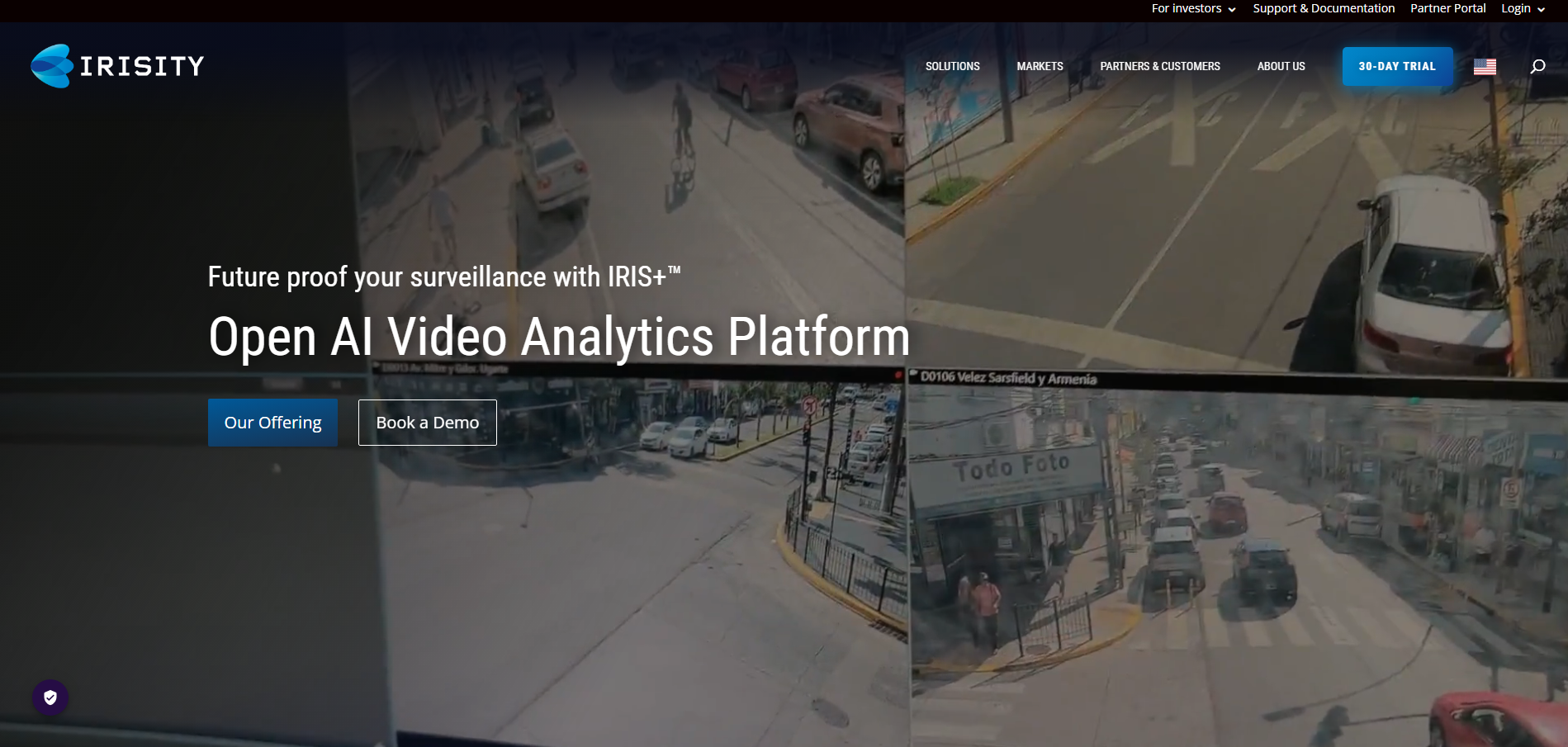
Irisity specializes in AI-powered video analytics, helping organizations transform surveillance footage into actionable intelligence. Its technology focuses on detecting events, identifying anomalies, and improving situational awareness across security environments.
Unlike purely privacy-focused platforms, Irisity's primary objective is operational insight. However, as organizations increasingly seek privacy-conscious analytics, anonymisation and responsible data handling have become important considerations within these deployments.
The platform is particularly popular among organizations operating large-scale security and monitoring networks.
Key Features
AI-powered video analytics
Object and behavior detection
Event recognition technology
Real-time monitoring capabilities
Security-focused intelligence tools
Why This Solution
Strong analytics capabilities
Supports proactive security operations
Effective across large camera networks
Generates actionable operational insights
Well-suited to surveillance environments
Best For: Security teams, critical infrastructure operators, and large facilities.
Visit Irisity
5. AnonymizationAPI
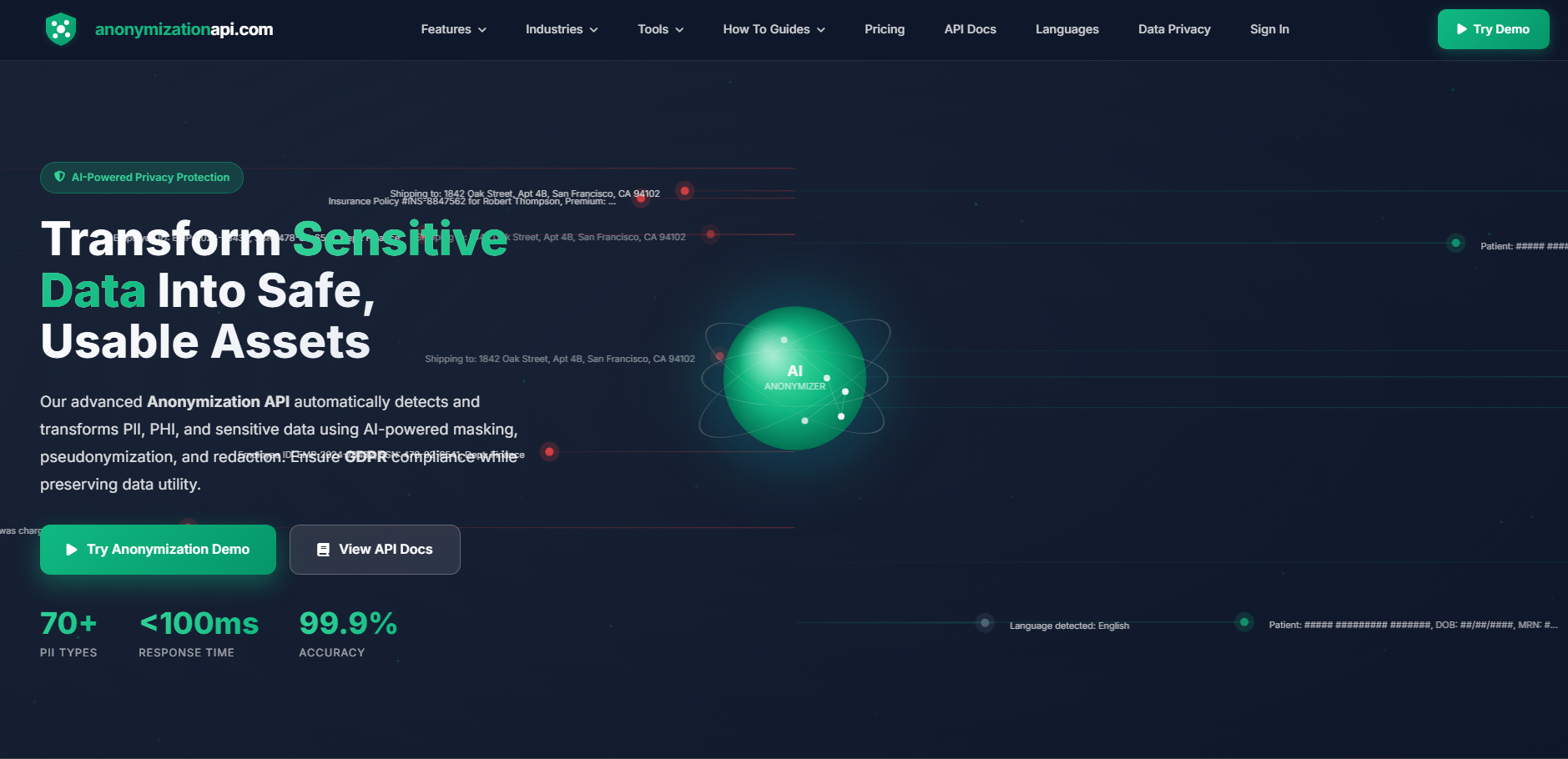
As its name suggests, AnonymizationAPI focuses directly on privacy protection. The platform provides developers with tools designed specifically to remove identifiable information from visual content through automated processing.
Its specialized focus can be attractive for teams building applications where anonymisation is the primary requirement. Rather than offering a broad collection of unrelated features, the platform concentrates on helping developers integrate privacy safeguards efficiently.
This targeted approach makes it particularly appealing for privacy-first development initiatives.
Key Features
Automated anonymisation services
Face blurring capabilities
API-driven processing workflows
Privacy-focused image and video handling
Developer-friendly integrations
Why This Solution
Built specifically around anonymisation
Straightforward implementation process
Focuses on privacy requirements directly
Useful for dedicated anonymisation projects
Simplifies privacy automation efforts
Best For: Developers creating privacy-centric applications and workflows.
Visit AnonymizationAPI
6. Gyrus AI
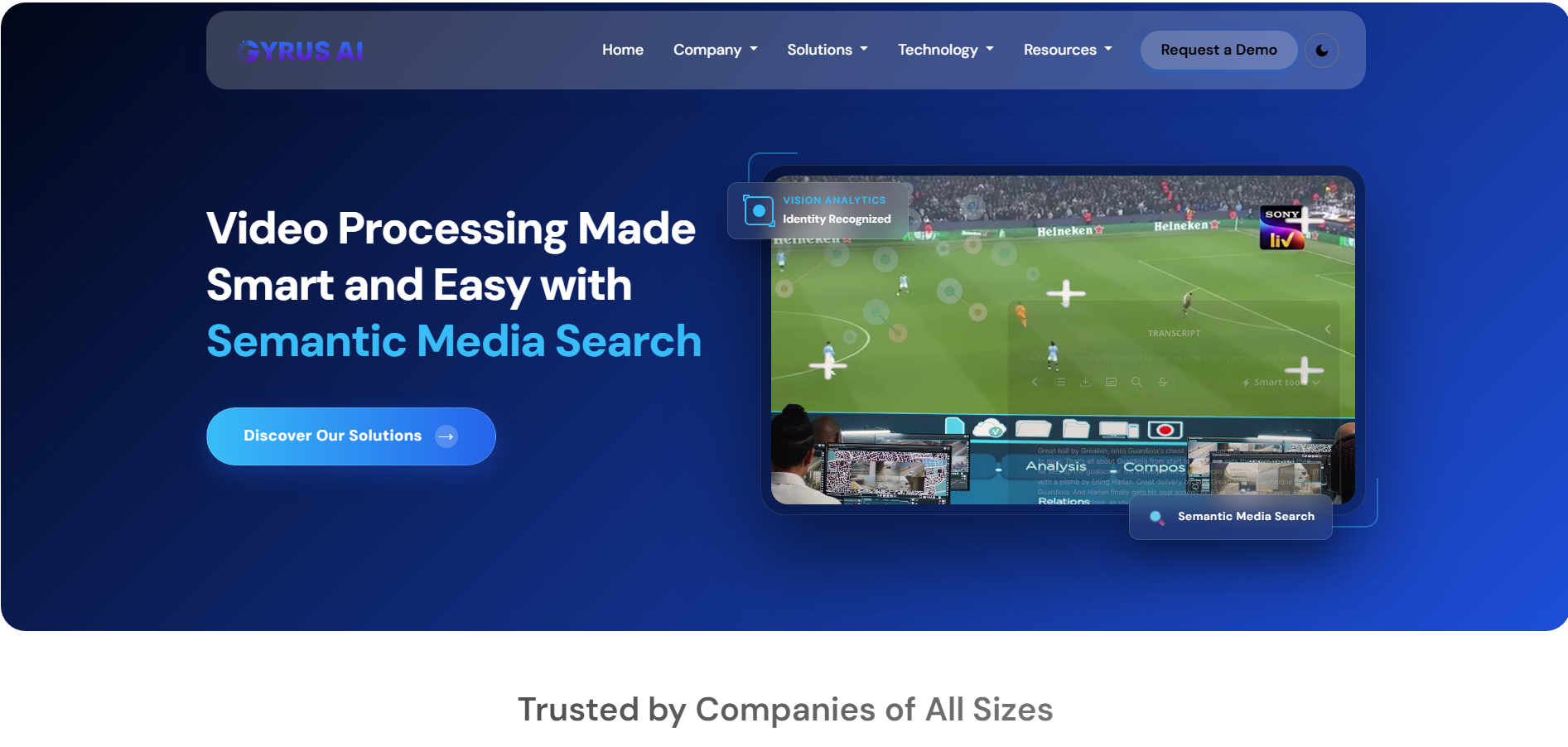
Gyrus AI offers a broader enterprise AI platform designed to help organizations automate processes, generate insights, and improve operational efficiency through artificial intelligence. Its solutions extend across multiple data types and business functions.
Video analysis forms part of a larger ecosystem focused on intelligent automation. Organizations using Gyrus AI often seek ways to connect analytics, decision-making, and operational workflows into a unified strategy.
This broader perspective makes the platform appealing for enterprises pursuing extensive AI transformation initiatives.
Key Features
AI-powered automation tools
Video intelligence capabilities
Enterprise analytics support
Workflow optimization features
Data-driven decision tools
Why This Solution
Supports wide-ranging AI initiatives
Connects analytics with operations
Flexible enterprise applications
Suitable for transformation projects
Helps automate complex workflows
Best For: Enterprises investing in large-scale AI and automation strategies.
Visit Gyrus AI
7. Eden AI
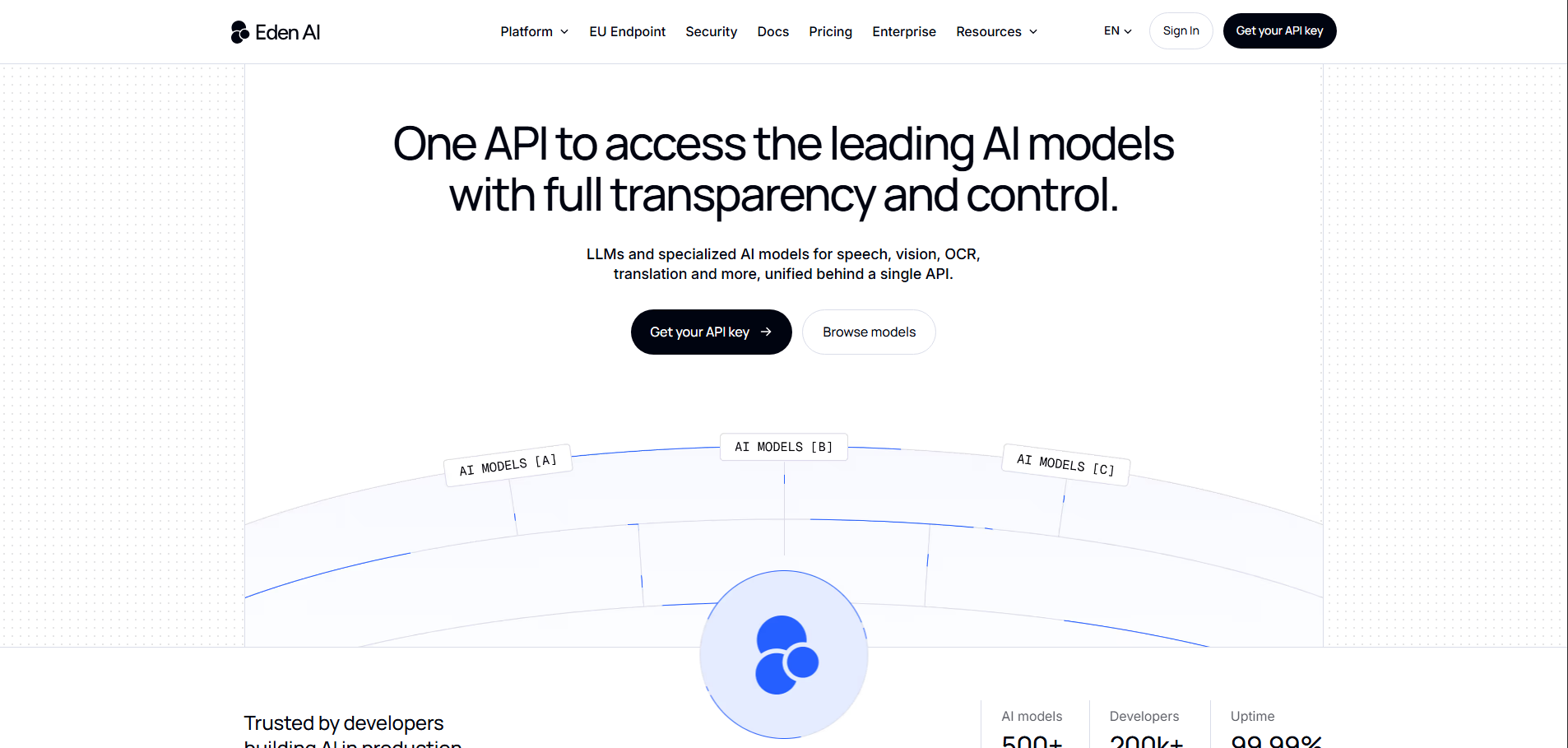
Eden AI takes a different approach by acting as an aggregation platform for multiple AI providers. Rather than locking developers into a single technology stack, it allows access to numerous AI services through a unified API structure.
This flexibility can significantly simplify experimentation and vendor evaluation. Teams can compare services, switch providers, and expand capabilities without redesigning their entire architecture.
For organizations exploring video anonymisation alongside other AI functions, this versatility can be highly valuable.
Key Features
Unified access to multiple AI providers
Flexible API architecture
Broad AI service catalog
Simplified integration workflows
Vendor comparison capabilities
Why This Solution
Reduces vendor dependency
Encourages experimentation
Simplifies AI adoption
Supports diverse use cases
Offers significant development flexibility
Best For: Development teams seeking access to multiple AI services through a single platform.
Visit Eden AI
8. Syntonym
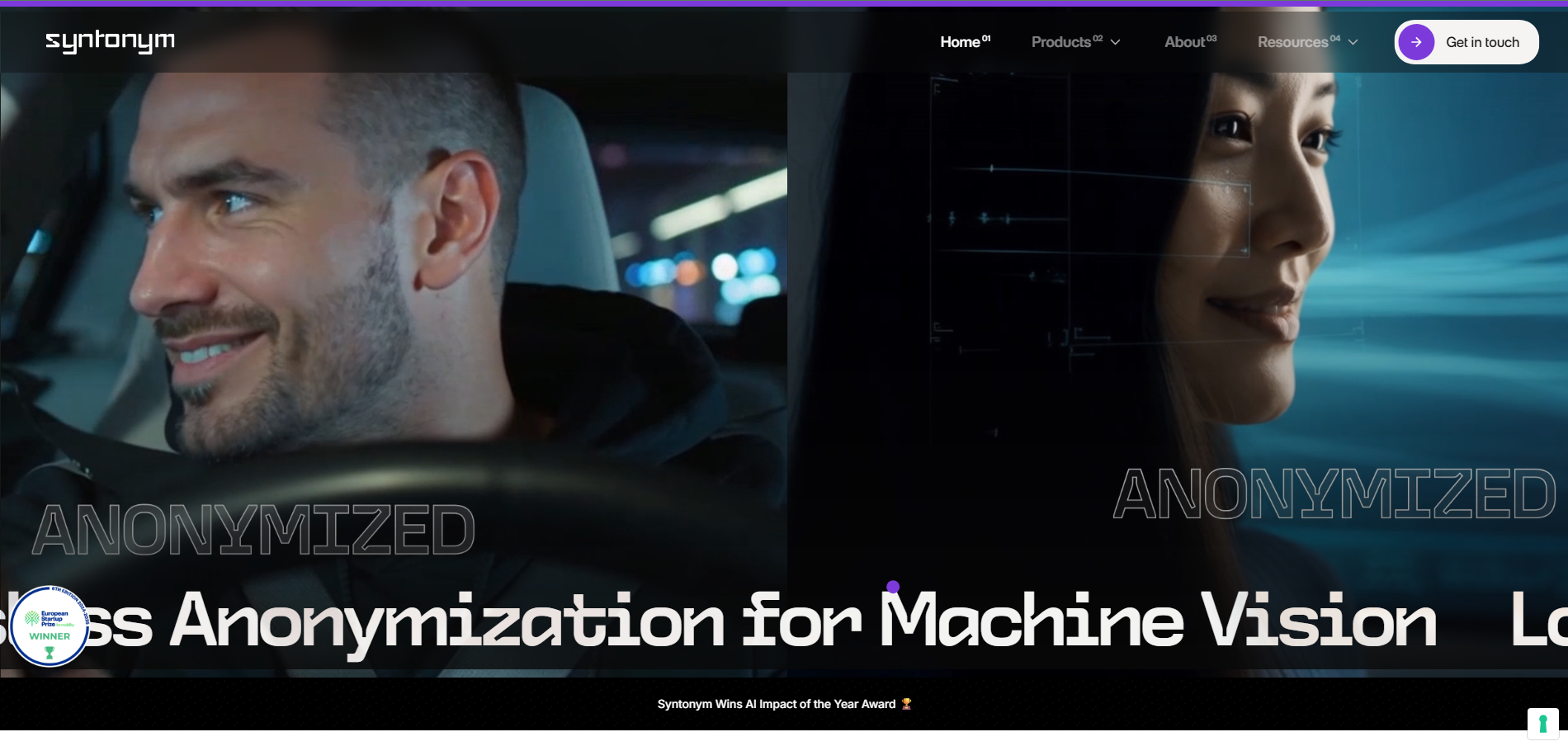
Syntonym has built its reputation around privacy-preserving computer vision. Rather than treating anonymisation as a separate step, the company focuses on enabling analytics and AI processing while protecting identities from the outset.
Its technology is often associated with smart cities, transportation networks, and surveillance environments where organizations need valuable operational insights without exposing personal information unnecessarily.
This privacy-first philosophy aligns closely with growing demands for responsible AI deployment.
Key Features
Real-time anonymisation technology
Privacy-preserving computer vision
Video analytics support
Identity protection workflows
Smart infrastructure compatibility
Why This Solution
Designed around privacy-first analytics
Supports responsible AI deployments
Enables insight generation without exposing identities
Suitable for surveillance-heavy environments
Addresses emerging privacy expectations
Best For: Smart city projects, transportation systems, and privacy-conscious analytics deployments.
Visit Syntonym
What to look for in a video anonymisation API
Choosing the right API involves more than finding a tool that can blur faces. Organizations should evaluate how well a solution fits operational, security, and compliance requirements.
Key considerations include:
Accuracy of detection and anonymisation
Support for both video and audio privacy protection
Scalability across large datasets
API reliability and documentation quality
Workflow automation capabilities
Integration flexibility
Security and deployment options
Audit and compliance reporting
Real-time versus batch processing support
Ability to protect multiple types of sensitive information
Frequently asked questions
-
A video anonymisation API automatically detects and obscures sensitive information within video footage, helping organizations protect privacy while maintaining usability.
-
They allow organizations to use video data without unnecessarily exposing personal information, helping reduce compliance risks and privacy concerns.
-
Depending on the platform, this may include faces, license plates, ID badges, computer screens, documents, and even spoken information captured in audio.
-
Yes. Modern anonymisation tools are designed to preserve the context and insights needed for analytics while removing identifiable information.
-
Generally no. Most APIs are designed to be integrated using standard development workflows without requiring advanced AI expertise.
-
No. They are used across insurance, education, healthcare, transportation, media, law enforcement, retail, and many other industries.
-
Leading solutions are capable of processing large video libraries and enterprise-scale workloads through automation and batch processing capabilities.
-
Anonymisation typically refers to removing identifying information to protect privacy, while redaction often involves permanently obscuring specific content to prevent future access or disclosure. Both approaches are commonly used together in privacy-sensitive workflows.