
2026 Guide to deploying dynamic privacy masking in live video
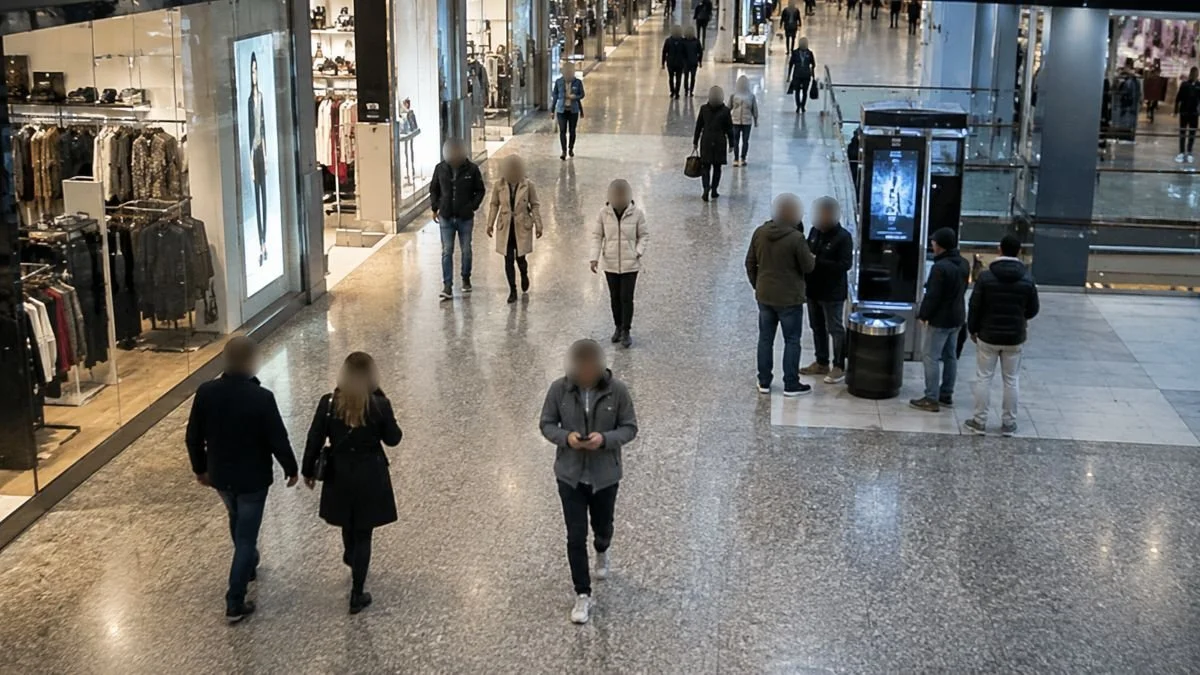
Live video has become an essential part of modern operations. From smart cities and transportation hubs to hospitals, schools, manufacturing facilities, and corporate campuses, organizations are relying on real-time camera feeds to improve security, streamline operations, and respond to incidents as they unfold.
However, the same cameras that provide valuable situational awareness also capture enormous amounts of personal information. Employees, visitors, customers, patients, and members of the public may all appear in live streams, often without any expectation that their identities will be visible to every person viewing the footage.
This is why dynamic privacy masking is rapidly becoming a cornerstone of enterprise video strategy. Instead of waiting until after footage has been recorded, organizations can automatically conceal sensitive information in real time, allowing operators to monitor events while reducing unnecessary exposure of personally identifiable information (PII). As privacy regulations evolve and organizations continue to expand their camera networks, live privacy protection is moving from an optional enhancement to an operational necessity.
What is dynamic privacy masking?
Dynamic privacy masking is the process of automatically obscuring sensitive information as a live video stream is captured or displayed.
Unlike traditional post-processing, which edits recorded footage after an event has occurred, dynamic masking works continuously. Artificial intelligence detects predefined objects, such as faces or vehicle license plates, and applies a privacy mask that follows them naturally as they move through the scene.
Authorized personnel can still monitor activity, identify potential risks, and respond to incidents, but individuals who do not need to be identified remain protected throughout the viewing process.
Why live video creates different privacy challenges
Recorded footage offers time for review before it is shared. Live video does not.
Security teams often need to make decisions within seconds, leaving little opportunity to manually protect personal information before multiple operators, contractors, or remote personnel access a feed.
Organizations also face increasingly complex environments where cameras monitor:
Office buildings
Distribution centers
Public transportation
Retail locations
Schools and universities
Manufacturing facilities
Healthcare environments
Critical infrastructure
Each location presents different operational requirements, yet every one of them captures personal information that should be handled responsibly.
AI has changed what's possible
Only a few years ago, live privacy masking required significant computing power and offered limited accuracy.
Today's AI models have transformed those capabilities.
Modern computer vision systems can identify and track multiple moving objects simultaneously, even in busy environments with changing lighting conditions, partial obstructions, or fast-moving subjects.
Rather than applying a fixed blur across an entire scene, AI understands what should (and should not) be anonymized, allowing operators to retain valuable situational awareness while minimizing unnecessary exposure.
Choosing what should be masked
Organizations often associate privacy masking with faces alone, but real-world deployments typically require much broader protection.
Depending on the environment, AI may be configured to detect:
Faces
Vehicle license plates
Employee ID badges
Computer monitors
Printed paperwork
Mobile devices
Customer information displayed on screens
Other predefined objects
The ability to customize masking rules is particularly valuable for multinational organizations operating under different legal or contractual obligations.
Edge processing versus centralized processing
One of the first architectural decisions organizations face is where masking should take place.
Edge-based processing performs anonymization close to the camera, reducing latency and minimizing the amount of sensitive information transmitted across networks.
Centralized processing, by contrast, offers greater flexibility when organizations need to manage hundreds or thousands of cameras from a single environment.
Many enterprises adopt a hybrid approach, balancing operational performance with infrastructure, bandwidth, and security requirements.

Performance should never come at the expense of privacy
Real-time systems are often judged by their speed, but consistency is equally important.
An effective privacy masking solution should continue protecting identities regardless of whether someone:
Changes direction
Walks through a crowd
Moves rapidly across the frame
Briefly disappears behind an obstacle
Appears under different lighting conditions
Reliable tracking minimizes the need for intervention and helps maintain confidence that sensitive information remains protected throughout the stream.
Building trust through privacy by design
Privacy masking is most effective when it forms part of a broader governance strategy rather than operating as an isolated feature.
Organizations should establish clear policies covering:
Who can view unmasked footage
When masking can be removed
Audit and access logging
Retention schedules
Incident response procedures
Data sharing rules
User permissions
Embedding these controls into operational workflows demonstrates that privacy has been considered from the earliest stages of system design rather than added as an afterthought.
Industries driving adoption
Demand for live privacy masking is increasing across both the public and private sectors.
Common use cases include:
Monitoring transportation networks without unnecessarily identifying commuters
Protecting students in educational environments
Allowing healthcare facilities to monitor activity while preserving patient confidentiality
Supporting workplace safety programs without exposing employee identities
Enabling retail analytics while reducing customer privacy risks
Protecting visitors within corporate campuses and public buildings
As organizations deploy more AI-enabled cameras, privacy-preserving technologies are becoming an essential companion to advanced video analytics.
Planning for long-term scalability
Many organizations begin with a pilot involving a handful of cameras before expanding across multiple locations.
Successful deployments should therefore consider:
Future camera growth
Integration with video management systems
API availability
Processing capacity
Cybersecurity requirements
User management
Software updates
Regulatory changes
Selecting a solution that can evolve alongside organizational requirements reduces the need for costly infrastructure changes later.
Turning live privacy into a sustainable operational strategy
Dynamic privacy masking delivers the greatest value when it becomes part of an organization's everyday video operations rather than an isolated compliance initiative.
Pimloc's team developed Secure Redact with this philosophy in mind. Alongside its AI-powered anonymization capabilities, the platform has been designed to fit naturally into enterprise environments where security teams, compliance officers, legal departments, and operational staff all rely on the same visual data for different purposes. This allows organizations to apply consistent privacy controls without creating duplicate workflows or fragmented systems.
Among the capabilities that make Secure Redact particularly well suited to enterprise deployments are:
Real-time and post-event AI anonymization across video, images, audio, and documents
Flexible deployment in cloud, private cloud, or fully on-premise environments, allowing organizations to meet internal security and data residency requirements
REST APIs that enable developers to integrate privacy controls directly into existing applications, video management systems, and automated workflows
Support for enterprise-scale processing, whether handling a handful of live streams or extensive multi-site camera estates
Fine-grained user permissions and review workflows that allow different teams to collaborate securely
Comprehensive audit histories that record how sensitive media has been processed, reviewed, and shared
Continuous AI improvements that expand the range of detectable privacy-sensitive objects as computer vision technology evolves
Designed to support organizations operating under GDPR, CJIS, FERPA, HIPAA, and other regulatory frameworks through adaptable privacy workflows
Rather than asking organizations to redesign their infrastructure around privacy, Secure Redact enables privacy protection to become another intelligent service within an existing security ecosystem. That flexibility is ideal for enterprises modernizing legacy surveillance environments while preparing for the next generation of AI-enabled video operations.
The future of live video is privacy-aware
The next wave of enterprise video technology will be defined not only by sharper cameras and smarter analytics, but by the ability to protect personal information automatically as events unfold.
Dynamic privacy masking demonstrates that organizations no longer need to choose between operational awareness and responsible data handling. By combining artificial intelligence, thoughtful governance, and scalable deployment strategies, enterprises can build live video systems that support security objectives while respecting the privacy of everyone who appears on camera.
As camera networks continue to expand throughout 2026 and beyond, privacy-aware video will become the standard against which modern surveillance and monitoring systems are measured. And this will not be because regulations demand it, but because trust increasingly depends on it.