
Managing PII in CUI: What Federal Compliance Requires and How Privacy Tools Help
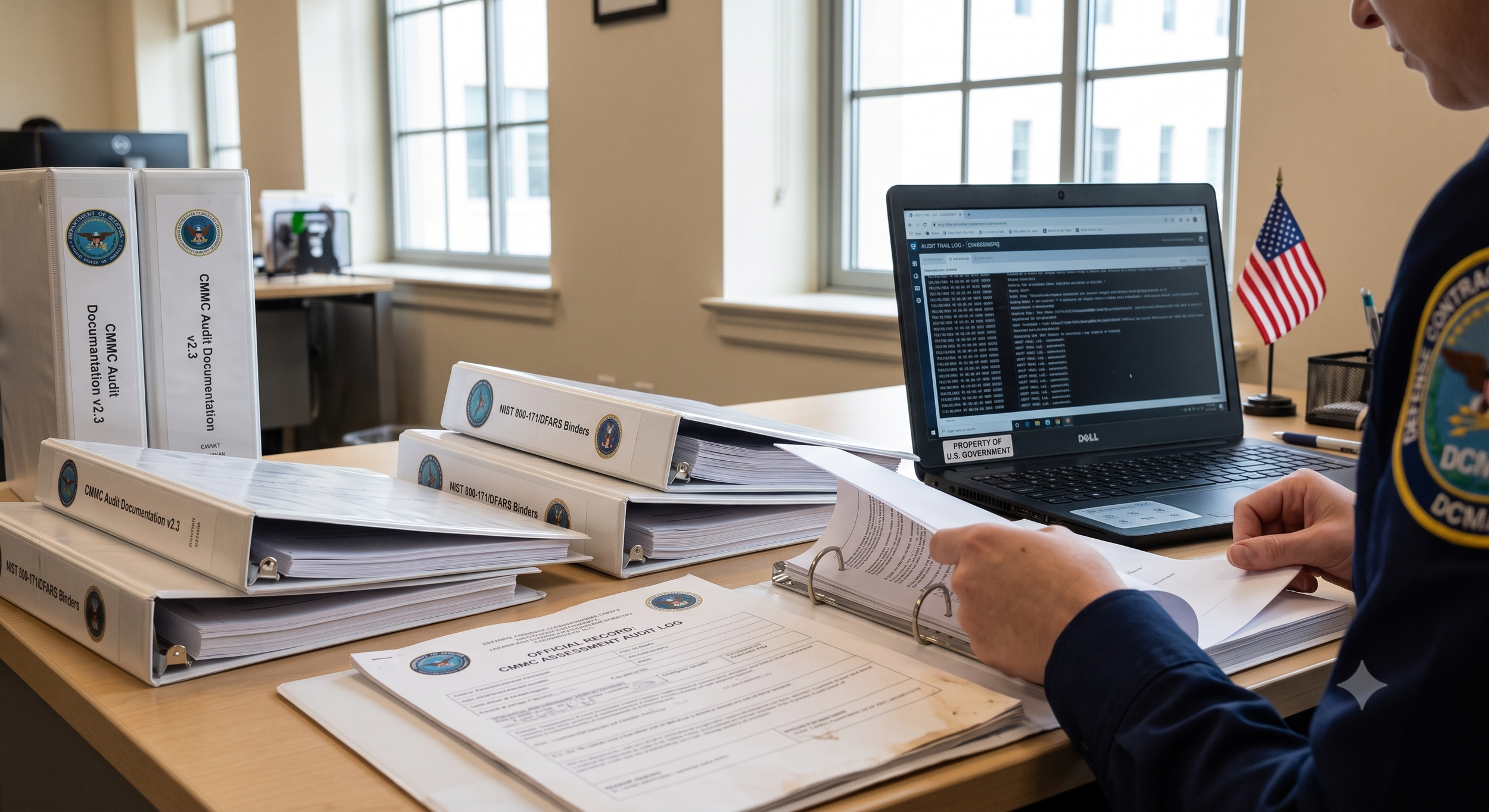
NIST SP 800-171 applies to any non-federal organization that processes, stores, or transmits Controlled Unclassified Information (CUI) on behalf of a federal agency. This mandate explicitly covers the Personally Identifiable Information (PII) that CUI files frequently contain.
While most federal contractors have established workflows for masking text-based PII in standard documents, managing PII within video files, drone feeds, and scanned images remains a severe technical hurdle—and a frequent source of sudden audit failures.
This guide outlines which NIST SP 800-171 controls directly govern video-based PII, what the Cybersecurity Maturity Model Certification (CMMC) mandates for defense vendors, why multimedia presents a unique data liability, and how automated redaction tools can secure your compliance pipeline without violating federal cloud data laws.
What is CUI and Who Must Comply?
Controlled Unclassified Information (CUI) is a government-wide data umbrella for sensitive, unclassified federal information that requires safeguarding or dissemination controls pursuant to law, regulations, or government-wide policies. It spans technical drawings, communications, legal briefs, medical records, and digital media feeds.
NIST SP 800-171 was engineered to protect CUI resident on non-federal information systems. If your organization contracts with the Department of Defense (DoD), Department of Justice (DOJ), Department of Energy (DOE), or civilian agencies, and your workflows touch CUI, compliance is a non-negotiable condition of contract award.
The 2026 "Revision Rift"
A primary source of confusion for modern compliance teams is the co-existence of two distinct versions of the NIST standard:
NIST SP 800-171 Revision 2: Features 110 security requirements organized across 14 control families.
NIST SP 800-171 Revision 3: Features 97 requirements spread across 17 families, introducing "Organization-Defined Parameters" (ODPs).
While NIST officially treats Revision 3 as the active standard, the DoD issued an active class deviation. For the defense supply chain, CMMC Level 2 remains strictly frozen on Revision 2 (110 controls). Civilian agencies, however, are increasingly embedding Revision 3 requirements into new solicitations. Contractors must verify which specific revision governs their active contract vehicle.
Which NIST SP 800-171 Controls Govern Video PII?
Under the current Revision 2 baseline, several core control families directly dictate how video, audio, and imagery containing PII must be managed:
Access Control (AC - e.g., 3.1.1, 3.1.2): You must limit CUI access to authorized users. If a security surveillance video or a recorded telehealth session features identifiable faces or patient names, only personnel with an explicit "need-to-know" can be permitted to access the raw file.
Media Protection (MP - e.g., 3.8.1, 3.8.7): Requires organizations to protect, sanitize, or destroy CUI media before disposal or release. Unredacted video assets cannot sit unsecured on local thumb drives or shared network folders.
System and Communications Protection (SC - e.g., 3.13.11): Mandates the protection of CUI at rest and in transit. Transmitting raw, un-redacted media feeds across external networks without cryptographic encryption is an immediate compliance failure.
Configuration Management (CM) & Incident Response (IR): Secure baselines must be maintained across all media storage architectures, and any unauthorized exposure of video-contained PII must trigger formal federal breach-reporting protocols.
The CMMC Verification Layer and Rollout Timeline
For entities operating within the defense industrial base, the Cybersecurity Maturity Model Certification (CMMC) program changes the rules of compliance from self-attestation to mandatory, independent verification.
The phased implementation of CMMC is moving rapidly:
Current Phase: Contracting officers are actively embedding CMMC clauses into solicitations, authorizing Level 1 and Level 2 self-assessments while allowing program managers discretion to mandate third-party reviews.
The November 2026 Inflection Point: Beginning in November 2026, CMMC Level 2 C3PAO third-party certifications become completely mandatory as a condition of contract award for all applicable contracts handling CUI. Self-attestation will no longer be sufficient to win or retain DoD business.
Why Video PII Multiplies Audit Risk
Text documents are inherently predictable; data strings like Social Security numbers or addresses can be mapped and scrubbed via basic keyword scanning. Video data is unstructured, highly dynamic, and dense.
A facility surveillance loop, a body-worn camera feed from a federal installation, or clinical training footage from a federally funded research project can generate hours of high-definition data. Every visible face, background license plate, uniform insignia, or un-sanitized computer screen captured in the background constitutes active PII embedded within a CUI wrapper.
Attempting to scrub this data manually frame-by-frame is an administrative failure. A trained media editor can spend up to five hours manually keyframing and blurring a single hour of complex crowd video. At scale, manual processing causes critical project bottlenecks and inevitably leads to human omission errors that fail C3PAO audits.
How Automated AI Redaction Solves the Burden
Automated privacy software bridges the gap between massive media collection and strict federal data controls through three core mechanisms:
De-scoping the Compliance Boundary: One of the most effective strategies for reducing audit friction is data minimization. By running video feeds through an automated redaction pass prior to moving the assets into a shared environment or general case file, you permanently purge the third-party PII. This vastly reduces the blast radius of a potential breach and minimizes the number of strict access controls you must continuously enforce on that endpoint.
Generating Immutable Audit Trails: CMMC assessors do not accept verbal assurances; they require objective, verifiable evidence. Automated redaction tools generate precise processing logs detailing exactly which video file was processed, the timestamps of the metadata removal, and the identity of the validating officer.
Expediting Public and Legal Disclosure: Whether responding to a federal public records request or delivering video discovery to an opposing legal team, automated computer vision tracks and masks faces, license plates, and text strings instantly, slashing turnarounds by up to 80%.
The Crucial Federal Trap: FedRAMP Moderate Equivalency
Organizations seeking an automated redaction tool for federal workflows cannot simply sign up for a commercial, off-the-shelf SaaS application.
The DFARS 252.204-7012 Cloud Mandate
If an organization utilizes an external Cloud Service Provider (CSP) or SaaS platform to process or store CUI, that vendor must meet the FedRAMP Moderate security baseline (or demonstrate exact structural equivalency) and prove they can satisfy the DoD's stringent cyber incident reporting requirements (paragraphs c through g).
If your team uploads unredacted CUI video to a standard public cloud software tool that lacks verified FedRAMP Moderate alignments, you have executed an unauthorized data exfiltration event, violating federal law and nullifying your CMMC standing.
Therefore, your selected redaction architecture must support flexible deployment parameters:
On-Premises / Air-Gapped Installs: Complete localization within your own pre-certified, secure network boundary with zero external internet connectivity.
FedRAMP High/Moderate Cloud Hosting: Native operation within an approved government cloud enclave (such as AWS GovCloud or Azure Government).
Next Steps for Compliance Officers
NIST SP 800-171 and CMMC are active, verifiable legal frameworks. If your organization captures, processes, or utilizes video assets tied to federal contracts, you must formally document how that media is sanitized.
Pimloc’s Secure Redact offers the enterprise computer vision and flexible deployment options required to secure federal media pipelines. Capable of being deployed on-premises, within air-gapped secure networks, or via compliant private cloud infrastructures, the platform automates data destruction across video and audio assets while preserving compliance integrity. To analyze how automated AI redaction can protect your federal contract lifecycle, connect with the Pimloc team to arrange an enterprise briefing.
Automated detection across faces, plates, and on-screen text.
Try Secure Redact for free.
Frequently Asked Questions
-
Yes. The definition of Controlled Unclassified Information (CUI) is format-agnostic. Any video file, aerial drone feed, or digital image that contains sensitive government information or identifiable civilian PII is tightly bound to the same 110 controls (under Rev 2) that govern standard text documents. The Media Protection (MP) and Access Control (AC) families specifically dictate how this footage must be encrypted, restricted, and sanitized.
-
CMMC Level 2 is strictly mapped to NIST SP 800-171 Revision 2 (110 controls). Although NIST finalized and published Revision 3 in 2024, the Department of Defense issued a formal class deviation freezing the active CMMC baseline at Revision 2 to ensure stability across the defense industrial base.
-
You will commit a severe security violation. Under DFARS 252.204-7012, any cloud-based software or SaaS application that touches CUI must be fully certified at a FedRAMP Moderate baseline or demonstrate strict structural equivalency. Uploading raw CUI video to a standard, non-government-certified commercial cloud tool constitutes an unauthorized data spill, compromising your contract standing.
-
Yes, but the software must be specifically engineered to support fully disconnected, local containerized deployment (such as via Docker or on-premises server infrastructure). Organizations operating within classified or highly restricted environments must ensure their redaction provider can deliver full feature functionality without requiring an active external internet handshake or cloud callback.
-
While human faces are the most pervasive identifier, video PII also extends to vehicle license plates, visible employee identification badges, security uniforms with unique serial markings, visible medical charts, and computer monitors displaying internal network layouts caught in the background of the shot. A defensible redaction pipeline must be capable of masking all of these contextual indicators.