
Blurring Faces in Video: Why It Means More Than You Think
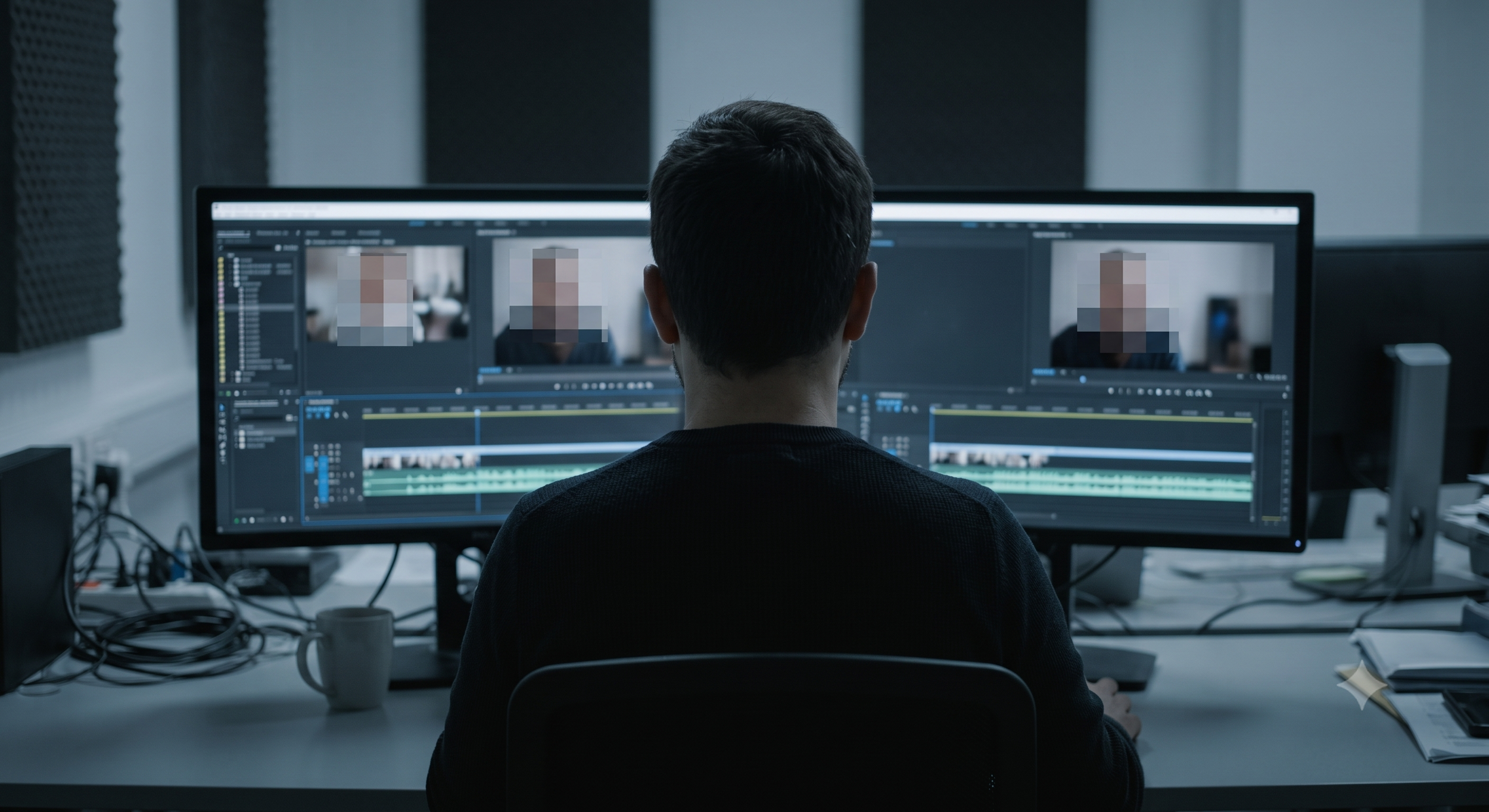
Blurring faces in video is so common in documentary and reality TV that audiences read the signal instantly: something is being hidden. Watch any episode of Cops or The First 48 and you will see blurred suspects, bystanders, and minors within the first few minutes - anyone who did not sign a release form. That visual shorthand is now so embedded in the grammar of factual television that the blur itself has become a kind of statement.
But the blur does more than protect someone from embarrassment. In many jurisdictions, broadcasting an unredacted face without consent carries real legal exposure. For producers and broadcasters working with footage of real people in sensitive situations, it is a compliance requirement, not a stylistic choice.
What the law actually requires
The legal picture varies by country. Under UK GDPR, a person's face in footage counts as personal data. Publishing it without a lawful basis - consent, legitimate interest, or another Article 6 ground - risks enforcement action from the ICO. In the EU, the same framework applies. In the US, the position is more fragmented: privacy tort law, state-level statutes, and broadcast standards each create different obligations depending on where the content airs and where the person was filmed.
Minors are a consistent exception across almost every framework. A child's face should not appear in broadcast footage without parental consent. Reality TV productions working in schools, hospitals, or public spaces with minors present face the highest exposure if they miss this.
Release forms only cover what they say
A standard talent release covers the person who signed it. It does not cover anyone else visible in the background. A documentary filmed over six months might include dozens of incidental faces - delivery drivers, neighbours, members of the public - none of whom consented. Each unblurred face is a potential liability. Productions that catch this in post rather than on set are the ones that spend weeks on manual redaction before broadcast.
The Coldplay Kiss Cam moment shows what happens without a blur
In July 2025, a couple at a Coldplay show at Gillette Stadium covered their faces when the Kiss Cam found them. Chris Martin quipped from the stage that they were either having an affair or just shy. Within 24 hours, both had been identified: Andy Byron, then CEO of tech company Astronomer, and a colleague. Both resigned shortly after.
Their instinct to cover their faces made the story. Had the footage been blurred by the broadcast team, there would have been nothing to identify. The absence of a blur became the event.
This is the cultural logic the blur has acquired. It signals that something is there to be found. For organisations releasing footage under a freedom of information request, the opposite applies: the blur should be invisible infrastructure, not a narrative device.
When blurring faces is not straightforward
Manual blurring in video editing software works, but it does not scale. A documentary with 40 hours of rushes and 200 incidental faces takes weeks to process by hand. Frame-by-frame tracking drifts. Faces that turn sideways or are partially occluded get missed.
How automated face detection works
Automated face detection uses trained models to scan each frame for facial regions. The model identifies a bounding box around a face, and a tracking algorithm follows that region across subsequent frames, accounting for movement, partial occlusion, and changes in angle. A pixellation or Gaussian blur is applied to the tracked region before the footage is exported.
The process is not perfect. Low resolution, poor lighting, and extreme camera angles all reduce detection confidence. On footage below 720p or in poor lighting, faces at the edge of frame are the most likely to be missed. Productions using automated redaction should plan a human review pass where those conditions apply.
Automated tools, including Pimloc's Secure Redact platform, handle volume at a speed that manual review cannot match. But automated redaction does not replace editorial judgement. The decision about which faces to blur - and which to leave visible because the person consented or is a public figure in their professional capacity - still requires a human.
The protest footage problem
Documentary makers covering protests face a specific version of this. YouTube introduced a face-blur tool partly in response to reports that government agents in Syria used online videos to identify protesters. The risk was concrete: footage shot to document injustice became a tool of repression.
Blurring every face in protest footage is not always the right answer. Some subjects want to be identified. Others need to be visible for the footage to have evidentiary value. Consent and context both have to be weighed against risk before applying or withholding the blur.
How production teams use Secure Redact
Broadcasters and production companies use Secure Redact to process large volumes of raw footage before editorial review. Raw footage is uploaded to the platform. The detection model runs across all clips and flags faces and number plates. An editor then works through the results, accepting, rejecting, or adjusting individual redactions before the footage is exported in broadcast-ready form.
Footage stays within a secure environment throughout, which matters when the content involves sensitive subjects or active legal proceedings. The workflow is designed for bulk processing. If you are handling a long-running series or a FOIA disclosure involving hours of CCTV or body-worn camera footage, it is built for that scale.
Start with the footage you already have
If you are a producer, researcher, or compliance officer sitting on footage that needs review before release, the practical starting point is an audit. Count the hours of material, identify which sequences contain faces not covered by a release, and assess the video quality. That tells you whether automated redaction will handle most of it or whether the footage conditions mean you need more manual oversight.
Secure Redact offers a free trial for organisations wanting to test detection on their own material. Start there, check what the tool catches and what it misses on your specific footage, then make a decision about the workflow you need.