
Real-time face blurring: 6 solutions for live and streaming video
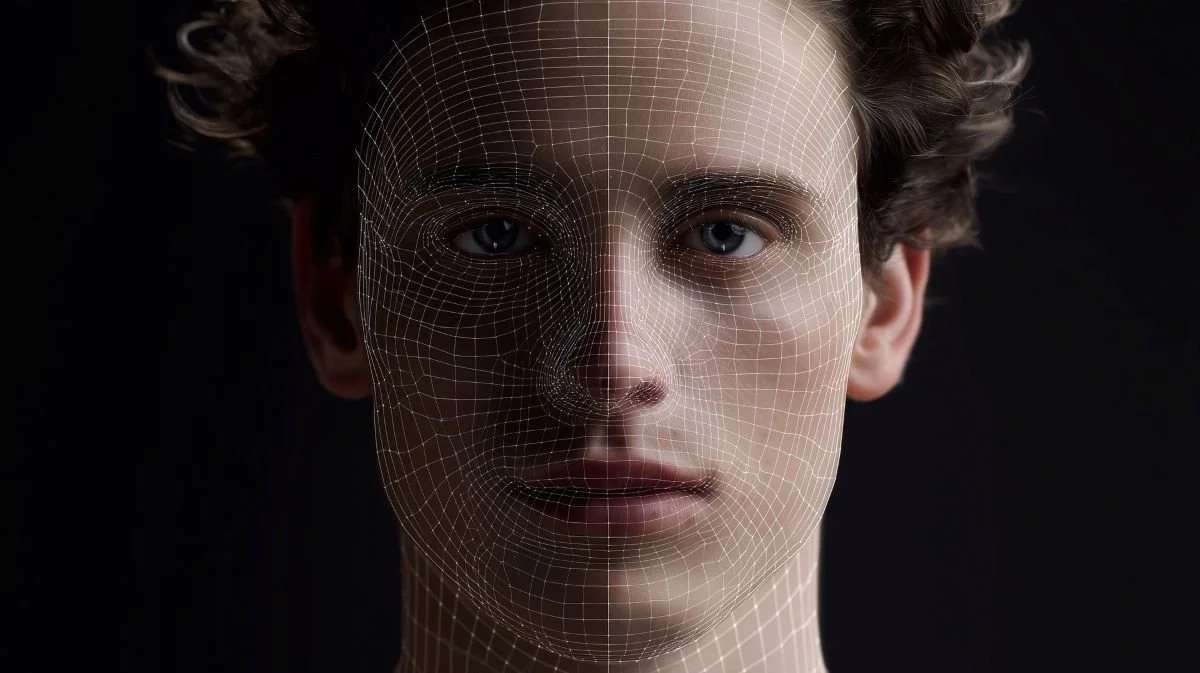
Live video has become a core part of modern operations. Security teams monitor public spaces in real time, transportation operators oversee large networks of cameras, organizations stream public meetings, and businesses increasingly rely on live video for customer engagement, training, and remote operations.
While these technologies deliver clear benefits, they also create privacy challenges. A live stream may capture employees, customers, visitors, students, bystanders, vehicle registrations, or other personally identifiable information. Once that content has been broadcast, privacy risks become significantly harder to manage. Unlike recorded footage, there is often no opportunity to edit sensitive information after the fact.
This is why real-time face blurring has become a critical capability. Advances in artificial intelligence now allow video systems to detect, track, and anonymize individuals as they appear on camera, helping organizations balance operational visibility with privacy obligations. Whether supporting GDPR compliance, protecting identities during investigations, or enabling privacy-first public streaming, the right platform can dramatically reduce risk without compromising situational awareness.
Below are six leading solutions helping organizations implement live face blurring and real-time video anonymization in 2026.
Comparison table
| Rank | Platform | Key Differentiator | Core Features | Best For |
|---|---|---|---|---|
| 1 | Secure Redact | Enterprise-grade privacy automation for video workflows | Real-time redaction, face and plate anonymization, API integrations | Law enforcement, public sector, enterprise security |
| 2 | Ocucon | Privacy-focused surveillance monitoring | Live privacy controls, video management integration, access controls | Security operations centers |
| 3 | bgblur | Lightweight browser-based blurring technology | Real-time background and face blurring, privacy protection tools | Remote work and video communications |
| 4 | Facit.ai | AI-powered privacy automation | Video anonymization, redaction workflows, compliance support | Regulated industries |
| 5 | Leonardo.AI | AI visual processing capabilities | AI image generation, visual AI tools, privacy-focused workflows | Developers and creative teams |
| 6 | Blur.me | Privacy-first video conferencing enhancement | Real-time anonymization, webcam privacy controls | Individuals and distributed teams |
1. Secure Redact
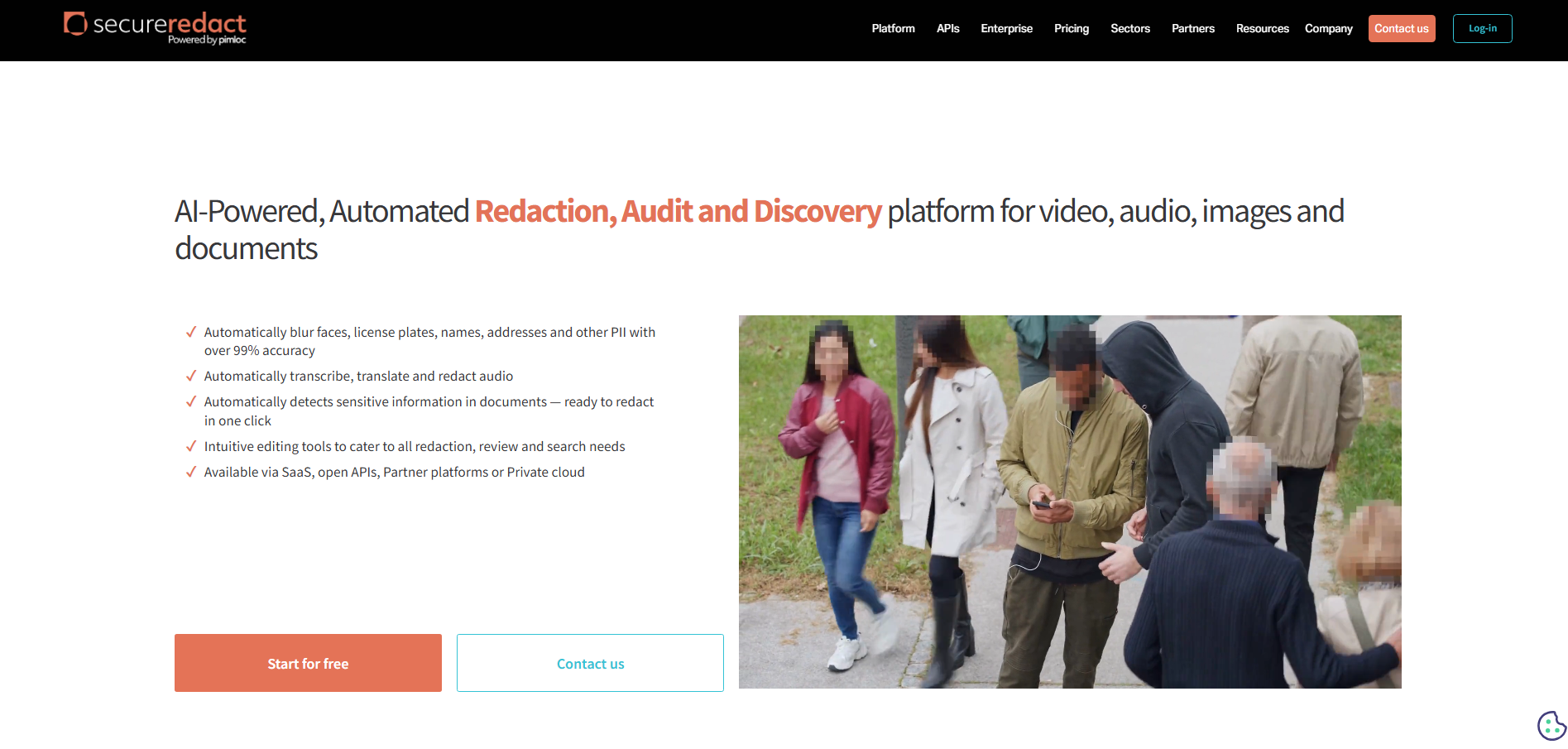
When privacy requirements intersect with high-volume video operations, Secure Redact delivers one of the most complete solutions available. Developed by Pimloc, the platform enables organizations to automatically identify and anonymize sensitive information across video content while maintaining operational usability.
What makes Secure Redact particularly valuable in real-time environments is its ability to move beyond basic face blurring. The platform can identify faces, license plates, screens, documents, and other sensitive visual information while supporting automated workflows that reduce reliance on manual review. This broader approach helps organizations address privacy risks that simple face masking tools may overlook.
For security teams, law enforcement agencies, transportation operators, insurers, and public sector organizations, the platform provides a scalable framework for managing privacy across both live and recorded video environments. Rather than forcing organizations to choose between visibility and compliance, Secure Redact helps them achieve both simultaneously.
Key Features and Benefits
Automated face detection and anonymization
License plate, screen, and sensitive object redaction
Advanced AI tracking across moving subjects
API-driven integration with existing video workflows
Automated processing for large-scale deployments
Audio redaction capabilities for privacy-sensitive environments
Comprehensive audit logs and compliance reporting
Flexible cloud, private cloud, and on-premises deployment options
Enterprise-grade security architecture
Designed for regulated and evidence-based environments
Why This Solution
Addresses multiple categories of personal data simultaneously
Built for operational environments where privacy is critical
Reduces manual intervention and review workloads
Supports scalable privacy programs
Combines automation, compliance, and usability in a single platform
Best For: Organizations requiring robust, enterprise-scale privacy protection across live and recorded video workflows.
Visit Secure Redact
2. RedactX
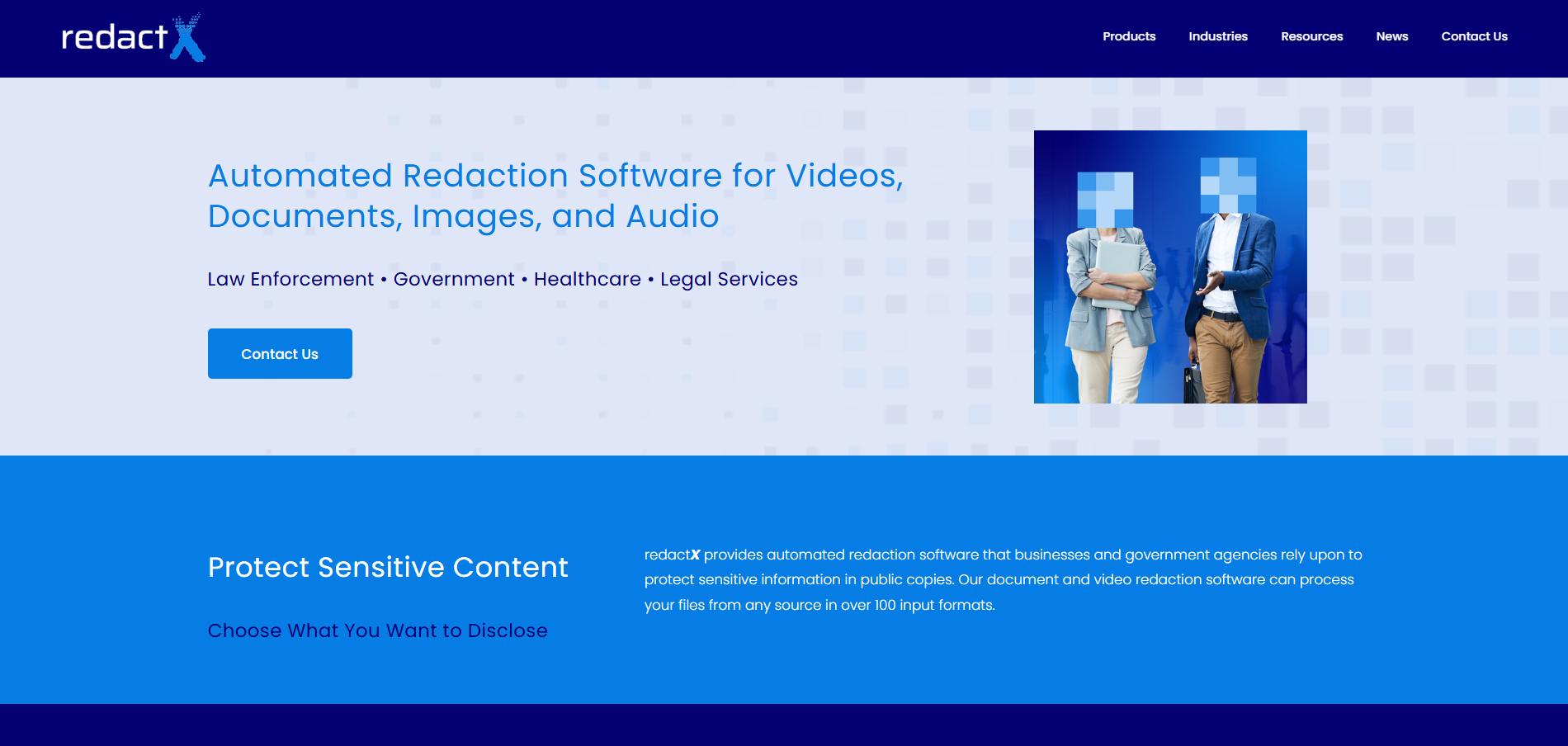
RedactX focuses on helping organizations manage privacy within active surveillance environments. Rather than treating privacy as a separate workflow, the platform incorporates privacy controls directly into video monitoring operations.
This approach makes RedactX particularly attractive to security teams that need continuous visibility while reducing the risk of exposing personal information unnecessarily. Live monitoring environments often require quick decision-making, and embedding privacy controls into the viewing experience can simplify compliance efforts.
RedactX's emphasis on operational practicality makes it a strong option for organizations balancing security objectives with privacy expectations.
Key Features
Real-time surveillance privacy controls
Video management system integration
Access control functionality
Privacy-aware monitoring workflows
Security operations support
Why This Solution
Designed specifically for monitoring environments
Helps reduce privacy exposure during active surveillance
Integrates with existing security operations
Supports privacy-conscious viewing practices
Balances oversight and compliance requirements
Best For: Security operations centers and organizations managing live surveillance systems.
Visit RedactX
3. bgblur
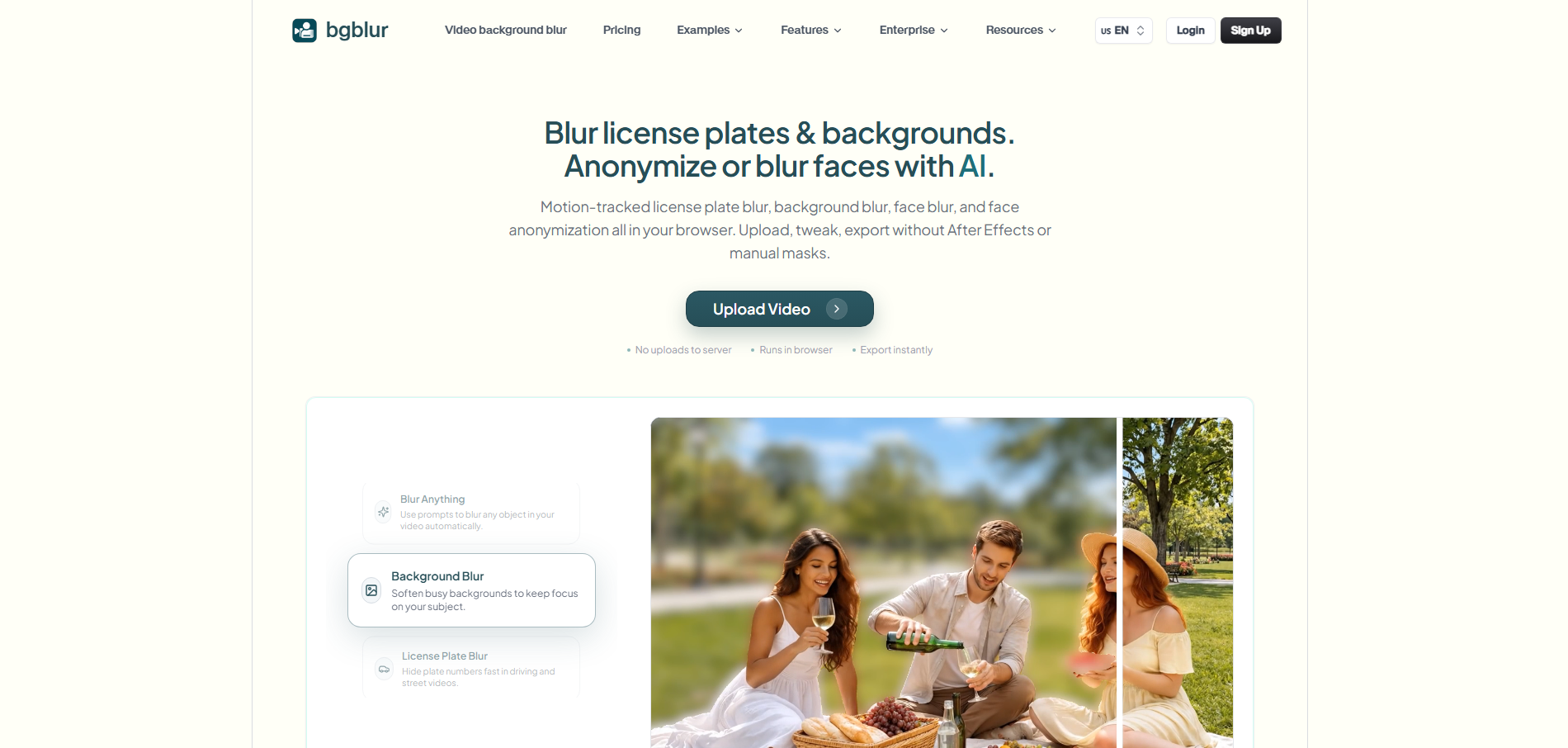
bgblur approaches privacy protection from a different angle, focusing on lightweight and accessible real-time blurring technology. The platform is designed to work seamlessly in environments where users need quick privacy controls without deploying complex infrastructure.
Its browser-friendly approach makes it appealing for organizations looking to implement privacy enhancements across distributed teams or remote work environments. Rather than requiring extensive technical resources, bgblur emphasizes ease of adoption and immediate usability.
This accessibility has helped position the platform as a practical option for organizations seeking straightforward real-time privacy protections.
Key Features
Real-time face blurring
Background anonymization tools
Browser-based implementation
Lightweight deployment model
User-friendly privacy controls
Why This Solution
Quick to deploy and configure
Accessible for non-technical users
Suitable for remote environments
Minimal infrastructure requirements
Focuses on immediate privacy improvements
Best For: Organizations and teams seeking simple real-time privacy controls for video communications.
Visit bgblur
4. Objective Redact
Objective Redact specializes in AI-powered privacy technologies designed to help organizations process video while protecting sensitive information. Its solutions are often used in sectors where regulatory obligations and privacy expectations play a significant role.
By applying machine learning to privacy workflows, Objective helps organizations reduce review times while maintaining consistency across large video collections. Moreover, the platform helps to automate tasks that traditionally required substantial manual effort.
This combination of automation and privacy-focused design makes it particularly relevant for organizations handling sensitive visual data.
Key Features
AI-powered video anonymization
Automated privacy workflows
Sensitive information detection
Compliance-oriented processing
Scalable video analysis capabilities
Why This Solution
Reduces manual privacy review workloads
Supports regulated industries
Designed around compliance objectives
Handles growing video volumes effectively
Leverages automation to improve consistency
Best For: Organizations processing sensitive video content in regulated environments.
Visit Objective Redact
5. Leonardo.AI

Leonardo.AI is widely recognized for its work in generative AI and visual content creation, but its broader AI capabilities also make it relevant to organizations exploring advanced visual processing workflows.
This sophisticated AI environment can support image analysis, visual transformations, and automated content workflows. While not exclusively focused on video privacy, its AI expertise creates opportunities for developers seeking flexible visual processing tools.
Its strength lies in adaptability, making it attractive to teams building custom solutions around AI-powered video workflows.
Key Features
Advanced AI visual processing
Image and content analysis capabilities
Developer-friendly integrations
Automation-focused workflows
Scalable cloud infrastructure
Why This Solution
Broad AI functionality
Suitable for experimental and custom projects
Flexible development environment
Supports advanced visual workflows
Strong innovation focus
Best For: Developers and organizations building custom AI-powered visual applications.
Visit Leonardo.AI
6. Blur.me
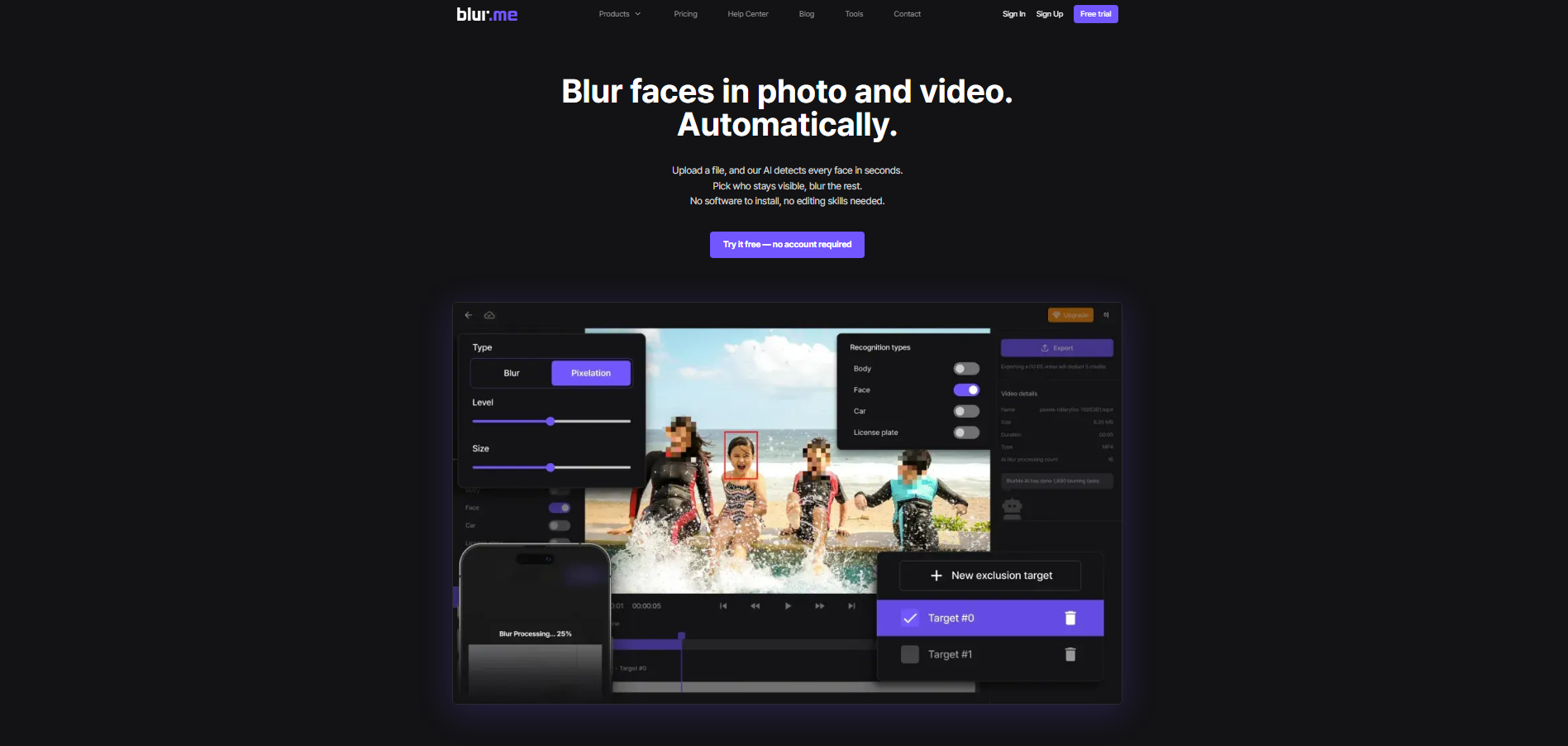
Blur.me concentrates on helping users protect privacy during live video communications. As video conferencing, remote collaboration, and virtual events continue to grow, the demand for real-time privacy tools has increased significantly.
The platform provides straightforward controls that help users obscure sensitive visual information without disrupting communication. This makes it particularly useful for professionals working remotely or organizations operating distributed teams.
Rather than targeting enterprise surveillance environments, Blur.me focuses on making privacy accessible during everyday video interactions.
Key Features
Real-time face blurring
Webcam privacy controls
Live video anonymization
Remote work support
Easy-to-use privacy settings
Why This Solution
Designed specifically for live communications
Enhances personal privacy
Minimal learning curve
Quick implementation
Supports hybrid and remote work environments
Best For: Individuals, remote teams, and organizations seeking privacy enhancements during video conferencing.
Visit Blur.me
What to look for in a real-time face blurring solution
Real-time privacy protection introduces unique technical and operational requirements. The right solution should provide both strong anonymization and minimal impact on video usability.
When evaluating platforms, consider:
Detection accuracy during live streaming
Performance under varying lighting conditions
Ability to track moving subjects consistently
Support for license plate anonymization
Low-latency processing capabilities
Scalability across multiple camera feeds
Integration with existing video systems
Compliance reporting and audit functionality
Security and deployment flexibility
Support for both live and recorded workflows
Frequently asked questions
-
Real-time face blurring uses AI to detect and anonymize faces instantly as video is captured or streamed, preventing viewers from identifying individuals.
-
It helps organizations reduce privacy risks before information is broadcast or viewed, rather than attempting to address issues after distribution.
-
Yes. Real-time anonymization can help organizations meet privacy obligations by limiting exposure of personally identifiable information.
-
Modern AI systems are designed to preserve overall video usability while selectively obscuring sensitive information.
-
Some solutions support multiple forms of anonymization, including vehicle registrations, screens, documents, and other identifiable content.
-
No. It is also used in video conferencing, public livestreams, transportation systems, education, workplace monitoring, and media production.
-
Accuracy varies by platform, but leading solutions use advanced computer vision models capable of tracking subjects across complex scenes.
-
Many platforms provide APIs and integrations that allow privacy controls to be embedded directly into operational systems and applications.