
Why Blurring Faces Has Become a Normal Part of How We Share Video
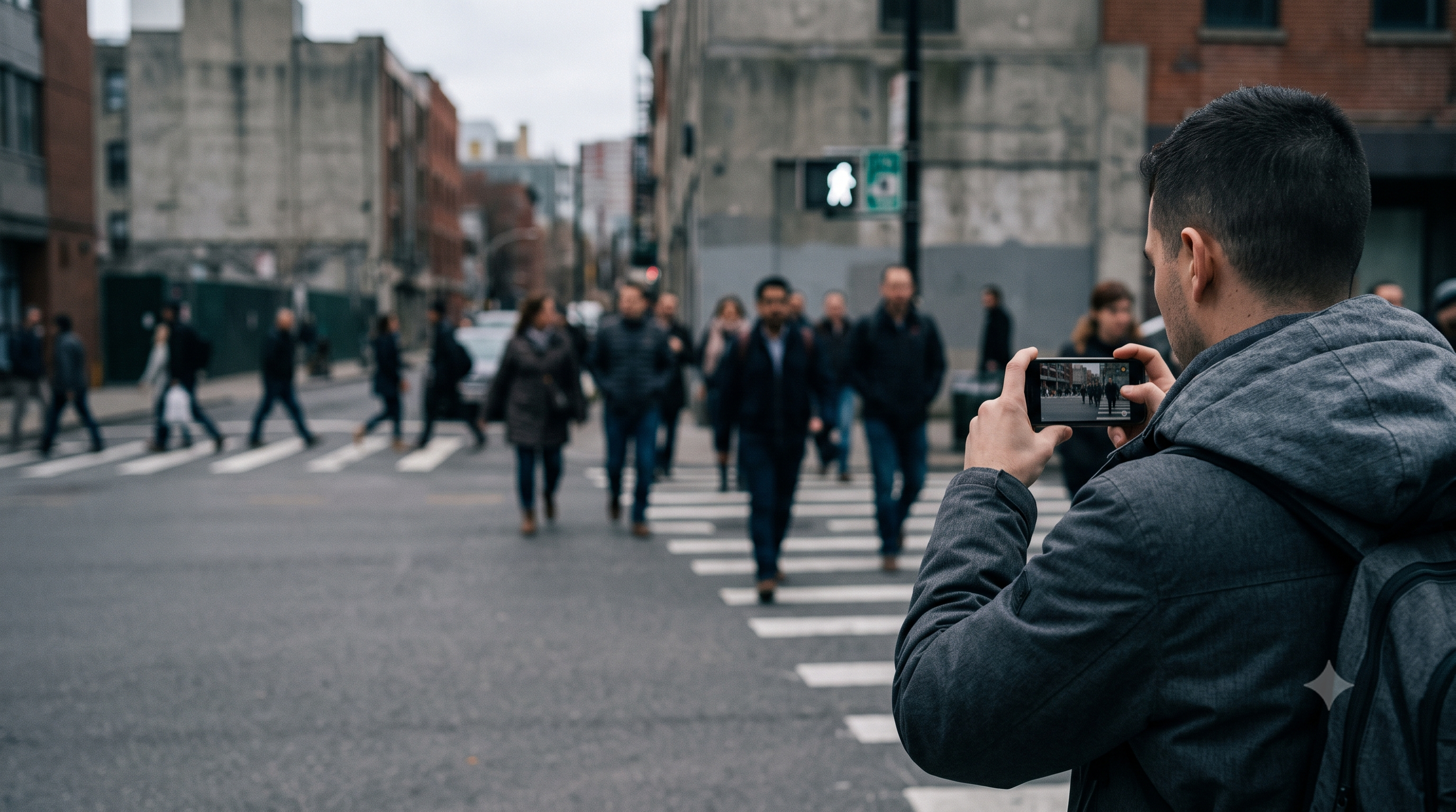
At some point in the last decade, blurring a face stopped being a specialist task and became something anyone does without thinking.
Parents sharing family photos on Instagram reach for the emoji before posting — a flower or a smiley placed over a child's face before the image goes up. Protesters obscure their identities before demonstrations, not after. Citizen journalists blur faces in footage before uploading it. The Met Police releases body-worn camera recordings with bystanders' faces already redacted.
None of these people have been trained in data protection law. Most could not define a lawful basis under Article 6 of UK GDPR. They are doing it because the instinct to protect a face — their own, their children's, strangers' — has become culturally normal.
That shift matters. It means public expectations around video privacy are rising faster than most institutional processes have adapted to meet them.
Where the instinct comes from
The blurred face has been a fixture of broadcast television for decades. Reality TV programmes showing suspects, bystanders, or anyone without a signed release form routinely pixelated faces from the early 1990s onwards. Investigative journalism used silhouetted witnesses in backlit interview settings. Crime documentaries applied blurs to victims and minors.
Audiences learned to read the signal. A pixelated face means: this person did not consent, or cannot be identified for legal reasons, or is being protected. That reading became so embedded that it required no explanation. The blur became shorthand.
When smartphones made everyone a potential publisher of video, that shorthand came with them. People who had spent years watching blurred faces on television applied the same logic when they started filming. The technology available — most editing apps now include a blur or emoji overlay function — made it simple enough to become habitual.
The Coldplay moment and what it revealed
In July 2025, a couple at a Coldplay show at Gillette Stadium covered their faces when the Kiss Cam found them. The instinct to obscure — not a blur applied in post, but a physical covering of their own faces in real time — made the story. Within 24 hours both individuals had been identified, and both resigned from their roles shortly after.
The case illustrated something that privacy advocates have argued for years: the face is the primary identifying feature in video, and the decision to conceal it is often made by the subject, not the person holding the camera.
For organisations that release footage, the implication runs in the other direction. The public increasingly expects that faces will be protected. An institution that releases unredacted footage is now making a choice that reads as a failure of care, not a neutral default.
Citizen journalism and the responsibility gap
The growth of citizen journalism created a version of this problem that broadcast standards rules were not designed to address. Someone filming a protest, an altercation, or a public incident on a smartphone is not operating under an editorial framework. They are making decisions in real time about what to film and how quickly to post it.
The risk of unredacted footage from protests became visible in documented cases where government agents in authoritarian contexts used online videos to identify and detain individuals. YouTube introduced a face-blur tool partly in response to this. Human rights organisations began issuing guidance to journalists and activists about redacting footage before sharing.
That guidance has filtered through. Most people who film protests regularly are now aware that posting unredacted footage of other demonstrators carries risk. But awareness is not uniform, and tools vary in quality. The gap between what good practice looks like and what actually happens in the moment remains wide.
The Met Police and the institutional shift
The Metropolitan Police's use of body-worn cameras has expanded significantly in recent years. Footage is now released more frequently — sometimes proactively, sometimes in response to public interest requests — and that footage routinely includes members of the public who were present at incidents but not involved in them.
The practical implication is that the Met, and forces like it, need to redact faces before releasing footage. A bystander visible in the background of an incident did not consent to appearing in footage that may be broadcast or published. Their face is personal data. Releasing it without redaction creates a compliance risk under UK GDPR.
This is not a hypothetical. Forces that have released footage without adequate redaction have faced scrutiny from the ICO and from the individuals affected. The operational question is no longer whether to redact, but how to do it at the volume and pace that release schedules require.
What parents are already doing
The cultural shift is perhaps clearest in the most mundane context: family photos on social media.
The practice of placing an emoji over a child's face before posting a group image has become standard among parents who have grown up with social media. It is not legally required — there is no law that prevents a parent from posting a clear photo of their own child. It reflects a practical judgement about the child's future interests: a face obscured today cannot be used to identify that person in ten years without their consent.
That judgement is intuitive rather than legalistic. It suggests that public understanding of facial identification risk has developed faster than most institutional redaction practice. People who are not data protection professionals have reached a working conclusion that faces in shared video require protection as a default.
The gap organisations need to close
The distance between public expectation and institutional practice is where the risk lives.
Organisations that handle video — police forces, local authorities, transport operators, broadcasters, healthcare providers — are releasing footage in contexts where the people who appear in it, and the people who receive it, both expect redaction to have been applied. When it has not been, or when it has been done inconsistently, the gap is visible.
The operational challenge is volume. Manual redaction does not scale to the amount of footage most organisations now need to process. A police force responding to a significant number of DSAR requests a month, each involving hours of body-worn camera footage, cannot redact that footage frame by frame. Neither can a local authority releasing CCTV under freedom of information obligations.
Automated redaction tools address the volume problem. Pimloc's Secure Redact platform detects faces, number plates, and other personal data across footage and applies redaction before export. The output is reviewed by a human before release. The combination of automated detection and human oversight brings institutional practice closer to the standard that public expectation now sets.
The direction of travel
The instinct to blur a face — whether it is expressed through an emoji on Instagram or an automated redaction tool processing hours of body-worn camera footage — reflects a broad cultural shift in how people think about identity in video.
That shift is not reversing. Consumer face-search tools can now match a photograph to a social media profile in seconds. The consequences of an unredacted face being published have become more concrete and more traceable. Public awareness of those consequences is rising.
Organisations that treat redaction as a default rather than an afterthought are already aligned with where public expectation is heading. Those that treat it as optional are carrying a compliance risk that is becoming harder to defend.